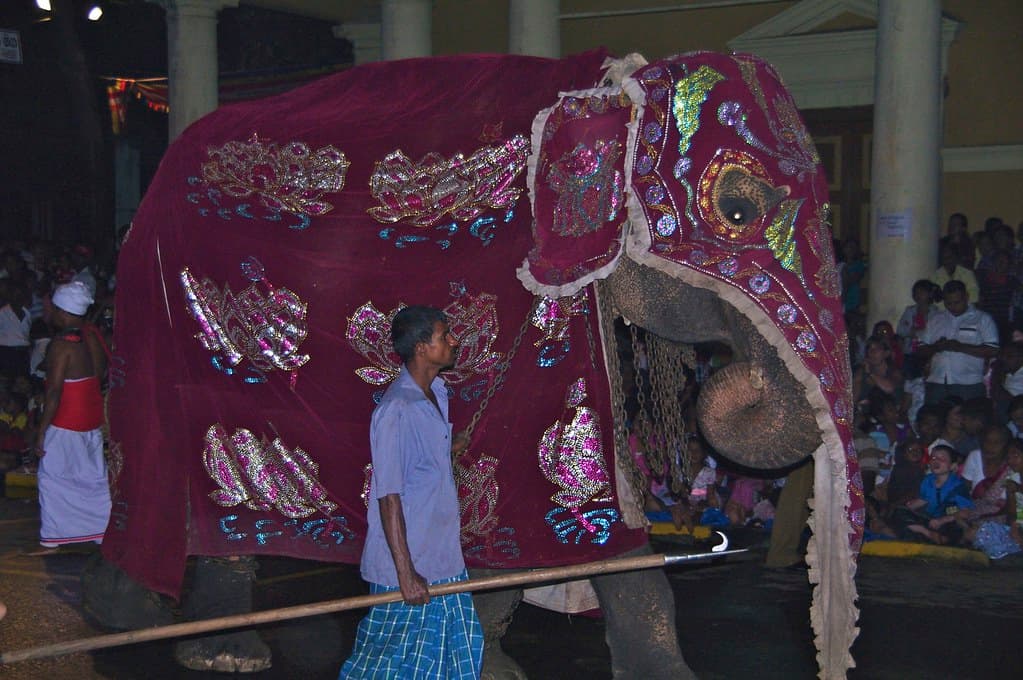
What is Esala Perahera?
The Esala Perahera (ඇසළ පෙරහැර) is Kandy's great procession, held for the Sacred Tooth Relic of the Buddha. The relic has been kept in Kandy's Temple of the Tooth, the Sri Dalada Maligawa, since the city was the capital of the last Sinhalese kingdom, and for Sri Lankans it is the country's most precious object. Once a year, in the month of Esala or the one after, the city takes it out to its people.
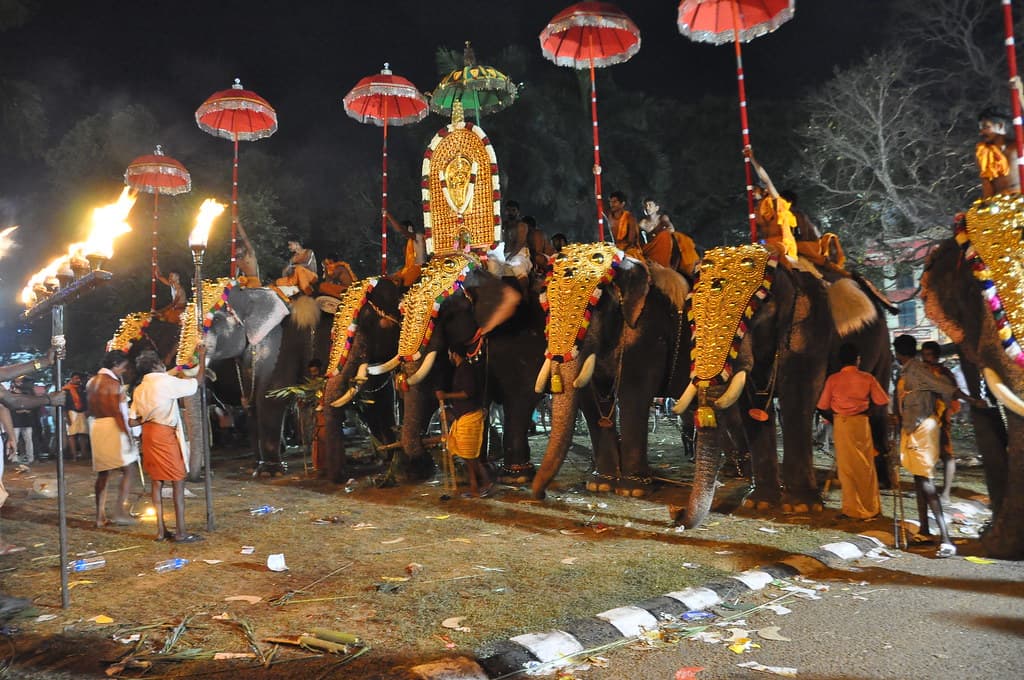
Not the relic itself, though: what rides through the streets is a replica casket, carried on the back of the temple's chief tusker under a lit canopy. Around it march the processions of Kandy's four devales, the shrines of the gods Natha, Vishnu, Kataragama and the goddess Pattini, each with its own elephants, dancers and officials. Together they make a procession that takes hours to pass.
The festival is older than the relic's arrival. It is thought to have begun as a ritual to ask the gods for rain, and the relic, brought to Sri Lanka in the 4th century CE, was added later. That double nature still shows: a Buddhist procession for a relic of the Buddha that is also a parade of Hindu-origin deities, ending with a water rite at the river.
What to expect
The perahera runs over about ten nights, each one longer and grander than the last, and every procession starts at an auspicious time fixed by astrologers.
Nights 1–5
Kumbal Perahera
The first five processions are the smaller ones, led by the devale processions and the temple's own, along a set route through the old town. They are still spectacular, and the crowds are thinner.
Nights 6–10
Randoli Perahera
The randoli, palanquins of the goddesses, join the procession, and everything grows: more elephants, more dancers, longer routes. The last night, the Maha Randoli, is the biggest of the year and the one most visitors come for.
Final day
Water-cutting and day perahera
At dawn the devale processions go to the Mahaweli river at Getambe for the Diya Kepeema, the water-cutting ceremony, in which a sword is drawn through the water. A daytime procession through Kandy closes the festival.
Each procession opens with whip-crackers, who clear the way with loud cracks, followed by fire-ball acrobats and flag bearers. Then come the drummers and dancers in silver headdresses, the line of dressed elephants, and finally the Maligawa tusker with the casket. The goddess Pattini's procession is the only one with women dancers.
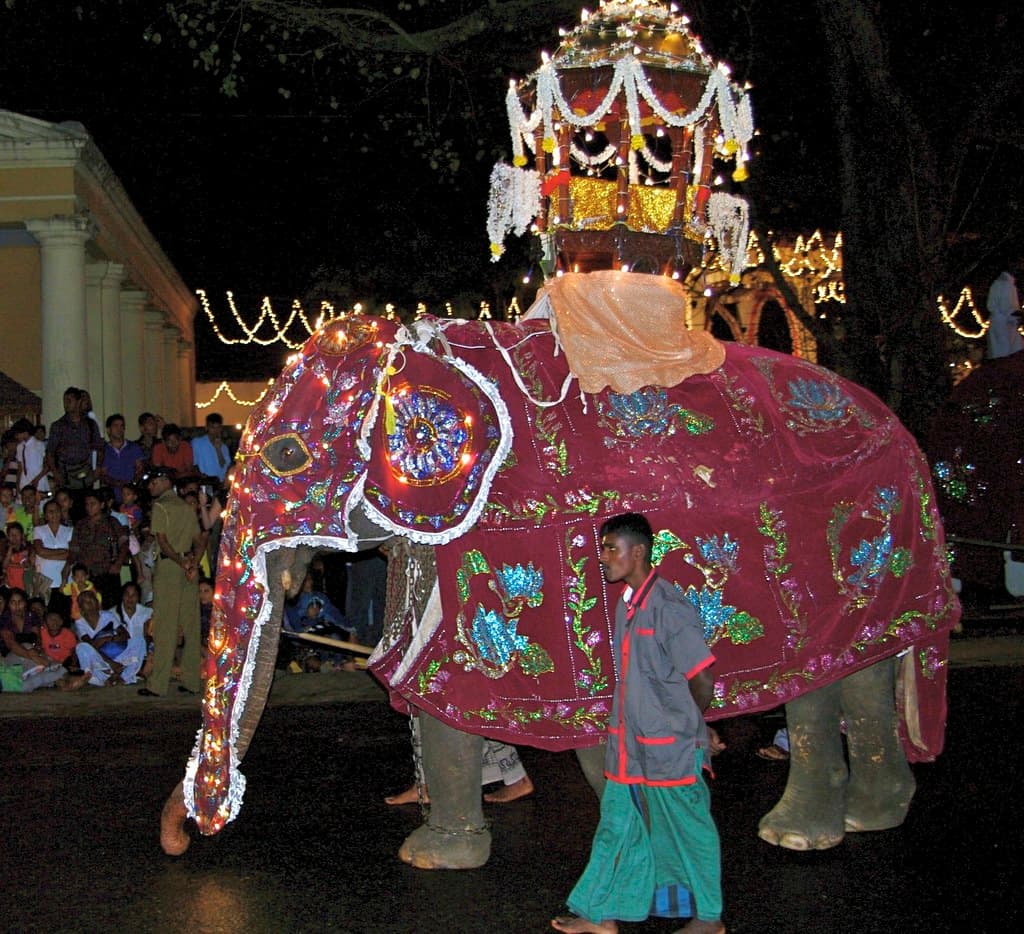
An elephant carrying a lit canopy in the Esala Perahera
Photo by Vasnic64 / flickr · CC BY 2.0
Planning your trip
Getting there
Sri Lanka's international airport is outside Colombo, and Kandy is about three hours away by road. The train from Colombo is slower but one of the classic journeys of the island, climbing through hills and tea country; book reserved seats ahead for festival dates. In Kandy, the procession route circles the streets around the Temple of the Tooth and the lake, all reachable on foot.
Where to stay
Hotels and guesthouses around Kandy Lake and on the hills above it are the most convenient, and they fill first for the last Randoli nights. Some offer packages that include a seat on the route. Further out, the hotels along the road to Peradeniya are cheaper and a short tuk-tuk ride away.
What it costs
Watching from the street is free. Reserved seats are sold by hotels, shops and agents along the route, from plain chairs on the pavement to balcony places, and prices rise sharply for the last Randoli nights. Rooms in Kandy are cheap for most of the year but can cost several times as much in festival week.
Go like you know
- Visit the Temple of the Tooth during the day before the processions. Dress modestly, in white if you can, with shoulders and knees covered, and take your shoes off at the entrance.
- Never pose with your back to a Buddha statue for a photo; in Sri Lanka it is seen as disrespectful.
- No flash: the drummers and dancers don't need it, and the elephants certainly don't.
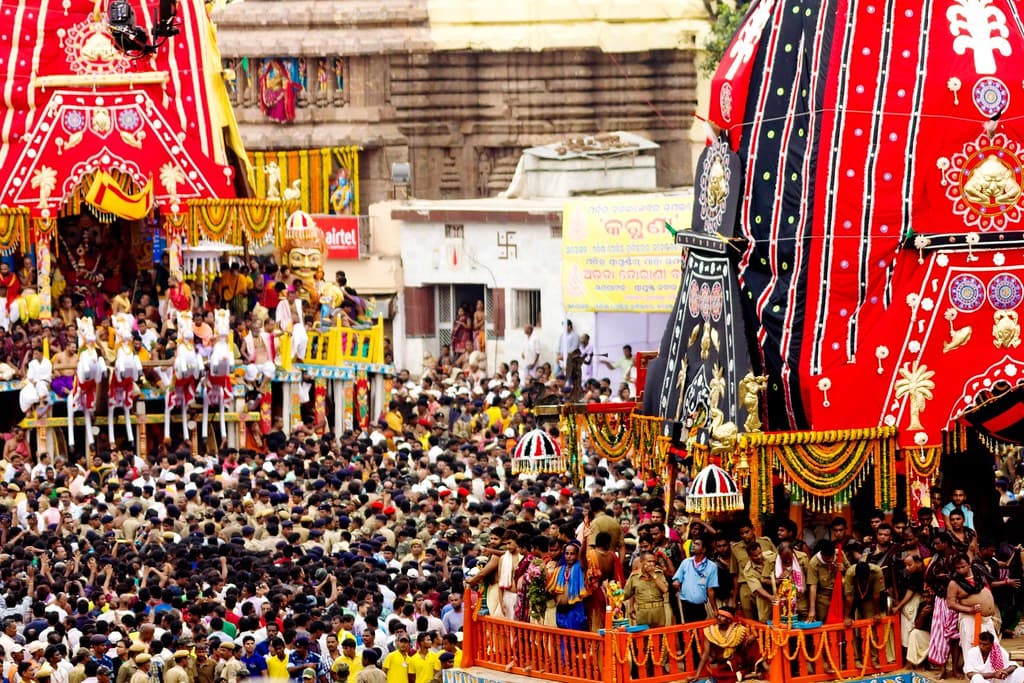
- Kerala's Thrissur Pooram is the other great elephant festival of the region, and Puri's Rath Yatra is India's great procession of the gods.
- For another Buddhist pilgrimage festival, see Waisak at Borobudur in Java.
Frequently asked questions
When is the Esala Perahera?
In July or August, following the lunar calendar. The ten nights of processions end on the full moon, and the Temple of the Tooth publishes the schedule a few months ahead. In 2026 the processions ran from August 18, with the grand Randoli procession on August 27 and the day procession on August 28.
How long does each procession last?
Hours. The early Kumbal processions are shorter, but on the final Randoli nights the procession takes hours to pass a single point. Start times are set by astrologers and announced in advance, so arrive well before, whether you have a seat or not, and bring something to eat.
Is the real Tooth Relic in the procession?
No. The Maligawa tusker carries a replica casket, and the relic itself stays in the Temple of the Tooth. The casket is still treated with great reverence as it passes: this is the moment the crowd has waited for, and visitors are expected to stand quietly and respectfully while it goes by.