What is the Dragon Boat Festival?
The Duanwu festival (端午节), known in English as the Dragon Boat Festival, falls on the fifth day of the fifth month of the Chinese lunar calendar. It is one of China's oldest festivals, traditionally traced back more than two thousand years, and is celebrated across China, Hong Kong, Taiwan and Chinese communities around the world. It sits alongside Chinese New Year and the Lantern Festival among the big fixtures of the Chinese lunar calendar.
The most famous story behind the festival is that of Qu Yuan, a poet and minister of the state of Chu during the Warring States period. Loyal to his king but slandered and exiled, he drowned himself in the Miluo River in despair. Local people raced out in boats to save him, beating drums and splashing paddles to scare away fish, and threw rice into the water so the fish would eat it instead of his body. Those acts became the dragon boat races and the custom of eating zongzi. Qu Yuan is the best-known figure, but UNESCO notes that other regions honor different local heroes during the festival.
The festival also has older roots in summer rituals to ward off disease and evil. Families hang mugwort and calamus on doors, children wear perfumed sachets, and people drink realgar wine. In 2009, UNESCO inscribed the Dragon Boat Festival on its list of intangible cultural heritage.
Drums to scare the fish away, rice to feed them: a rescue that never came in time, repeated every year for two thousand years.
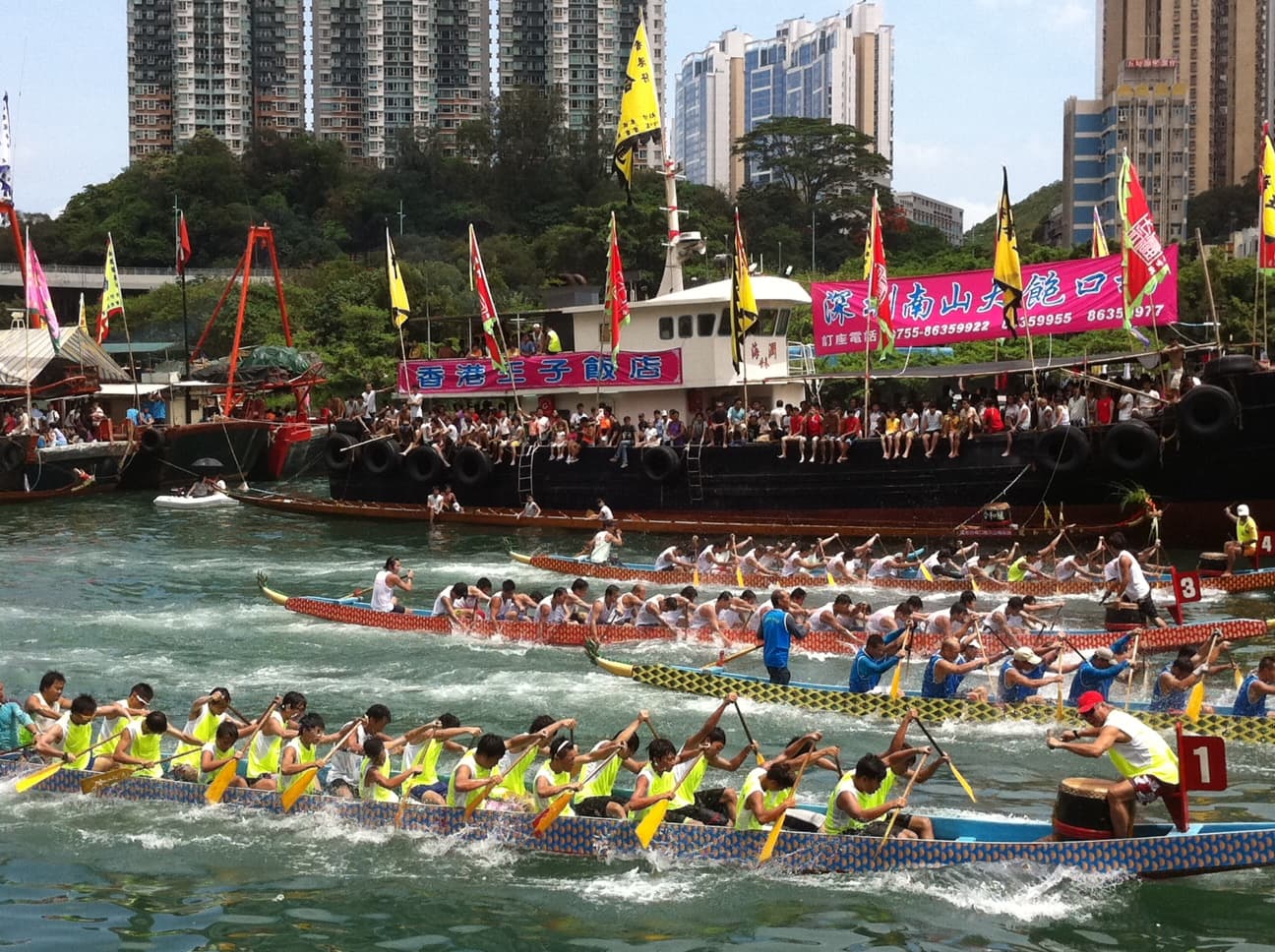
Dragon boat racing in Hong Kong
Photo by Atmhk / wikimedia · CC BY-SA 3.0
What to expect
The festival is a single day, but races and preparations take place over several days around it.
Weeks before
Training and zongzi
Dragon boat teams train on rivers and harbors, and families and shops prepare zongzi with sweet or savory fillings.
Festival day
Races and rituals
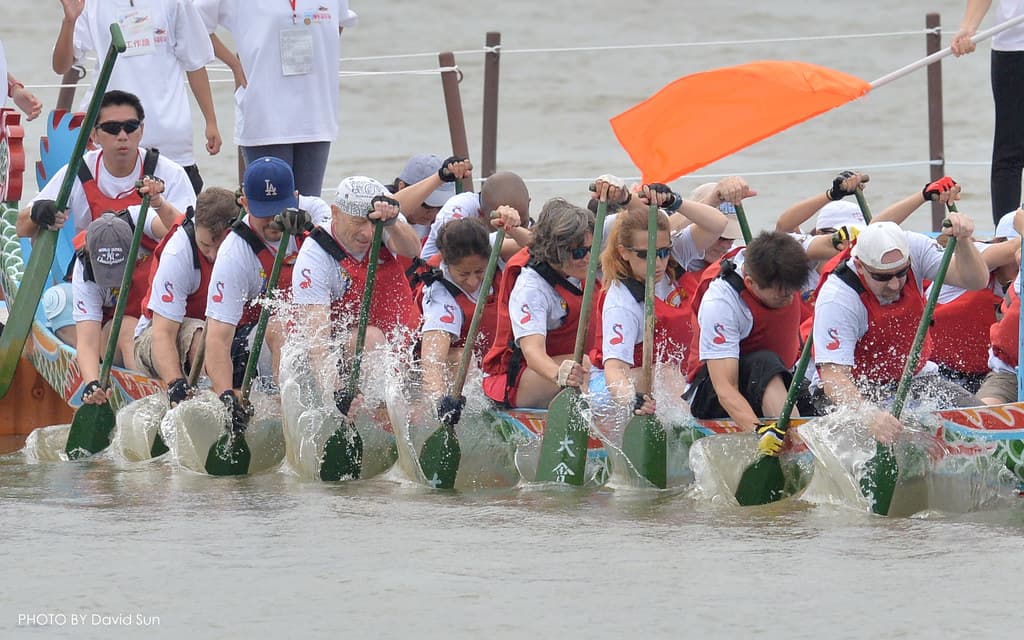
Dragon boat races take place on rivers, lakes and harbors, often opened with a ritual to dot the dragon's eyes and awaken its spirit. Families eat zongzi and hang herbs on their doors.
Holiday
Family time
On the mainland, the festival is a short public holiday, and many people travel or spend time with family.
Planning your trip
Getting there
Dragon boat races take place across China, often in cities with rivers or lakes. Miluo in Hunan, linked to Qu Yuan and home to the Quzi Memorial Temple, holds commemorative events, and many other river and harbor cities host races. Hong Kong and Taiwan also have well-known races that are easy for visitors to reach. In Hong Kong, the Stanley International Dragon Boat Championships were held on the festival day itself in 2026, while the larger international races off Tsim Sha Tsui came about a week later, so check local schedules for the year you travel.
The festival is a public holiday in mainland China (a three-day break in 2026), Hong Kong and Taiwan. Transport and popular tourist sites can be crowded, so book trains early and check local race schedules, which are published in the weeks before.
Dragon boat racing has also become an international sport. Clubs in Europe, North America and Australia race throughout the summer, and the Hong Kong International Dragon Boat Races, first held in 1976, draw crews from many countries to race across Victoria Harbour. If you are in Hong Kong in the spring, the Cheung Chau Bun Festival falls about a month earlier on the lunar calendar.
Where to stay
Base yourself in or close to the race city, near the river, lake or harbor front, and book early: the short holiday sends domestic travelers to the same places at the same time.
What it costs
Watching from the shore is generally free, and the Hong Kong International Dragon Boat Races advertise free admission for spectators. The cost to plan for is the holiday itself: travel and rooms at popular destinations get busier and pricier over the short break. Zongzi are sold everywhere, and taster paddling sessions vary by club, so ask first.
Go like you know
- Catch an eye-dotting ceremony if you can: the dragon's eyes are painted to bring the boat to life, usually when a new boat or the racing season begins, so ask the local organizers when it happens.
- Buy a perfumed sachet, xiangbao, a traditional charm to ward off illness.
- Join a dragon boat taster session; some clubs offer them to visitors.
- Visit Hong Kong's Stanley for races, or Tai O for its traditional dragon boat water parade, in which deity statues are paraded through the fishing village's waterways.
- Try sweet zongzi in the north and savory ones in the south.
- Look for the Quzi Memorial Temple near Miluo if you visit Hunan.
Frequently asked questions
When is the Dragon Boat Festival?
It falls on the fifth day of the fifth month of the Chinese lunar calendar, usually in late May or June. The date changes every year. It is a public holiday in mainland China, Hong Kong, Taiwan and some other places with Chinese communities.
Where can I see dragon boat races?
Races are held across China, often on rivers and lakes, as well as in Hong Kong and Taiwan, where they are easy for visitors to reach. Many cities publish race schedules in advance. Chinese communities worldwide also hold races, often open to international teams.
What are zongzi?
Zongzi are pyramid-shaped dumplings of glutinous rice wrapped in bamboo or reed leaves and steamed or boiled. Fillings vary by region, from sweet red bean and dates to savory pork, egg yolk and mushrooms. They are eaten during the festival in memory of Qu Yuan.
Can visitors join a dragon boat team?
Some clubs, especially in Hong Kong and Taiwan, offer taster sessions or corporate and community races open to visitors. Joining a full race team usually requires training in the weeks before. Contact local clubs or tourism offices for opportunities.
What else do people do on Duanwu?
Besides races and zongzi, families hang mugwort and calamus on their doors to ward off illness, children wear colorful silk threads on their wrists and perfumed sachets, and some people drink realgar wine. In Taiwan, balancing an egg upright on Duanwu is a pastime said to bring good luck.