What is Dahi Handi?
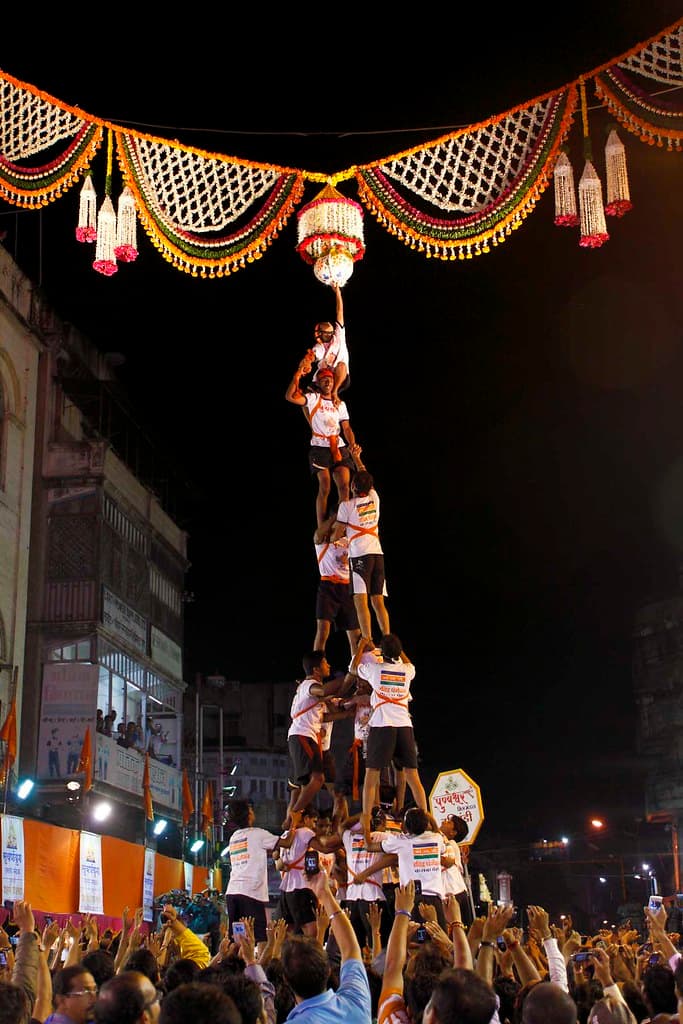
On the day after Krishna Janmashtami, the festival of the birth of the Hindu god Krishna, the streets of Mumbai and Thane come alive with one of India's most spectacular and dangerous celebrations. In Dahi Handi, teams of young men and women, called Govinda pathaks, climb on each other's shoulders to build human pyramids, sometimes nine or ten tiers high, to reach and break a clay pot, the handi, filled with curd and hung high above the street.
The festival re-enacts a favourite story from Krishna's childhood. As a boy in the village of Gokul, Krishna loved butter and curd so much that the women of the village hung their pots out of reach, and he and his friends climbed on each other's shoulders to steal them. In Maharashtra, the festival is also known as Gopalkala, and it has grown into a huge, competitive event, with political parties, local groups and sponsors offering large prizes for the teams that break the highest pots.
The pyramids are astonishing feats of strength and balance. Teams train for weeks, and their members, wearing matching T-shirts, form a dense base and then climb in rings, with the smallest and lightest climber at the top reaching for the pot. In 2012, a team from Jogeshwari built a nine-tier pyramid over 13 metres high, a Guinness World Record, and ten-tier pyramids have been reported since.
But Dahi Handi is also dangerous. Every year, participants are injured in falls, and some have died. After court rulings on minimum ages and safety, and the state's recognition of the event as a sport, organizers have introduced helmets, safety harnesses and medical teams, but injuries remain common, and in recent years hundreds have been hurt across Mumbai.
What to expect
Dahi Handi takes place on a single day, the day after Janmashtami, usually in August or early September, from morning until evening.
Morning
The teams set out
Govinda teams travel across the city in trucks and buses, singing and chanting, to try their luck at handis hung in different neighbourhoods.
Afternoon
The peak
The busiest hours are in the afternoon, when the biggest pyramids rise at the main venues, cheered on by huge crowds, music and water thrown from the buildings above.
Evening
Prizes and celebrations
The winning teams collect their prizes, and celebrations continue into the evening across the city.
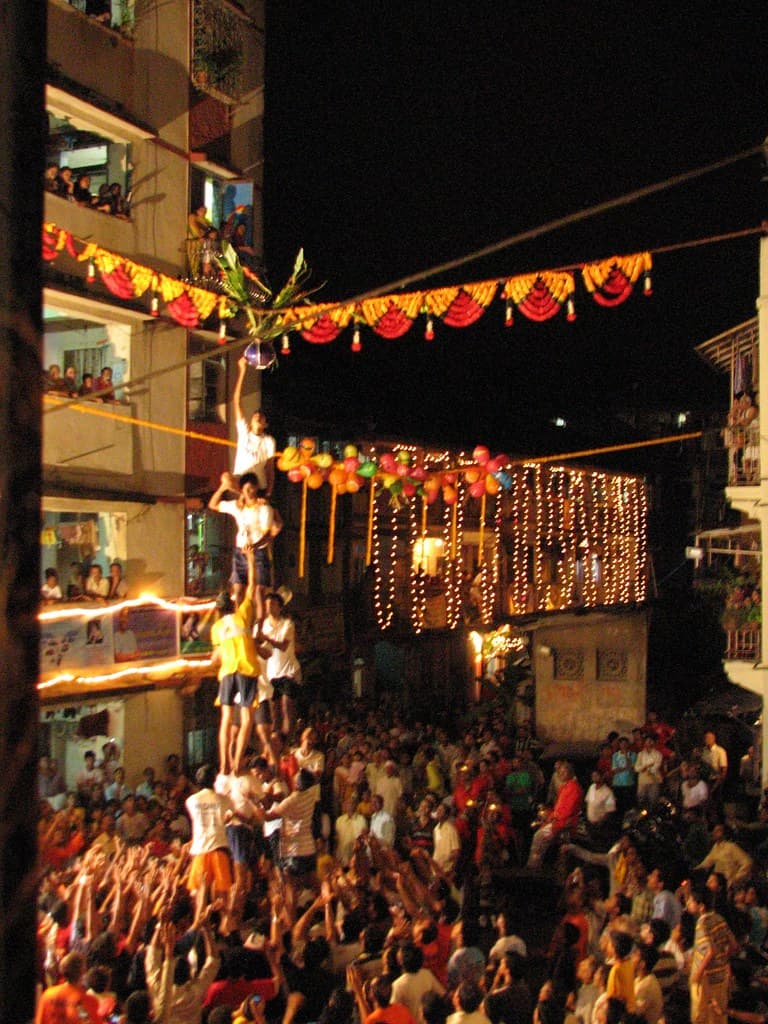
A Govinda pyramid in Girgaum, Mumbai
Photo by madpai / flickr · CC BY 2.0
Planning your trip
Getting there
Mumbai's international airport has flights from across India and the world. The main venues are in neighbourhoods such as Dadar, Lalbaug, Worli, Lower Parel, Ghatkopar and Thane, reached by local train followed by a taxi or auto-rickshaw for the last stretch.
Where to stay
Mumbai has accommodation for every budget, from guesthouses to grand hotels. Stay near a local train station for easy access to the venues, and avoid driving, as roads are congested on the day.
What it costs
Watching Dahi Handi is free. Mumbai is affordable for food and transport, though accommodation in central areas can be expensive.
Go like you know
- Ask locals which neighbourhoods have the biggest handis this year; prize money and venues change.
- Try Mumbai street food, from vada pav to pav bhaji, between pyramids.
- Visit a Krishna temple on Janmashtami night, the evening before, when devotees celebrate the god's birth at midnight.
- Use the local trains early in the day, before the crowds build.
- Mumbai's Ganesh Chaturthi, the city's greatest festival, usually begins less than two weeks later.
- For colour and celebration across India, see Holi in spring.
Frequently asked questions
When is Dahi Handi in 2027?
Dahi Handi is held the day after Krishna Janmashtami, which follows the Hindu lunar calendar. In 2027, Janmashtami is expected around August 25, with Dahi Handi on August 26. Dates can vary slightly between calendars, so check local listings closer to the time.
Is it safe?
For spectators who keep their distance, it is generally safe, but the event is dangerous for participants, with injuries every year. Courts and the state government have set safety rules, and organizers use helmets, harnesses and medical teams, but falls still happen. Keep well back from the pyramids.
Can visitors join a pyramid?
Not as a casual visitor. Govinda teams train for weeks, and climbing a pyramid without training is dangerous. Some groups welcome supporters to cheer and travel with them, but visitors should watch rather than climb, and always respect the safety rules set by organizers.
Where are the best places to watch?
Some of the biggest handis are hung in Dadar, Lalbaug, Worli, Ghatkopar and Thane, where sponsors offer large prizes and pyramids rise all afternoon. Venues and prizes change every year, so check local news the week before, and arrive early to find a safe spot well away from the base.