What is Onam?
Onam (ഓണം) is Kerala's festival of homecoming and plenty, celebrated by Malayalis of every faith at the end of the monsoon, when the rice harvest comes in. Declared Kerala's state festival in 1961, it falls in the Malayalam month of Chingam, in August or September, and lasts ten days, from the day of Atham to the great day of Thiruvonam.
Its story is that of King Mahabali, a generous demon king under whose rule, legend says, Kerala was a land of plenty and equality, with no theft, no lies and no poverty. The gods, alarmed by his power, sent Vishnu in the form of Vamana, a dwarf, who asked the king for as much land as he could cover in three steps, then grew to cosmic size and pushed Mahabali down to the underworld. Moved by the king's devotion, Vishnu granted him one wish: to visit his people once a year. Onam is that visit.
So Kerala prepares to receive him. Homes are cleaned and decorated, families gather, new clothes are worn, and the whole state takes on a holiday mood, with feasts, games, boat races and dances in every town, and a Malayalam proverb says you should have the Onam lunch even if you have to sell your land to pay for it.
What to expect
Much of Onam happens at home, but the public celebrations build through the ten days, peaking around Thiruvonam.
Atham
The festival opens
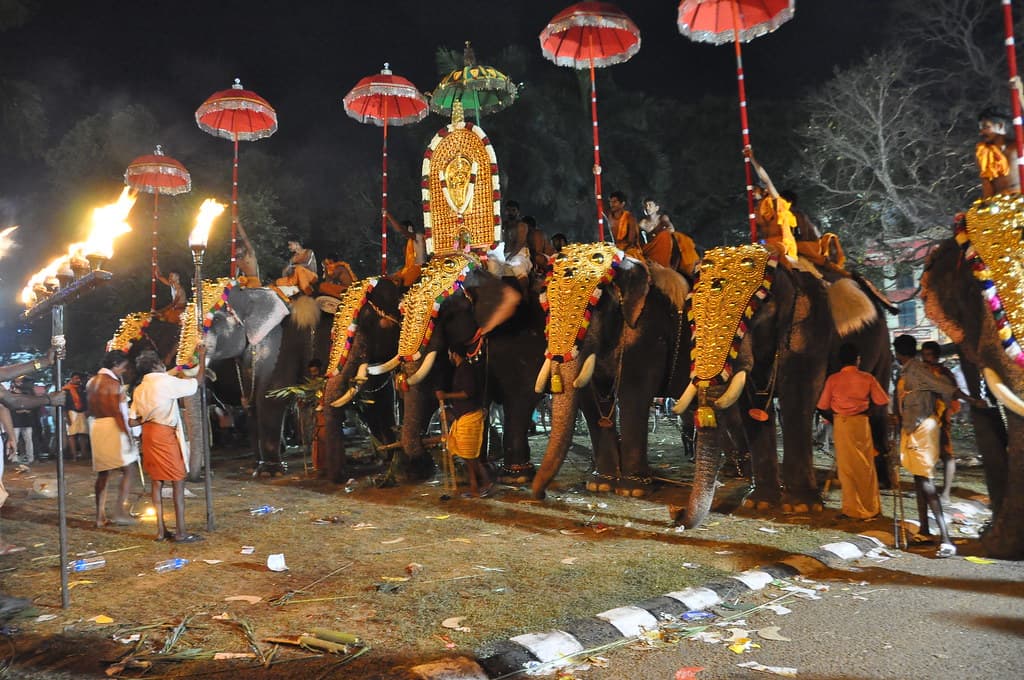
The festivities begin at the Thrikkakara temple near Kochi, closely tied to the Mahabali legend, and in the town of Thrippunithura with Athachamayam, a grand parade of floats, decorated elephants and folk art forms. Families lay the first, small pookalam flower carpet in front of their homes.
Days 2–9
Building up
The flower carpets grow larger and more elaborate each day. Markets are packed with shoppers, cultural programmes run across the state, and snake boat races begin on the rivers and backwaters.
Thiruvonam
The great day
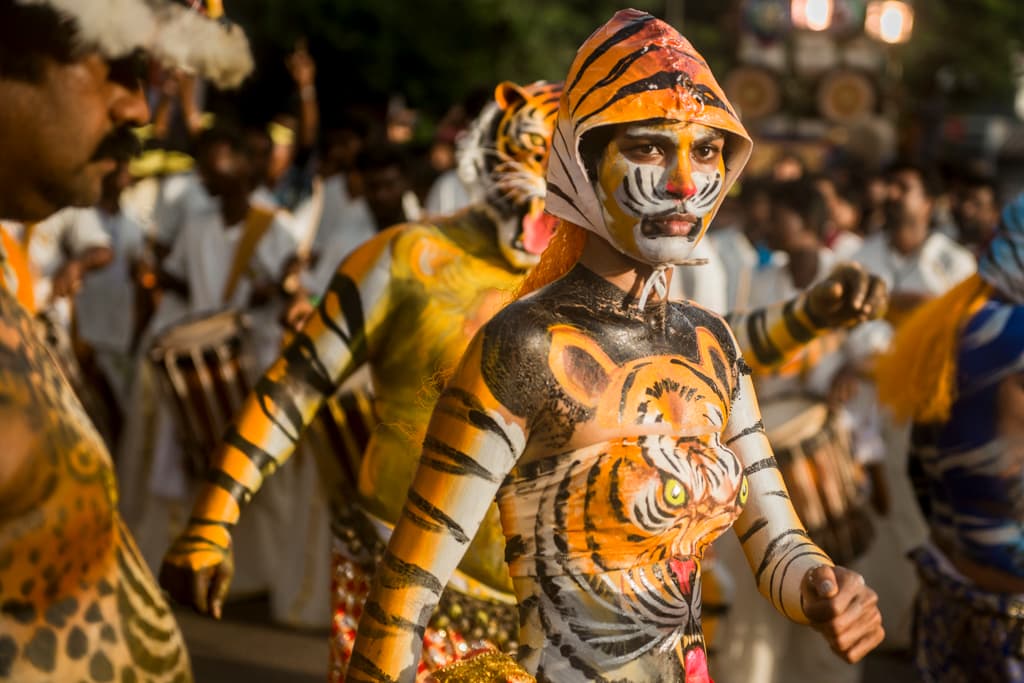
Families gather for the Onasadya, a vegetarian feast of more than two dozen dishes served on a banana leaf. In the days around it, Thrissur's Pulikali sends tiger-painted dancers through the streets, and the Aranmula boat race is held on the Pampa river.
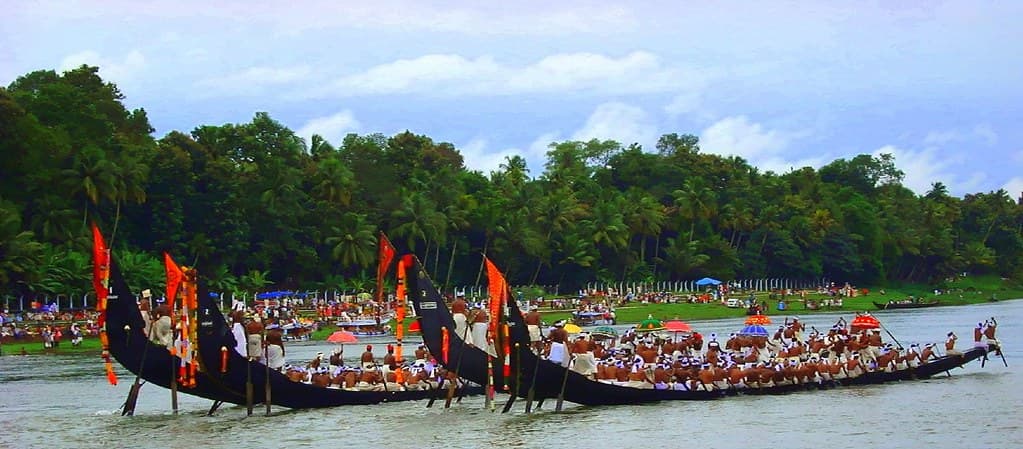
Snake boats at the Aranmula boat race in Kerala
Photo by Arun Kumar Sinha / flickr · CC BY 2.0
Planning your trip
Getting there
Kerala has international airports at Kochi, Thiruvananthapuram and Kozhikode, with flights from the Gulf, Southeast Asia and across India. Kochi is the most convenient base for Onam, close to Thrippunithura and Thrikkakara and within a few hours of Thrissur and the backwaters. Trains and buses connect the main towns.
Where to stay
Kochi's Fort Kochi and Ernakulam areas offer everything from homestays to heritage hotels. Many visitors add a night on a houseboat in the Alappuzha backwaters, which are busy around Onam. Book early: Onam is a major holiday for Keralites, many of whom travel home for it.
What it costs
Most public events, the parades, Pulikali and the boat races, are free to watch, though the best spots at the big boat races may be ticketed. Restaurant sadyas are reasonably priced. Kerala is moderately priced for India, with houseboats and heritage hotels at the top end.
Go like you know
- Wear something new, or at least something in white and gold, the colours of the Kerala sari and mundu that many wear for Onam.
- Help with a pookalam if a family or hotel invites you; the patterns are planned days ahead.
- Cheer on a snake boat team; each village backs its own boat.
- Kerala's other great festival is Thrissur Pooram, the temple festival of elephants and fireworks, in April or May.
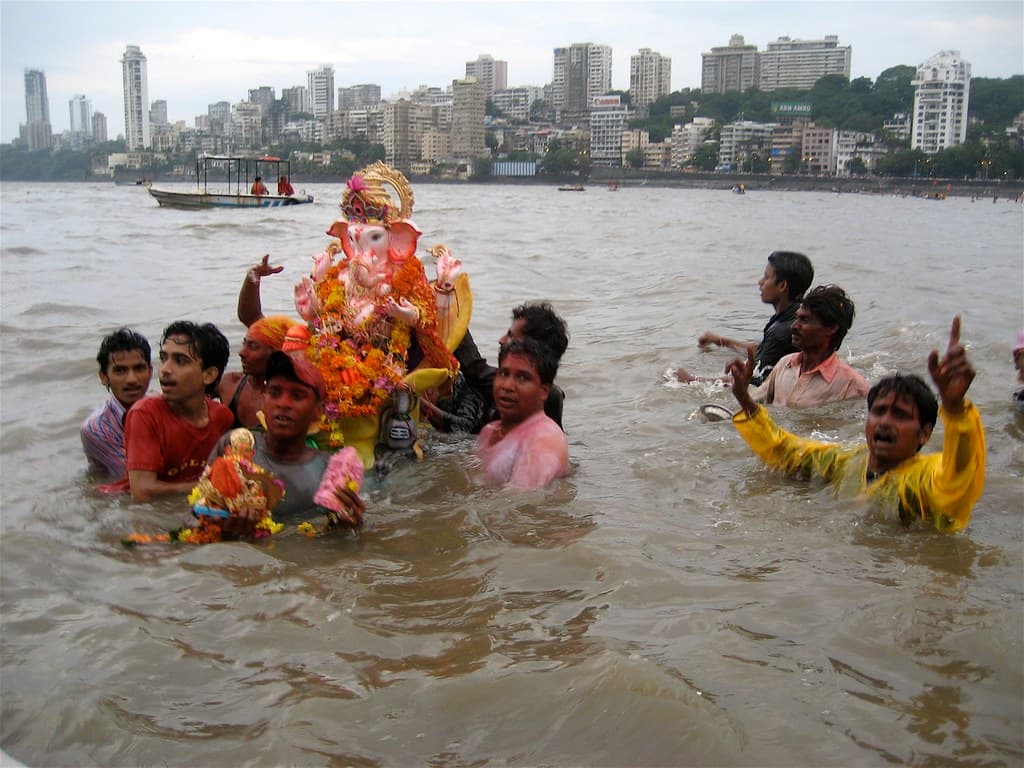
- For India's other great harvest-season festivals, see Mumbai's Ganesh Chaturthi, which often falls in the same weeks.
Frequently asked questions
When is Onam?
Onam follows the Malayalam calendar and falls in August or September. In 2026 it ran from Atham on August 16 to Thiruvonam on August 26. In 2027 Thiruvonam is expected on September 12, with some calendars giving September 13, and the festival starting about ten days before.
Is Onam only for Hindus?
No. Onam is Kerala's state festival, and people of all faiths celebrate it, with feasts, flower carpets and games. Its story is a Hindu one, but for most Keralites it is above all a festival of home, harvest and community, shared by Christians and Muslims as much as Hindus.
Where can I see the snake boat races?
Boat races are held on Kerala's rivers and backwaters through the season. The Aranmula race on the Pampa river is tied to Onam, while the famous Nehru Trophy race at Alappuzha usually takes place in August. Check the year's schedule, as dates follow the local calendar.