What is Aste Nagusia?
Bilbao, the largest city of the Basque Country, is best known today for the Guggenheim Museum's curving titanium walls. But every August it shows another face. Aste Nagusia, "the Great Week" in Basque, known in Spanish as the Semana Grande, is nine days of free concerts, fireworks, street parties, theatre and Basque traditions, starting on the first Saturday after August 15.
The festival in its modern form dates from 1978, a few years after the end of the Franco dictatorship, when Bilbao's people wanted a festival of their own, open, popular and run with the participation of its citizens. It is organized jointly by the city council and the konpartsak, dozens of festival groups formed by neighbours, friends, cultural associations and political and social movements. Each konpartsa runs a txosna, a festival booth, at El Arenal, by the river in the old town, serving drinks and food, hosting concerts and staying open late into the night.
The festival's symbol is Marijaia, a cheerful, round figure of a woman with her arms raised high in celebration, created in 1978. She presides over the week from the balcony of the Arriaga Theatre, and on the last night she is carried through the city before being burned, while crowds sing her farewell.
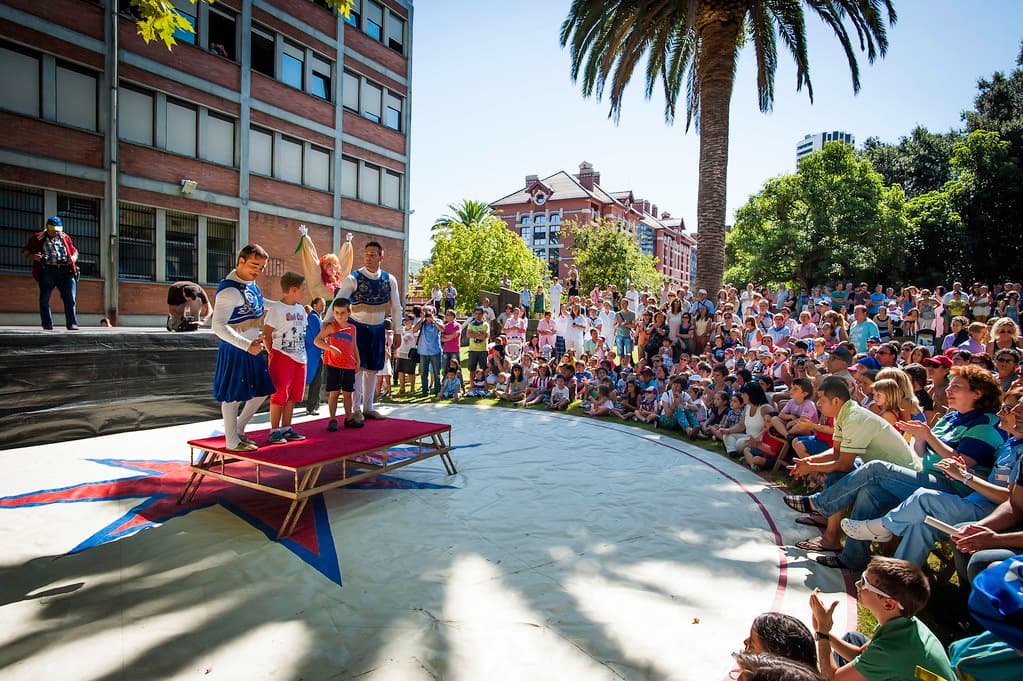
The programme is huge and almost entirely free: concerts on several stages every night, the Villa de Bilbao International Fireworks Competition, with a display each evening over the river, Basque rural sports, theatre, street performers, children's activities and cooking contests, in a city known for its food.
What to expect
The festival runs for nine days, from the opening rocket on the first Saturday to the burning of Marijaia on the last Sunday.
First Saturday
The txupinazo
The festival opens with the txupinazo, a rocket launched from the balcony of the Arriaga Theatre, as Marijaia appears and the crowd below erupts into celebration.
Every day
Concerts and fireworks
Concerts, theatre, rural sports and children's events fill the day, and each night the fireworks competition lights up the sky over the river, followed by concerts and parties at the txosnak.
Last Sunday
Farewell to Marijaia
On the final night, Marijaia is carried through the streets in a procession and burned, bringing the Great Week to a close with songs and tears.
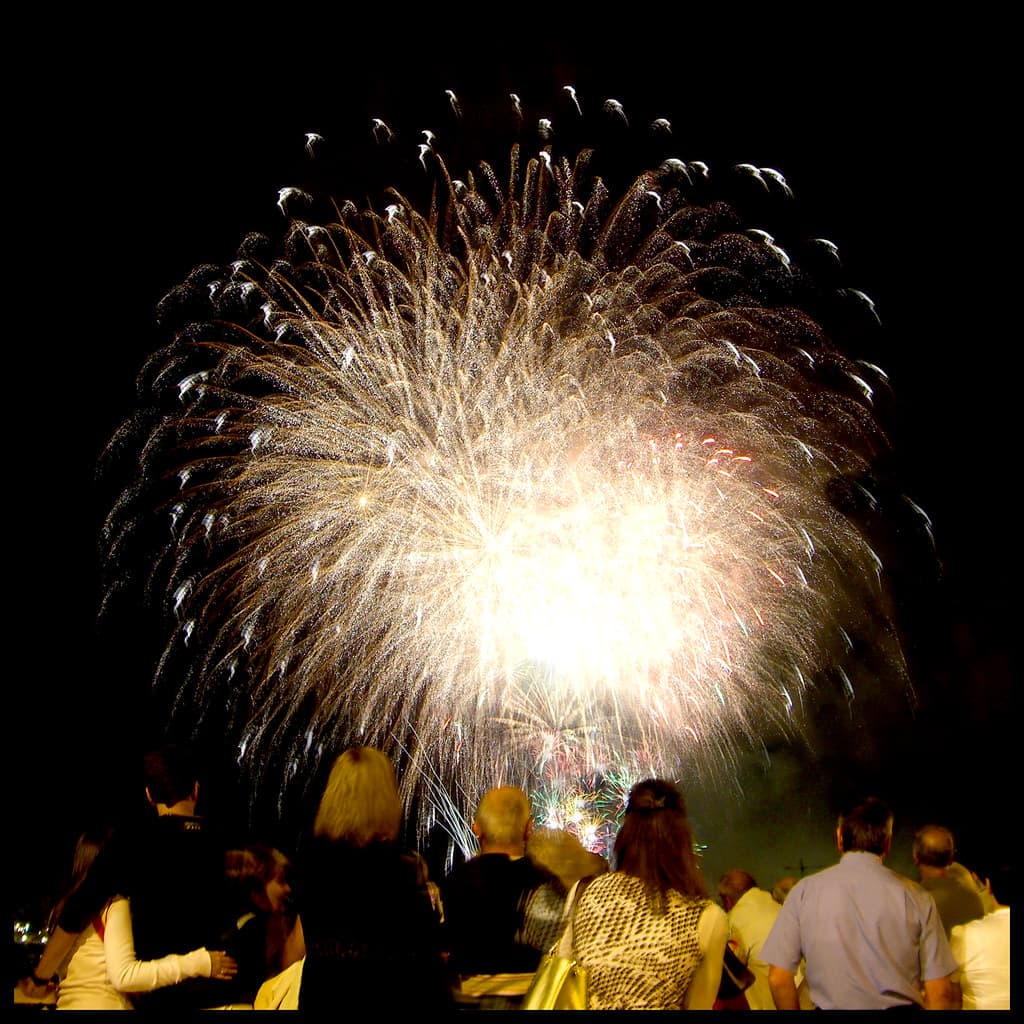
Fireworks over Bilbao during the Great Week
Photo by mikelo / flickr · CC BY-SA 2.0
Planning your trip
Getting there
Bilbao's airport has flights from across Spain and Europe, with buses to the city centre. Trains and buses connect Bilbao with Madrid, Barcelona and San Sebastián. The old town and El Arenal are central and easy to reach by metro and tram, and the city is very walkable.
Where to stay
The old town, the Casco Viejo, is the liveliest base but noisy during the festival. Abando, the Ensanche and the area around the Guggenheim are quieter and well connected. August is busy, so book early, though prices are usually lower than in San Sebastián.
What it costs
Almost everything is free, including the concerts, the fireworks and the street events. Food and drink at the txosnak are cheap, and Bilbao's pintxos bars offer some of the best food in Spain at reasonable prices.
Go like you know
- Eat pintxos, the Basque version of tapas, in the bars of the Casco Viejo and Plaza Nueva.
- Watch the Basque rural sports, such as wood chopping and stone lifting, for a taste of Basque tradition.
- Learn Marijaia's song before the last night; the whole city sings it.
- Visit the Guggenheim and walk along the river in the morning, while the city recovers from the night before.
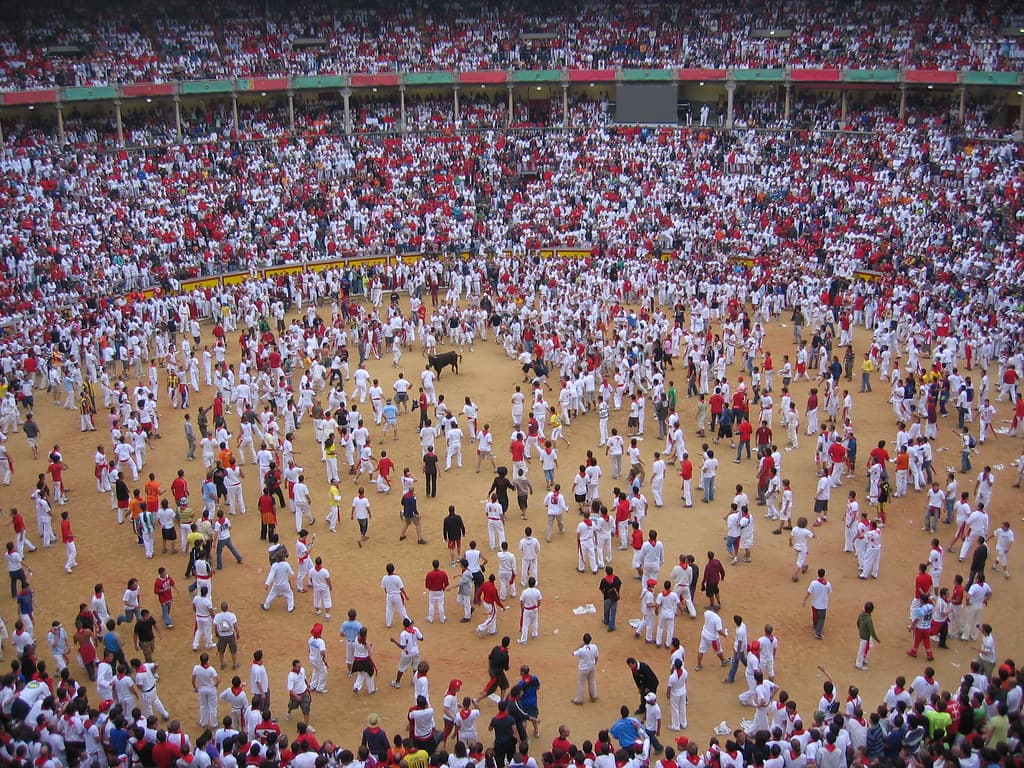
- Pamplona's San Fermín, in July, is the most famous festival of the region.
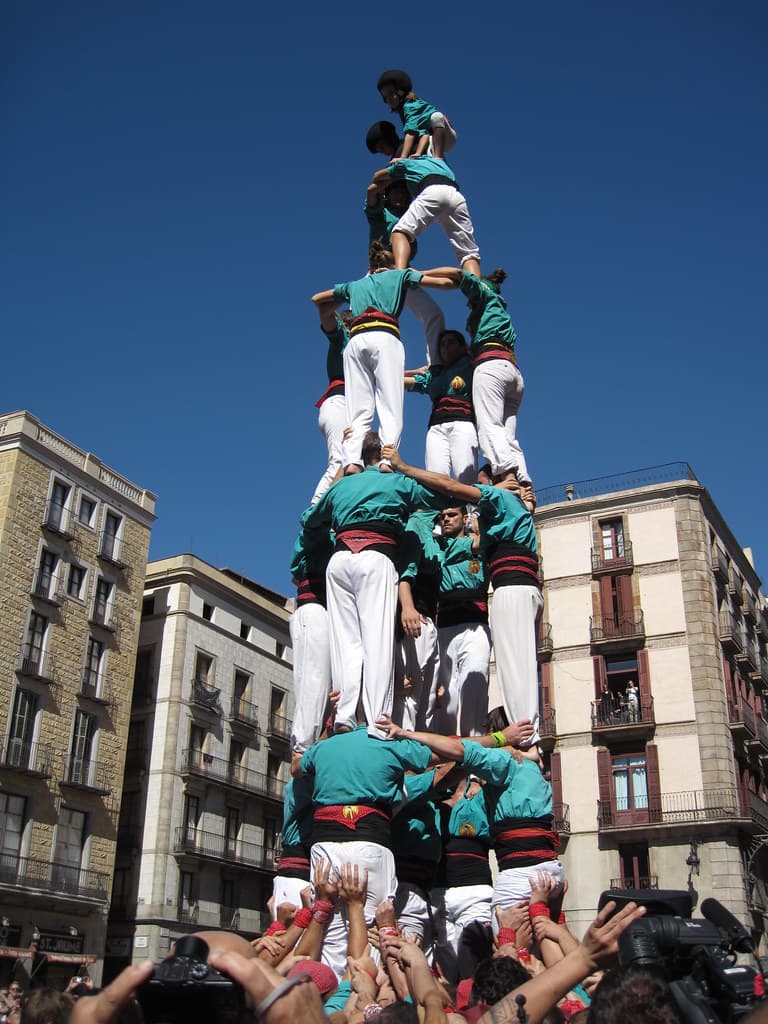
- Barcelona's La Mercè, in September, is another great free city festival in northern Spain.
Frequently asked questions
When is Aste Nagusia?
For nine days, starting on the first Saturday after August 15. In 2026 it ran from August 22 to 30. In 2027 it is expected from August 21 to 29, following the same rule. The city publishes the full programme a few weeks before the festival.
Who is Marijaia?
Marijaia is the symbol of the festival: a round, smiling figure of a woman with her arms raised in celebration, created in 1978. She watches over the week from the Arriaga Theatre and is carried through the city and burned on the last night, as the crowd sings her farewell.
What are the txosnak?
The txosnak are festival booths run by the konpartsak, the community groups that co-organize the festival. Set up at El Arenal by the river, they serve drinks and food, host concerts and stay open late, and their profits often support the groups' cultural and social activities.