What is the YOSAKOI Soran Festival?
In 1992, a student at Hokkaido University visited Kochi, on the island of Shikoku, and saw its Yosakoi festival, where dance teams with wooden clappers take over the streets every August. Inspired, the student came home to Sapporo and, with friends, started a festival of their own. It began small. Today the YOSAKOI Soran Festival is one of the biggest dance events in Japan, with hundreds of teams and tens of thousands of dancers, and around two million spectators.
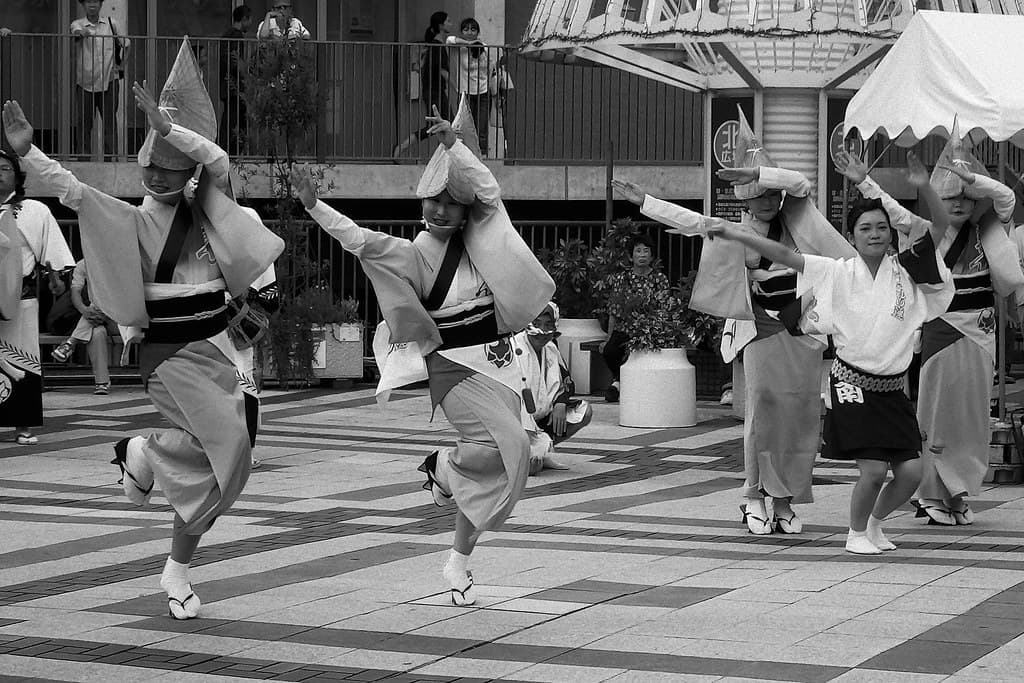
The festival brings together two traditions. From Kochi's Yosakoi comes the naruko, the wooden clapper that every dancer must hold. From Hokkaido comes the Soran Bushi, the work song of the herring fishermen who once crowded the island's coasts, a phrase of which must appear in every team's music. Everything else is up to the teams: the costumes, the choreography and the rest of the music, which can be anything from traditional drums to rock and techno.
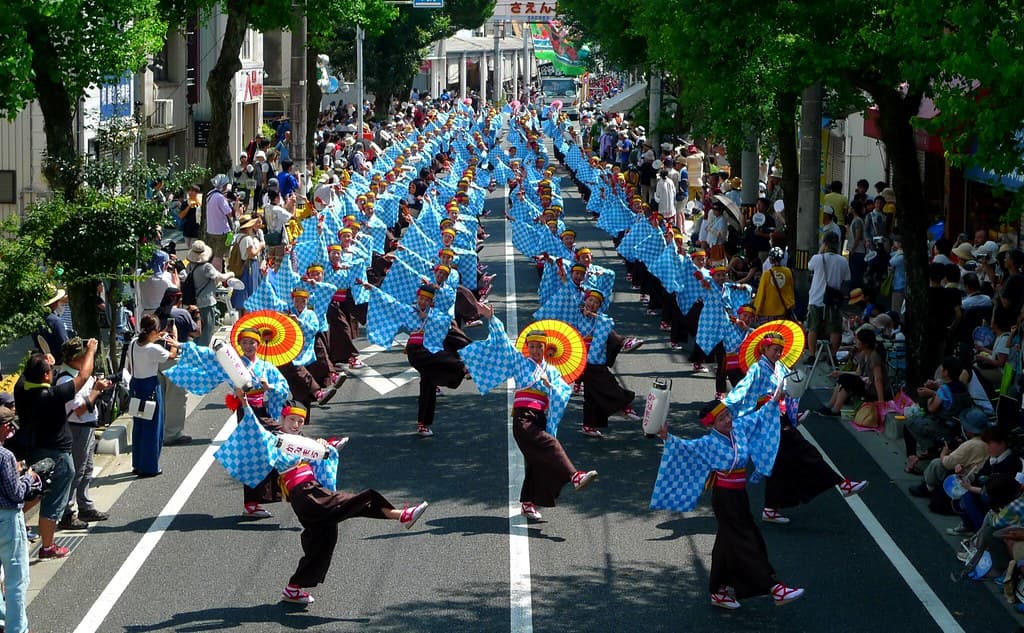
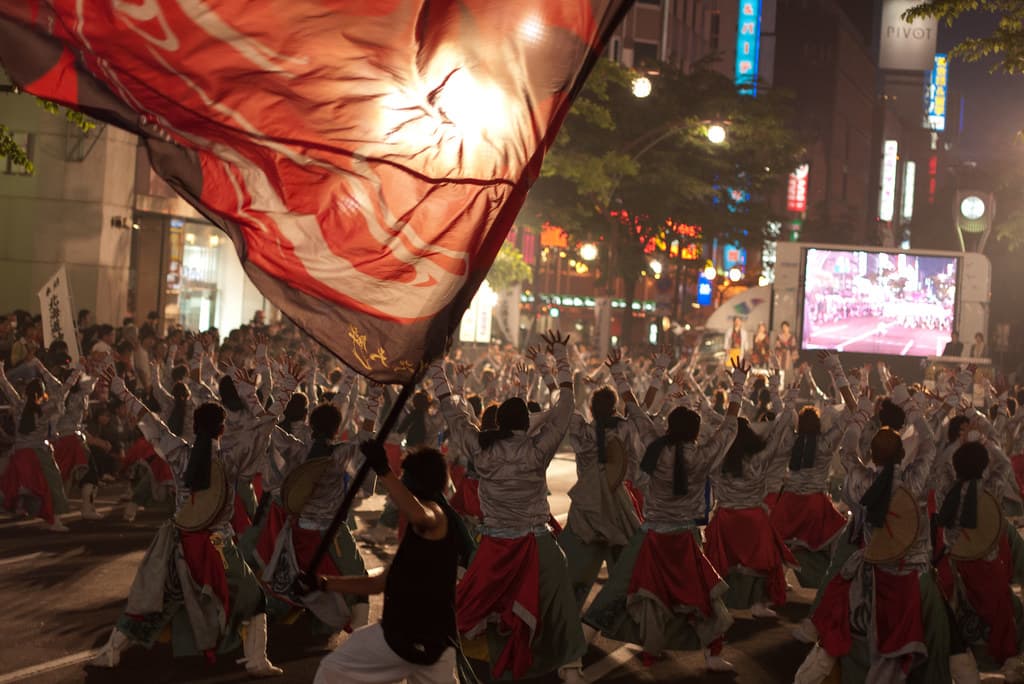
The result is spectacular. Large teams of dancers, from schools, universities, companies and neighbourhoods across Japan and beyond, perform tightly drilled routines in dazzling costumes that change in the middle of a dance, behind trucks carrying their musicians and giant flags that sweep over their heads. The festival is also a competition, and on the final night the best teams dance for the grand prize in Odori Park, Sapporo's long central park.
Coming in early June, as Hokkaido's short summer begins, it is one of the liveliest weeks of the year in Sapporo.
What to expect
The festival runs for five days, from Wednesday to Sunday, with performances across the city and the finals on the last night.
Wednesday to Friday
The opening days
Teams perform at stages and along streets across Sapporo, with the biggest crowds in the evenings around Odori Park. It is the easiest time to see the dancers up close.
Saturday
The semi-finals
The atmosphere builds as teams compete for a place in the final, and parades fill the central streets throughout the day and evening.
Sunday
The finals
The best teams perform on the main stage in Odori Park, and the grand prize is awarded late in the evening to a packed park.
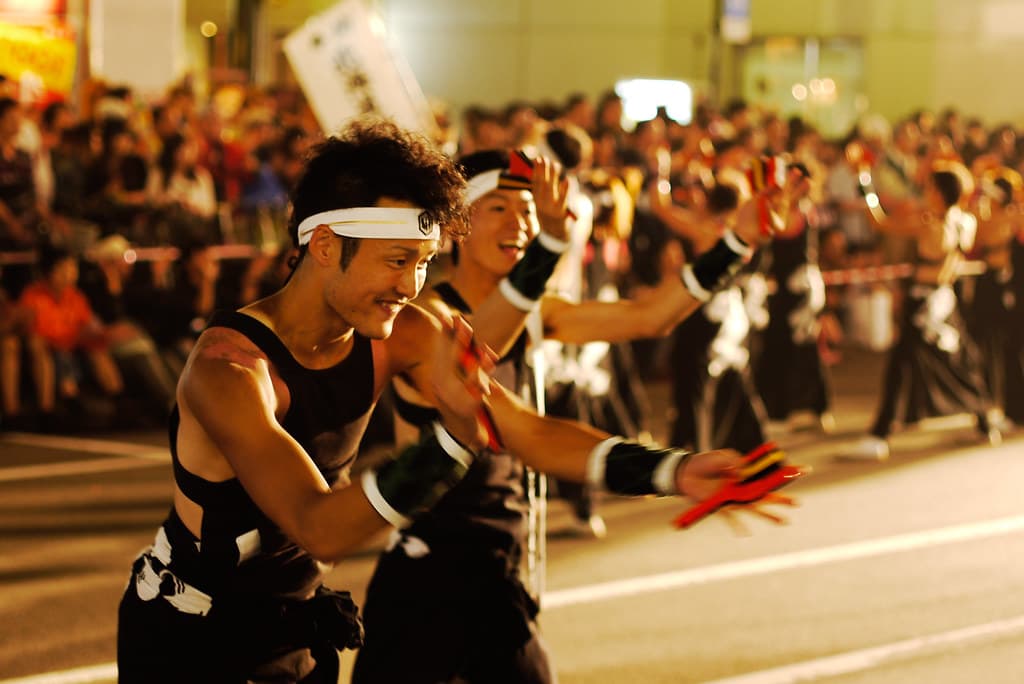
A dance team on the streets of Sapporo
Photo by Robert Thomson / flickr · CC BY-SA 2.0
Planning your trip
Getting there
New Chitose Airport, south of Sapporo, has flights from across Japan and Asia, and the rapid train to Sapporo station takes about 40 minutes. You can also reach Sapporo by shinkansen and limited express trains from Tokyo. Odori Park is in the city centre, reached by subway.
Where to stay
Central Sapporo, around Odori Park, Susukino and the main station, is the most convenient. Hotels fill during festival week, which can overlap with the Hokkaido Shrine Festival in mid-June, so book early.
What it costs
Watching the street performances is free, and paid seats are sold for the main stages. Sapporo is moderately priced by Japanese standards, with good food at every budget, especially seafood and Sapporo's famous ramen.
Go like you know
- Learn the "Soran Bushi" call, dokkoisho, and you'll hear it in every team's music.
- Try Sapporo's local specialities between performances: soup curry, miso ramen and Hokkaido seafood.
- Look for teams from other prefectures and countries; the festival draws dancers from far beyond Hokkaido.
- Sit near the end of a parade route, where teams often give their most energetic performances as they finish.
- Take the ropeway up Mount Moiwa for night views over Sapporo after the evening performances.
- Bring a small towel and a light jacket; you'll want the first in the afternoon sun and the second once the evening cools.
- The original is Kochi's Yosakoi Matsuri, in August, where it all began.
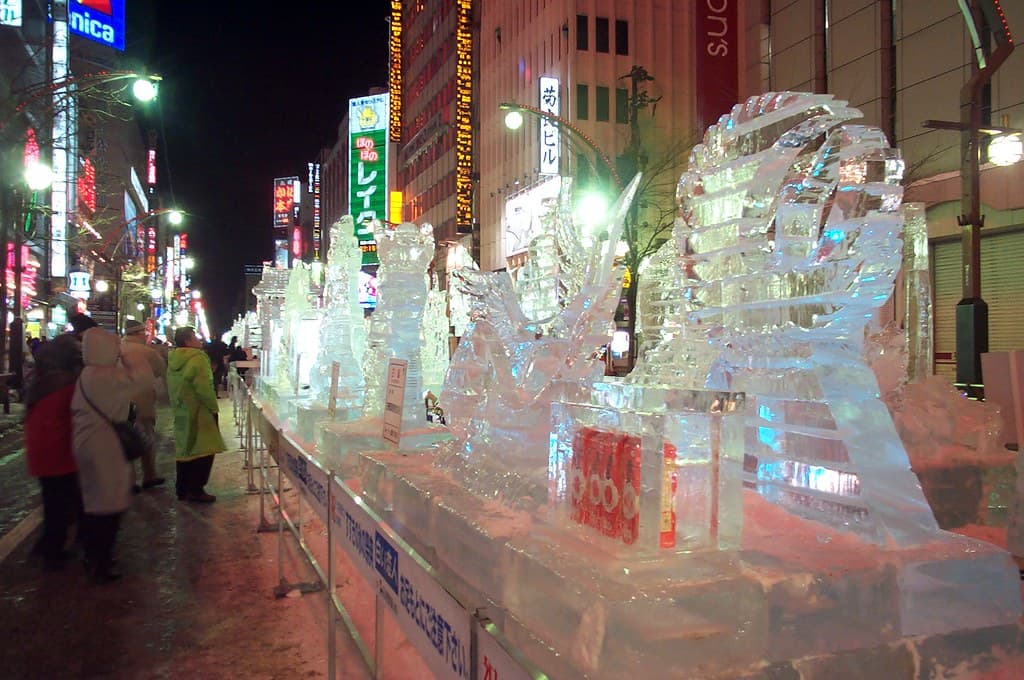
- In winter, Sapporo hosts the Sapporo Snow Festival, with its giant snow sculptures.
Frequently asked questions
When is the YOSAKOI Soran Festival?
For five days, Wednesday to Sunday, in early to mid June. In 2026 it ran from June 10 to 14, and Sapporo's official tourism site lists the 2027 festival for June 9 to 13. The finals take place on the Sunday night in Odori Park.
What are the rules for the dancers?
There are only two: each dancer must hold a naruko, the wooden clapper used in Kochi's Yosakoi, and each team's music must include a phrase of Soran Bushi, Hokkaido's fishermen's song. Everything else, from costumes to choreography and music, is the team's own creation.
Can visitors take part?
Some teams welcome participants from outside, and there are events where anyone can join in with simple steps and borrowed clappers. Joining a competing team usually means months of practice, but just watching from the street is free and gives you a front-row view.