What is the Thimphu Tshechu?
Bhutan, the Himalayan kingdom between India and China, has kept its Buddhist traditions alive more fully than almost anywhere else, and its festivals are among the most striking in Asia. The greatest of them is the Thimphu Tshechu, held every autumn in the capital, Thimphu, in the courtyard of the Tashichho Dzong, the great fortress-monastery that houses the government and the central monk body.
Tshechu means "tenth day", and the festivals are held around the tenth day of a month of the Bhutanese lunar calendar to honour Guru Rinpoche, also known as Padmasambhava, the teacher who brought Buddhism to the Himalayas. The Thimphu Tshechu has been celebrated since the late seventeenth century, and for three days it draws thousands of Bhutanese, many dressed in their finest gho and kira, the national dress, along with visitors from around the world.
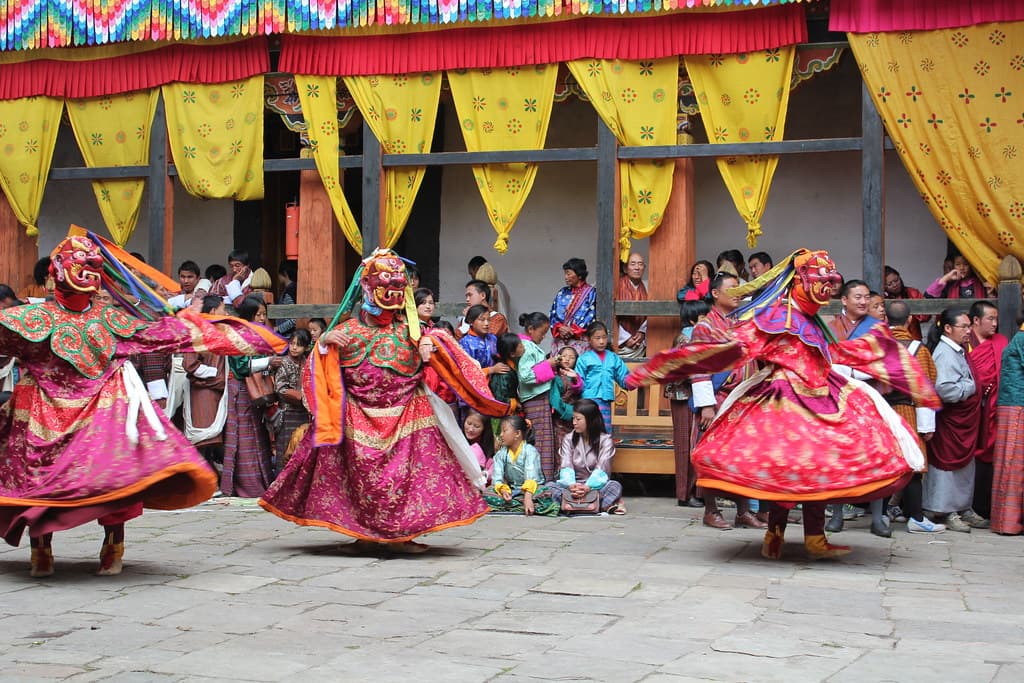
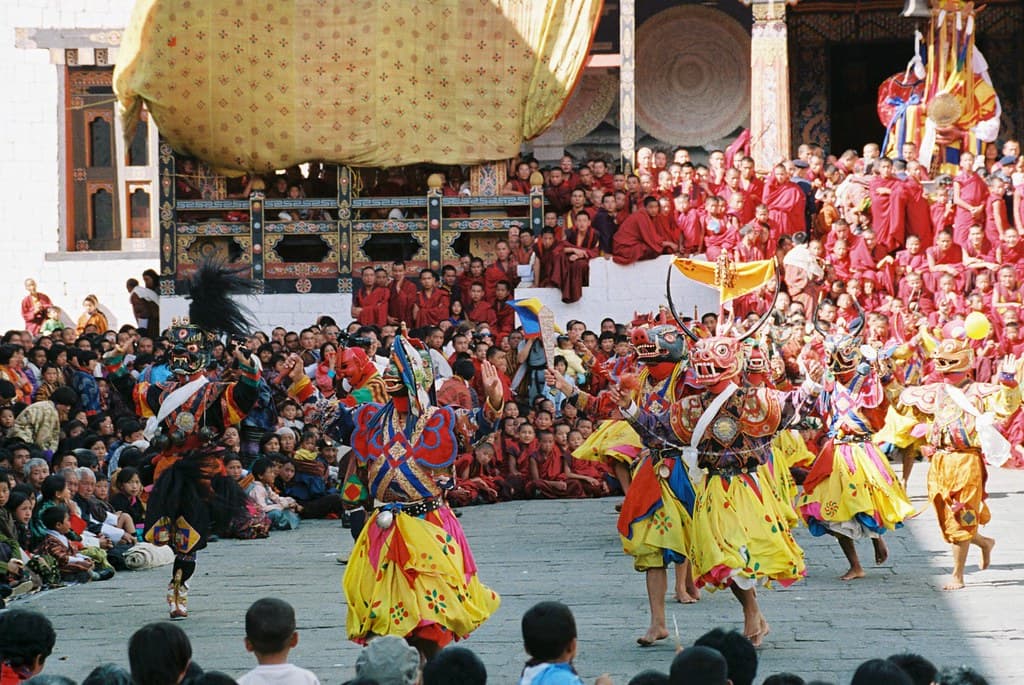
The heart of the festival is the cham, sacred mask dances performed by monks and laymen in elaborate silk costumes and carved, painted masks of deities, animals and demons. Each dance tells a story or teaches a lesson: the Dance of the Four Stags, the Stag and the Hound, the Black Hat dance with drums. Watching them is believed to bring blessings and cleanse the mind. Between the dances, the atsaras, jesters in red masks, wander through the crowd, joking and teasing the audience.
On the last morning, before dawn, a giant thongdrel, a huge appliqué banner of Guru Rinpoche, is unfurled on the walls of the dzong. Seeing it is said to free the viewer from sin, and crowds gather in the early hours to receive its blessing.
What to expect
The festival lasts three days, on the ninth to eleventh days of the eighth Bhutanese month, usually in September or October.
Day one
The mask dances begin
The festival opens in the courtyard of the Tashichho Dzong, with mask dances performed by monks and laymen from morning to afternoon.
Day two
Dances and jesters
More dances follow, with the atsaras entertaining the crowd between them, and families picnicking around the courtyard.
Day three
The thongdrel
Before dawn, the giant thongdrel is unfurled on the walls of the dzong, followed by a final day of dances and blessings.
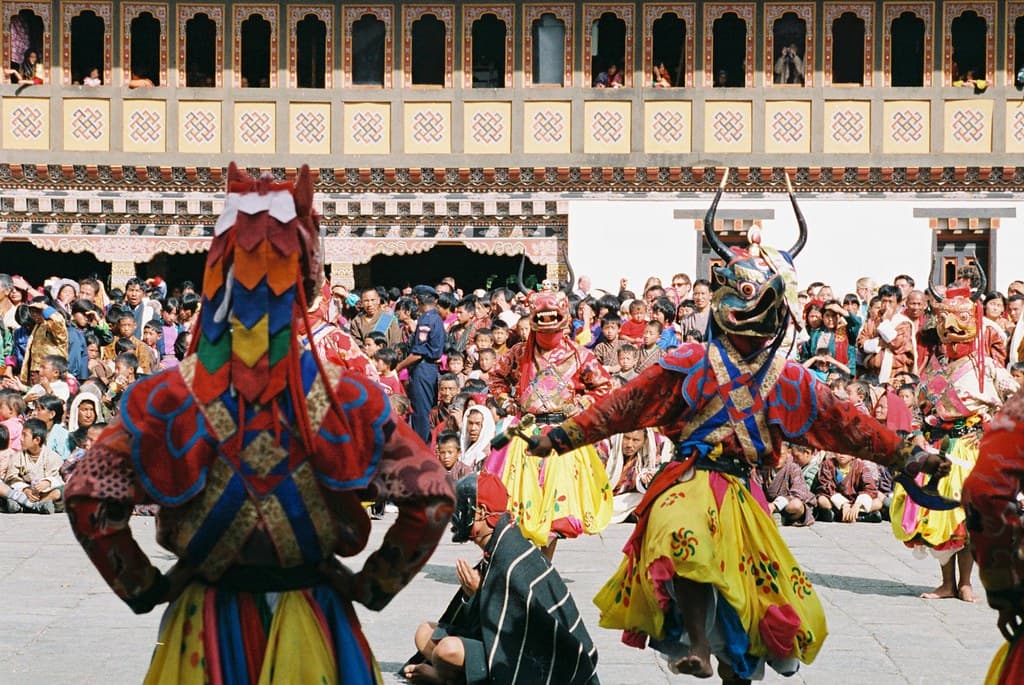
Mask dancers at the Thimphu Tshechu
Photo by Anja Disseldorp / flickr · CC BY 2.0
Planning your trip
Getting there
Paro International Airport, Bhutan's only international airport, is about 54 kilometres from Thimphu by road, with flights from cities including Delhi, Kathmandu and Bangkok. Most international visitors travel with a licensed guide, who arranges transport within Bhutan.
Where to stay
Thimphu has hotels in every category, from simple guesthouses to luxury lodges, but they fill up for the Tshechu, so book well ahead through your tour operator.
What it costs
Entry to the festival is free, but travel to Bhutan is expensive. Most visitors pay the Sustainable Development Fee, which has been USD 100 per person per night since 2023, on top of the cost of accommodation, guides and transport, often booked as a package.
Go like you know
- Wear Bhutanese dress if you can; many visitors rent or buy a gho or kira for the festival.
- Bring a cushion or mat to sit on; the courtyard has limited seating.
- Arrive early each morning to find a good spot around the courtyard.
- Watch the atsaras, the jesters; their jokes and antics are part of the blessing and a favourite with Bhutanese families.
- Bring a warm layer; autumn mornings in Thimphu are cool.
- Ask your guide to explain the story behind each dance; it makes the performances far more meaningful.
- Visit the Memorial Chorten and the Buddha Dordenma statue in Thimphu.
- Bhutan's Paro Tshechu, in spring, is the country's other great mask-dance festival.
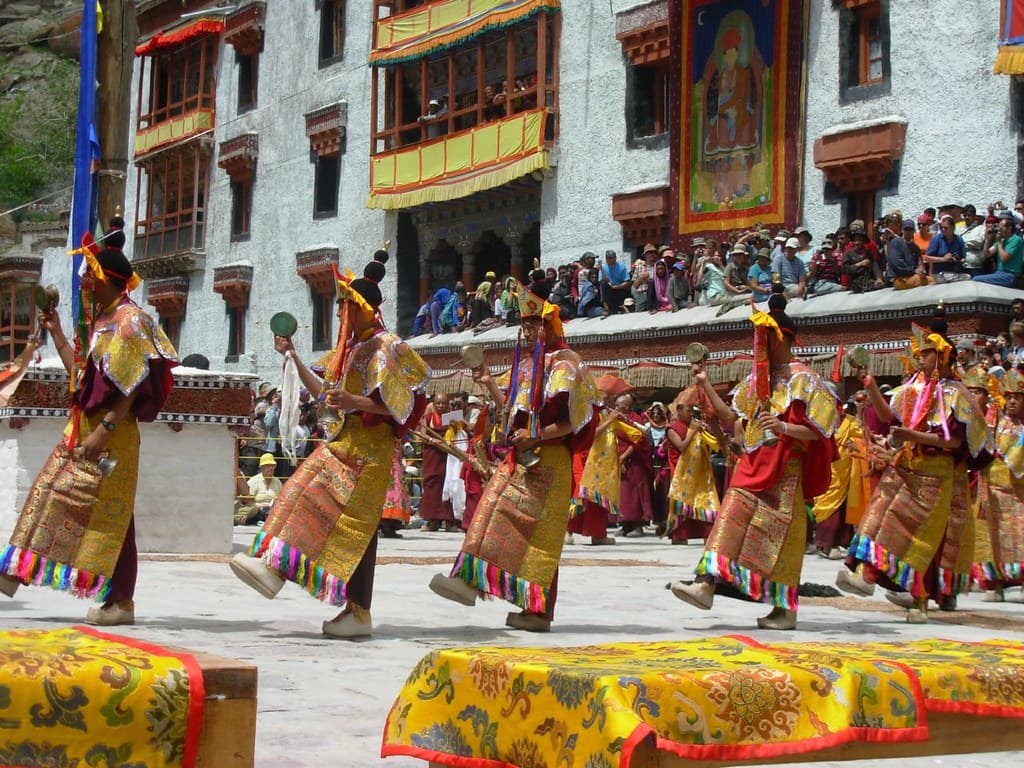
- Ladakh's Hemis Festival, in summer, is another Himalayan festival honouring Guru Rinpoche.
Frequently asked questions
When is the Thimphu Tshechu in 2027?
According to Bhutan's tentative festival calendar, the 2027 Thimphu Tshechu will be held from October 10 to 12, 2027, with the Thimphu Drubchen, a ritual held before the festival, a few days earlier. The dates follow the Bhutanese lunar calendar, so they change every year. Confirm with your tour operator before booking.
Do I need a guide to visit Bhutan?
Bhutan's rules for visitors have changed over the years, and most international visitors travel with a licensed guide and an organized itinerary. Visitors must pay the Sustainable Development Fee and obtain a visa through the official system. Check the current rules before planning your trip.
Can tourists watch the mask dances?
Yes. The festival is open to everyone, and visitors are welcome to watch the dances in the courtyard of the Tashichho Dzong. Dress modestly, stay off the dance ground, and be respectful; the dances are sacred rituals, not performances staged for tourists.