What is the Hemis Festival?
Ladakh, high in India's far north, is a land of Tibetan Buddhist monasteries perched on rock above wide, bare valleys. The largest of them is Hemis, a monastery of the Drukpa lineage tucked into a side valley of the Indus, about 45 kilometres from Leh. Each summer its courtyard hosts the Hemis Tsechu, the region's best-known festival, two days of sacred masked dances watched by Ladakhis from across the region and by travellers from around the world.
The festival honours Padmasambhava, known as Guru Rinpoche, the 8th-century teacher credited with bringing Tantric Buddhism to the Himalaya. It is held on the 10th day of the fifth month of the Tibetan calendar, the day of his birth according to tradition, which falls in June or July. The monastery itself was re-founded in 1672 under the Ladakhi king Sengge Namgyal, though a religious site existed here long before.
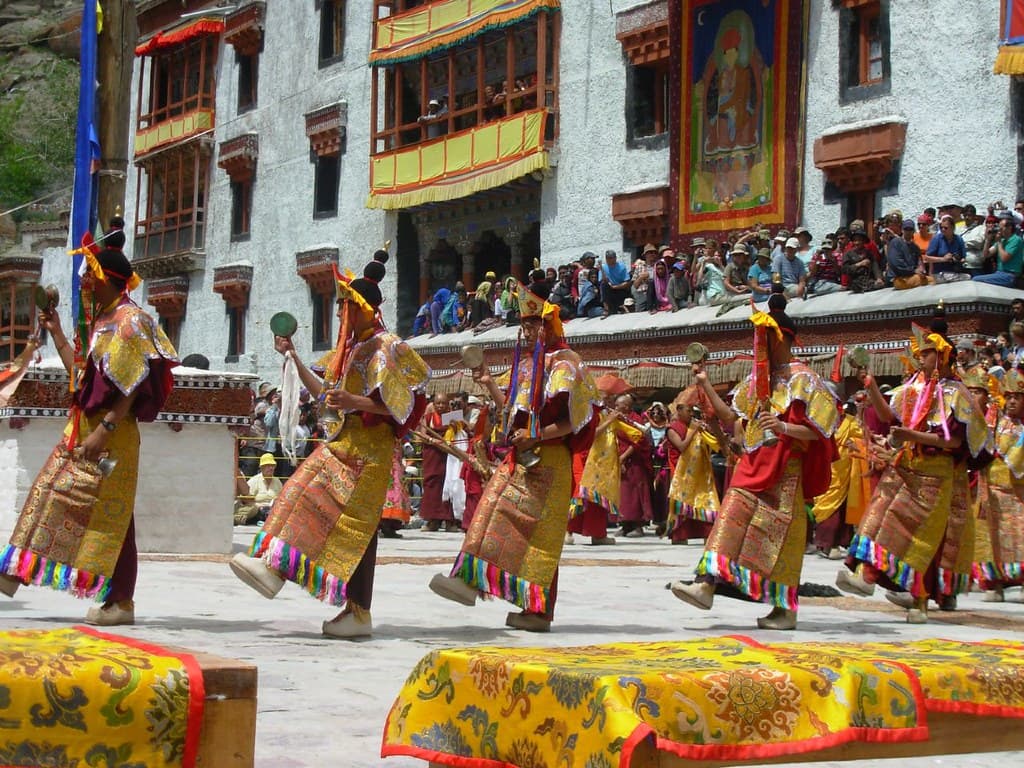
At the heart of the festival are the cham, ritual dances performed by monks in brilliant silk robes and large painted masks of deities, protectors and demons. Accompanied by long horns, cymbals and drums, they enact the victory of good over evil and the teachings of the Guru, and for the devout, watching them brings blessings.
What to expect
The festival takes place in the monastery's rectangular courtyard, surrounded by galleries and steps where the crowd sits, with the main temple's door at one end.
Morning
Opening rites
The day begins at dawn with rituals on the roof of the monastery, and a large sacred image is displayed. By mid-morning the courtyard and galleries are full of Ladakhi families in their finest dress, monks and visitors.
Day 1
The masked dances
Through the day, groups of masked dancers emerge from the temple to the sound of horns and cymbals, turning slowly in the courtyard in dances that can last an hour or more. Some are solemn, others playful, with comic figures who tease the crowd.
Day 2
The second day
The dances continue on the second day, which is usually a little quieter. Around the monastery, stalls sell food, crafts and trinkets, and the mood is that of a country fair.
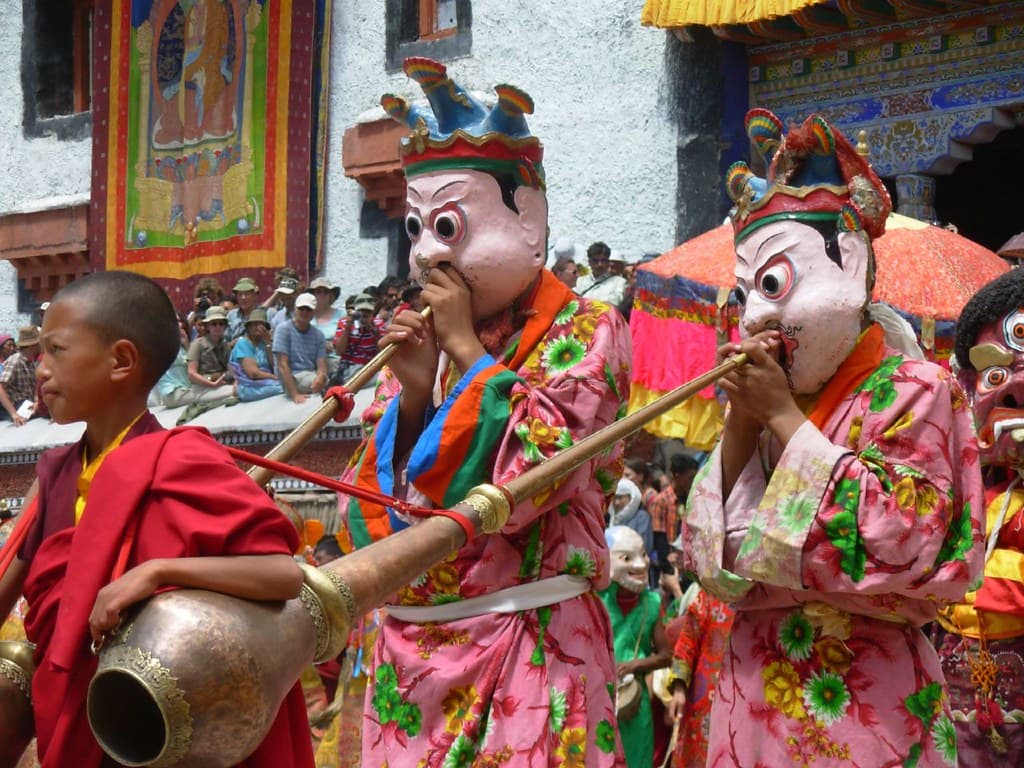
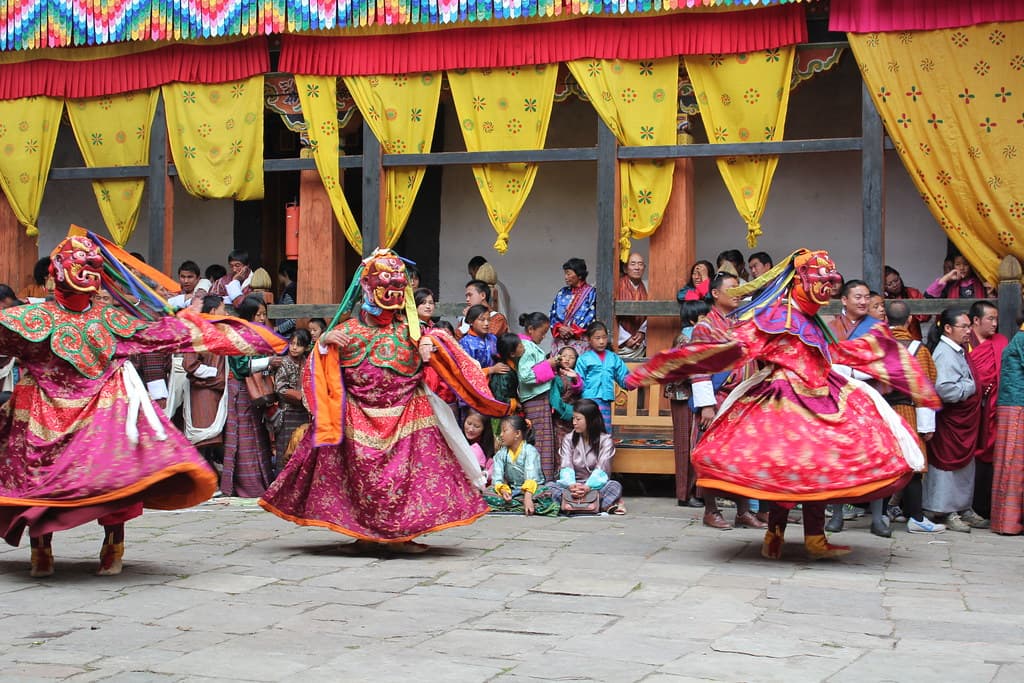
Masked figures with horns in the Hemis courtyard
Photo by madpai / flickr · CC BY 2.0
Planning your trip
Getting there
Leh has an airport with flights from Delhi and other Indian cities, one of the most spectacular flights in the world. Hemis is about an hour and a half from Leh by taxi; shared jeeps run on festival days. The roads from Manali and Srinagar open in summer for those coming overland.
Where to stay
Most visitors stay in Leh, which has guesthouses and hotels at every price and makes an easy base for day trips to the monasteries. A few guesthouses and homestays near Hemis offer a quieter stay. Book ahead for festival week, which falls in Ladakh's busy summer season.
What it costs
The festival is free, though the monastery charges a small fee for its museum. Leh's guesthouses are affordable, but flights to Leh rise in price during the summer season. A taxi to Hemis for the day is the other main cost, cheaper if shared.
Go like you know
- Dress modestly and walk clockwise around stupas and prayer wheels, as Ladakhis do.
- Ask before photographing people, and don't use flash or stand in front of the dancers.
- Stay a few days in Ladakh: Thiksey, Shey and other monasteries are near the road to Hemis, and each has its own festival calendar.
- Bring a warm layer even in summer; mornings and evenings in the Indus valley are cool once the sun drops behind the mountains.
- Bhutan's Paro Tshechu is the other great festival of masked dances in the Himalaya, in spring.
- Kathmandu's Indra Jatra brings masked dances to the streets in September.
Frequently asked questions
When is the Hemis Festival?
On the 10th and 11th days of the fifth month of the Tibetan calendar, usually in June or early July. In 2026 it fell on June 24 and 25. The dates move each year with the lunar calendar, so check with Ladakh's tourism office before booking flights.
Do I need a permit to visit Hemis?
Hemis is in the main part of Ladakh, open to visitors without the special permits needed for some border areas. Rules can change, so check current requirements before you travel, especially if you plan to visit areas such as the Nubra Valley or Pangong Lake on the same trip.
Is the giant thangka shown every year?
No. By the monastery's tradition, its great thangka, a huge embroidered image of Guru Rinpoche, is unveiled only once every twelve years, in the Tibetan year of the Monkey. In other years the festival still has its full programme of masked dances, and smaller sacred images are displayed.