What is Tapati Rapa Nui?
Rapa Nui, also known as Easter Island, is one of the most remote inhabited places on Earth, a small volcanic island in the Pacific about 3,700 kilometres off the coast of Chile. Famous for its moai, the giant stone statues, it is also home to a living Polynesian culture. Every year in late January and February, the island celebrates Tapati Rapa Nui, a festival of about two weeks in which the Rapa Nui people show off their traditions in sport, music, dance and art.
The festival has been held since the late 1960s or the 1970s; sources give different years. At its heart is a contest between two clans, each supporting a candidate for queen. Over the festival, members of each clan compete in dozens of events, from traditional sports to singing, dancing, crafts and body painting, earning points for their candidate. At the end, the candidate with the most points is crowned queen of the Tapati.
The events are spectacular. In the Haka Pei, young men slide down the steep slope of Cerro Pu'i on banana tree trunks, reaching speeds of up to 80 kilometres per hour. In the Tau'a Rapa Nui, a triathlon in the crater of Rano Raraku, near the moai quarry, competitors paddle reed canoes, swim on reed floats and run around the lake carrying bunches of bananas. Other events include takona, traditional body painting with natural pigments, the riu, ancestral chants, and the Koro Haka Opo, a choral contest.
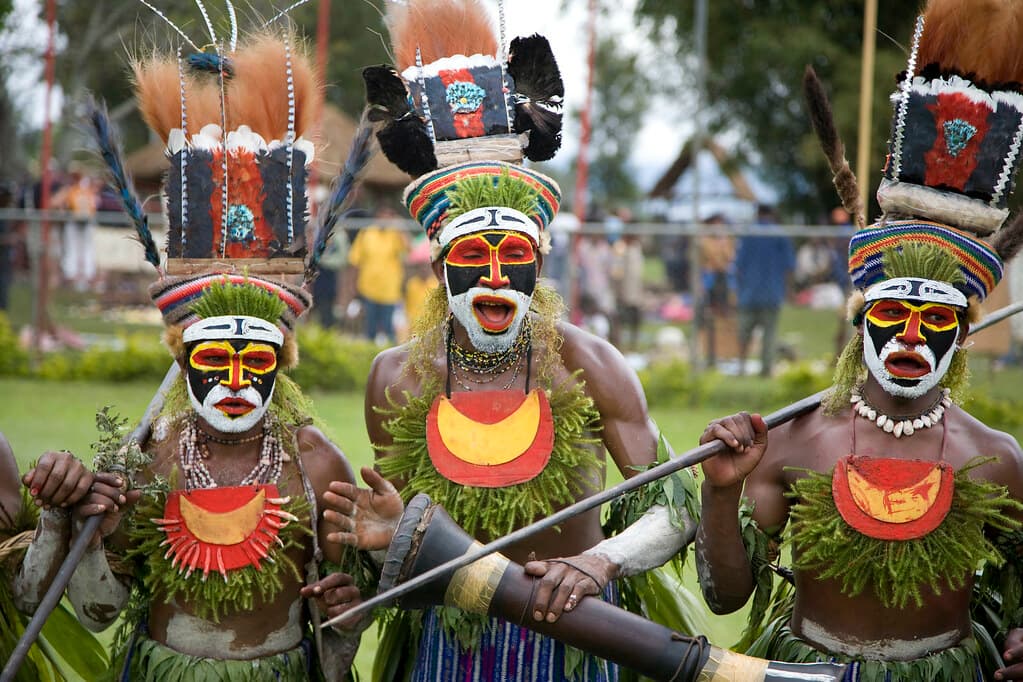
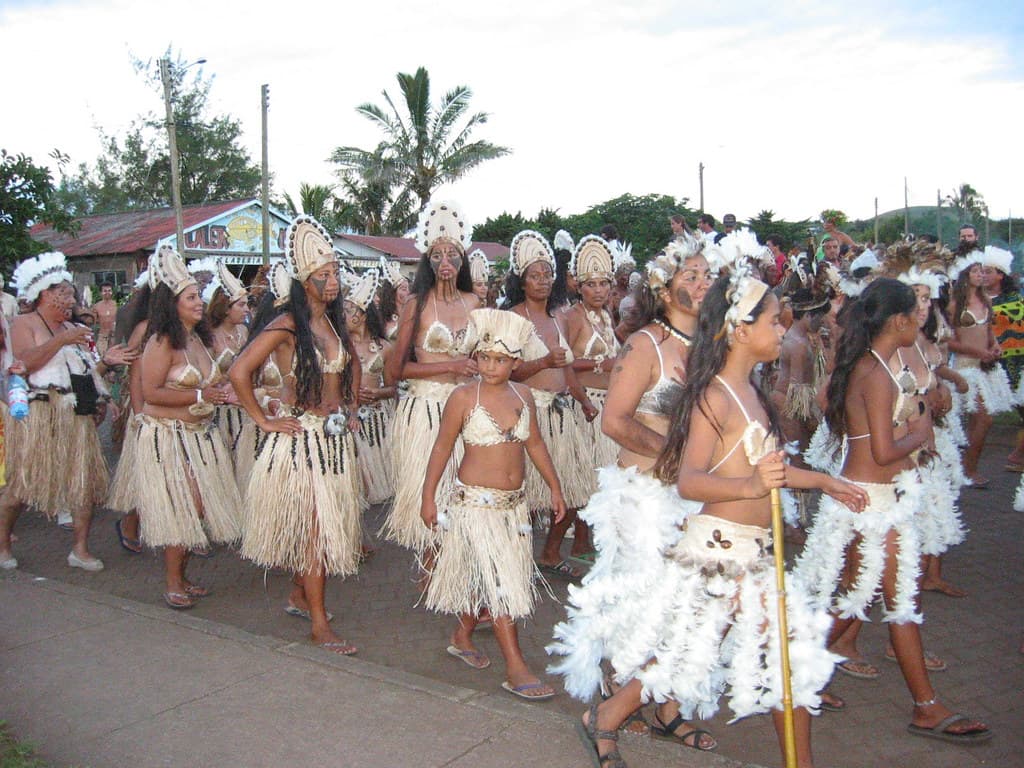
The festival is a celebration of identity for the Rapa Nui people, and visitors are welcome to watch and join in the parades, often painted and dressed in feathers and plant fibres.
What to expect
The festival runs for about two weeks in late January and February, with more than 40 events.
Opening
The clans and candidates
The festival opens with the presentation of the queen candidates and their clans, with music and dance.
During the festival
Competitions
Events run day and night, from the Haka Pei and the triathlon at Rano Raraku to chants, dance and crafts, with evening shows on a main stage in Hanga Roa.
The last days
Parade and coronation
A parade of floats and dancers fills the streets, and the festival ends with the coronation of the queen at Ahu Tahai.
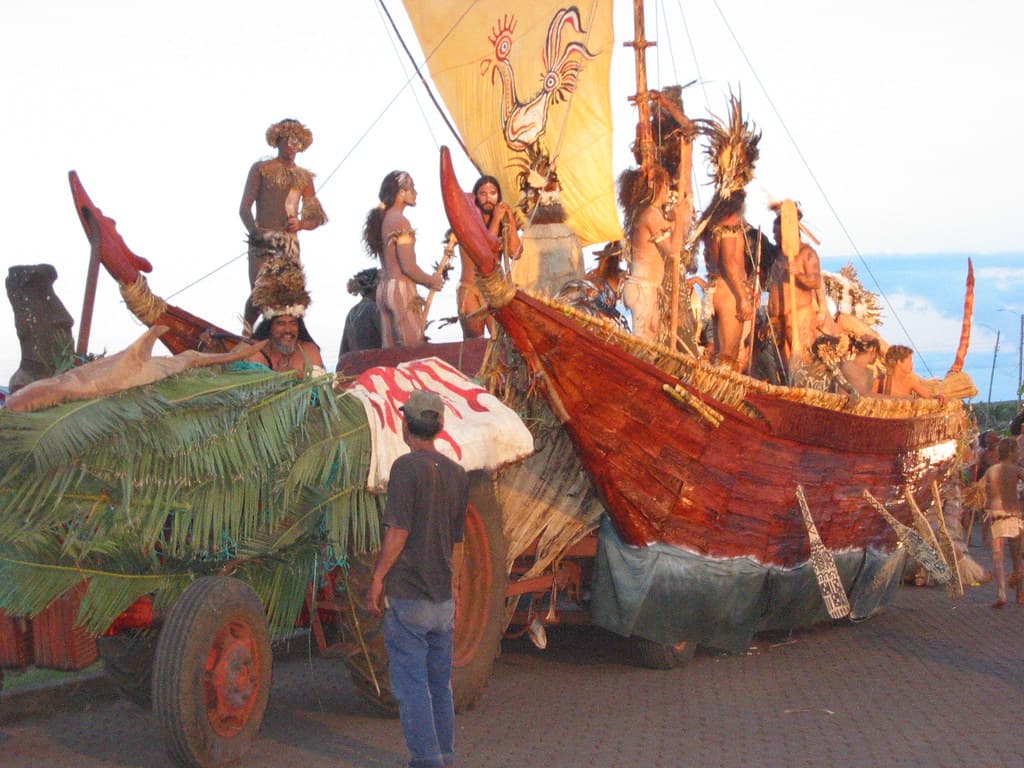
A float in the Tapati parade
Photo by Robert Nyman / flickr · CC BY 2.0
Planning your trip
Getting there
Rapa Nui is reached by flights from Santiago, operated by LATAM, to Mataveri Airport, next to Hanga Roa, the island's only town. Flights and accommodation fill up months before the festival, so book early.
Where to stay
Hanga Roa has guesthouses, cabins and hotels, which fill up for the Tapati. Visitors must have registered accommodation and fill in an entry form before travelling, and stays are limited to 30 days.
What it costs
Festival events are free, but Rapa Nui is expensive to reach and to stay on. Foreign visitors must also buy a ticket for Rapa Nui National Park, USD 100 for adults since October 2025, valid for ten days, to visit the moai sites.
Go like you know
- Get painted; visitors can join the takona body painting and the parade.
- Bring cash; card payments and ATMs on the island can be unreliable during the busy festival weeks.
- Learn a few words of Rapa Nui, such as iorana, hello, and maururu, thank you.
- Book a local guide for the national park; they bring the moai and the island's history to life.
- Visit the moai quarry at Rano Raraku and the fifteen moai of Ahu Tongariki at sunrise.
- Try umu, food cooked in an earth oven, often served during the festival.
- Chile's Fiestas Patrias, in September, is the country's great national celebration.
- Papua New Guinea's Goroka Show, in September, is another great gathering of Pacific cultures.
Frequently asked questions
When is Tapati Rapa Nui in 2027?
The festival is usually held in the first two weeks of February. The 2026 edition ran from February 3 to 14, and the 2027 edition is expected from about January 30 to February 12. Check the official programme before booking, as dates are set each year.
Can visitors take part?
Visitors are welcome to watch all the events, and many join the parade and the body painting. The competitions themselves are for members of the two clans, and are an expression of Rapa Nui identity, so watch respectfully and follow the organizers' instructions.
Do I need a park ticket?
Yes, to visit the archaeological sites of Rapa Nui National Park, a UNESCO World Heritage Site, including the moai. Foreign adults pay USD 100 for a ticket valid for ten days. Festival events in Hanga Roa can be watched without a park ticket.