What is the Rapa das Bestas?
In the green hills of Galicia, in the north-west of Spain, herds of semi-wild horses roam the mountains all year round. They are owned by the villages and their families, but they live free. Once a year, in summer, the villagers bring them down to be checked, marked and groomed, and in the hamlet of Sabucedo this has become one of Spain's most extraordinary festivals: the Rapa das Bestas, "the shearing of the beasts".
Rapas take place in many Galician villages through the summer, but Sabucedo's, held on the first weekend of July, is the most famous. The tradition is said to date back to the 15th century. Early in the morning, villagers set off into the mountains to round up the herds, and in the afternoon they bring hundreds of horses down to the curro, a stone-walled arena at the edge of the village, watched by thousands of spectators in the stands above.
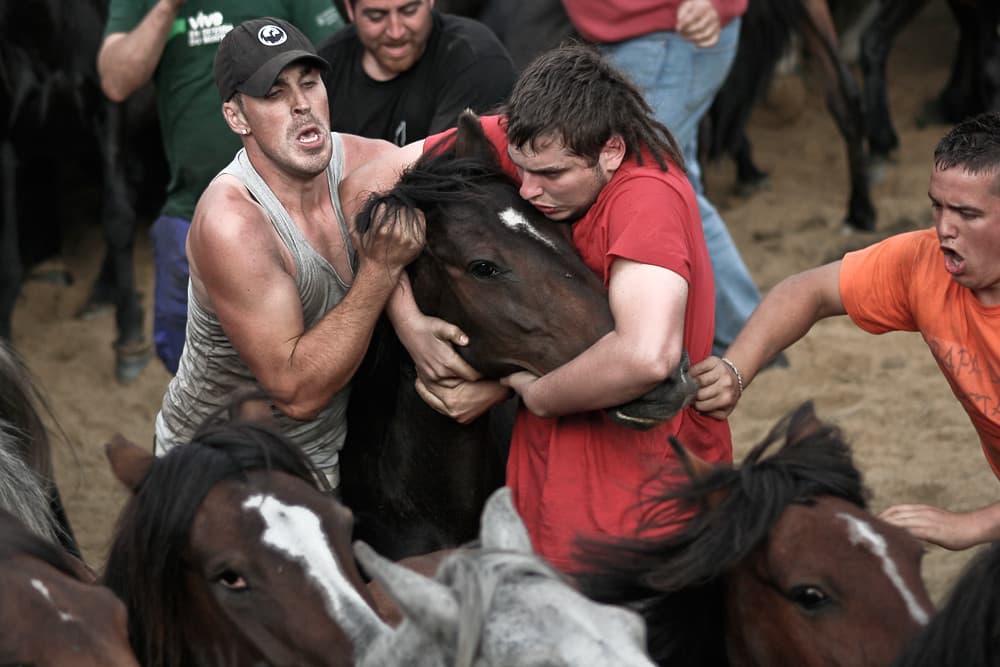
Then comes the moment the festival is known for. The aloitadores, young men and women from the village, enter the packed curro and, working in teams and with nothing but their bare hands, wrestle the horses one by one to a standstill. One grabs the head, another holds the body, a third leaps on the horse's back, and once the animal is still, its mane and tail are cut and it is checked and treated before being released. It is a raw, physical and noisy struggle, full of dust, sweat and courage, and over in seconds for each horse.
When all the horses have been shorn, they are released and return to the mountains for another year.
What to expect
The festival runs over a long weekend, from Friday to Monday, with the horses in the curro on several days.
Friday
Into the mountains
Before dawn, villagers head into the hills to round up the herds, and the horses are brought down to the village in a long procession, followed by spectators on foot.
Saturday and Sunday
The curro
The main rapas take place in the curro in the late morning and afternoon, with the aloitadores wrestling the horses before packed stands. Music, food and drink fill the village.
Monday
The release
After the last rapa, the horses are released and gallop back towards the mountains, and the village holds a final day of celebration.
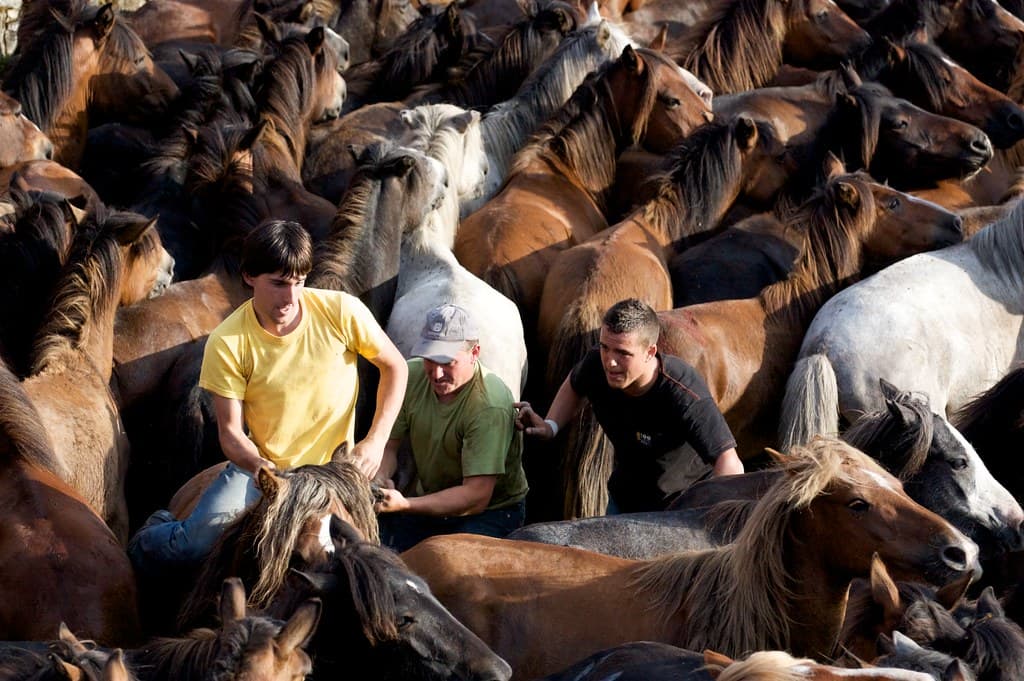
Horses in the curro of Sabucedo
Photo by 'bergaralphoto' Ramon Rodriguez Martinez / flickr · CC BY 2.0
Planning your trip
Getting there
Sabucedo is in the municipality of A Estrada, in the province of Pontevedra, about 40 kilometres south of Santiago de Compostela, which has the nearest airport and railway station. A car is the easiest way to get there; on festival days, roads into the village are busy and parking can be some distance away.
Where to stay
Sabucedo has almost no accommodation. Most visitors stay in Santiago de Compostela, Pontevedra or A Estrada, or in rural guesthouses in the surrounding countryside. Book early, as early July is also busy on the Camino de Santiago.
What it costs
Tickets for the curro are modestly priced, and the village celebrations are free. Galicia is good value, with excellent and affordable food. Rooms in Santiago de Compostela cost more in summer, when pilgrims and tourists fill the city.
Go like you know
- Try pulpo á feira, Galician-style octopus with paprika and olive oil, sold at stalls around the village.
- Buy tickets for the stands in advance; the curro is small and sells out.
- Combine the festival with a visit to Santiago de Compostela and its cathedral, a short drive away.
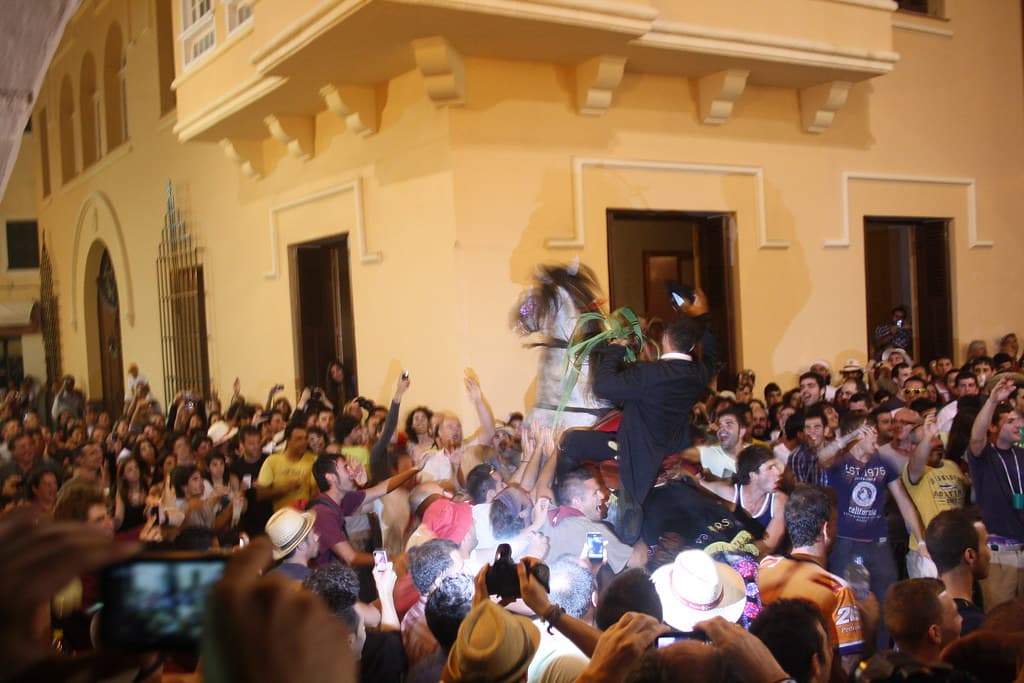
- For another festival on horseback in Spain, see Sant Joan in Ciutadella, in June.
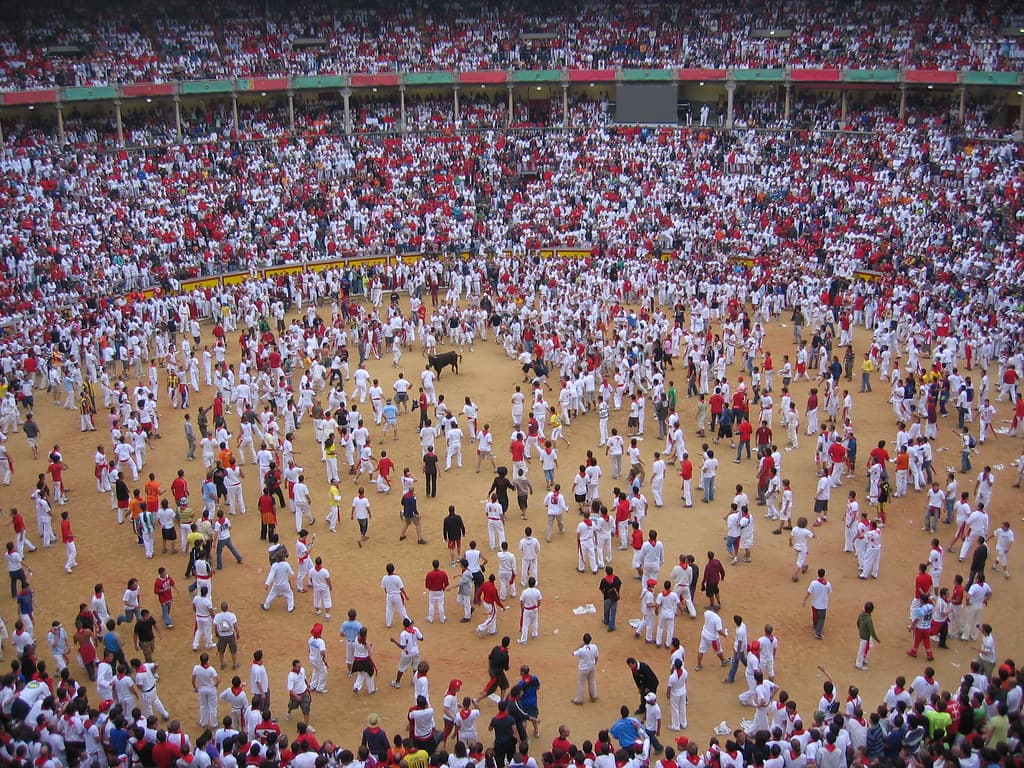
- Pamplona's San Fermín, a week later, is Spain's other great summer festival of animals and courage.
Frequently asked questions
When is the Rapa das Bestas in Sabucedo?
On the first weekend of July, usually from Friday to Monday. In 2027 it is expected from July 2 to 5, following the usual pattern. The organizing association publishes the programme and ticket details each spring, so check before booking.
Are the horses harmed?
The purpose of the rapa is to check, groom and treat the horses: manes are cut, and the animals are marked and given veterinary care before being released. The wrestling is rough, though, and animal welfare has been debated. In recent years the organizers have introduced rules to protect the horses.
Can visitors take part?
No. The aloitadores are villagers and experienced participants who have trained for years, and the curro is dangerous for the untrained. Visitors watch from the stands around the arena, which offer a close and dramatic view of the action.