What is the Fiesta de los Patios de Córdoba?
Behind the plain white walls of Córdoba's old houses are hidden courtyards: shaded, cool, and filled with plants. They are an ancient answer to the heat of southern Spain. The Romans built houses around open courtyards, and after the Muslim conquest of 711, when Córdoba became one of the greatest cities in Europe, houses kept their decoration inside, around the patio, away from the street.
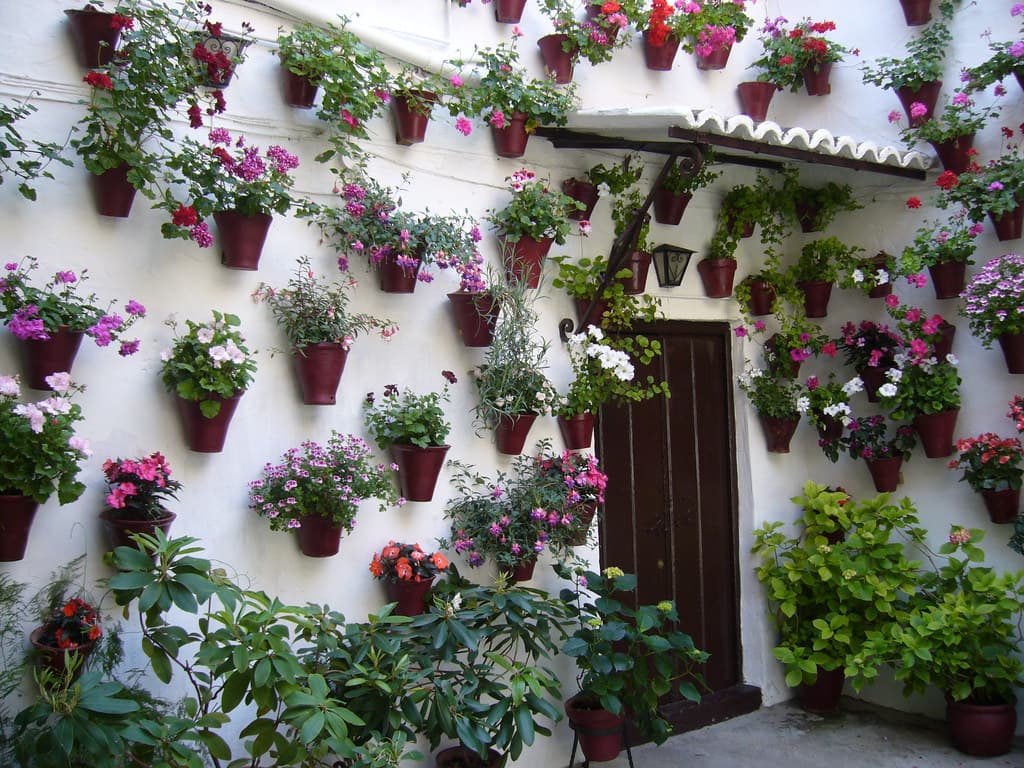
Over the centuries, the people of Córdoba made their patios into gardens, covering the walls with hundreds of potted plants, with a well or fountain at the centre and orange or lemon trees for shade. Many patios were shared by several families, and caring for the plants became a part of daily life, with the pots high on the walls watered by hand using a can on the end of a long cane.
In 1921, the city held its first competition for the best patios, balconies and windows. After a slow start, a break for the Civil War and a revival in the 1940s, the Fiesta de los Patios grew into one of Spain's best-loved festivals. For two weeks every May, residents open their courtyards to the public, free of charge, and compete for prizes in two categories, one for old architecture and one for modern or renovated houses. In 2012, UNESCO listed the festival as part of the intangible cultural heritage of humanity.
May is the month of flowers in Córdoba. The festival follows the Cruces de Mayo, when the city's squares are decorated with crosses of flowers, and comes before the city's great fair at the end of the month. In the 2018 edition, around 150,000 visitors walked through the patios.
What to expect
The patios are open every day of the festival, in two sessions: late morning and evening, with a break for the heat of the afternoon.
Mornings
The quieter hours
The patios open in the late morning, when the light is soft and the queues are shorter. Start with the patios in the San Basilio district, near the Alcázar, which are among the most famous.
Afternoons
The siesta break
The patios close in the early afternoon, when the heat peaks. Have a long lunch, rest, or visit the Mosque-Cathedral and the monumental palaces with patios of their own.
Evenings
The busiest hours
The patios reopen in the evening, when the air cools and the city comes out. Expect queues at the most famous houses, and flamenco or guitar music in some of the patios and squares.
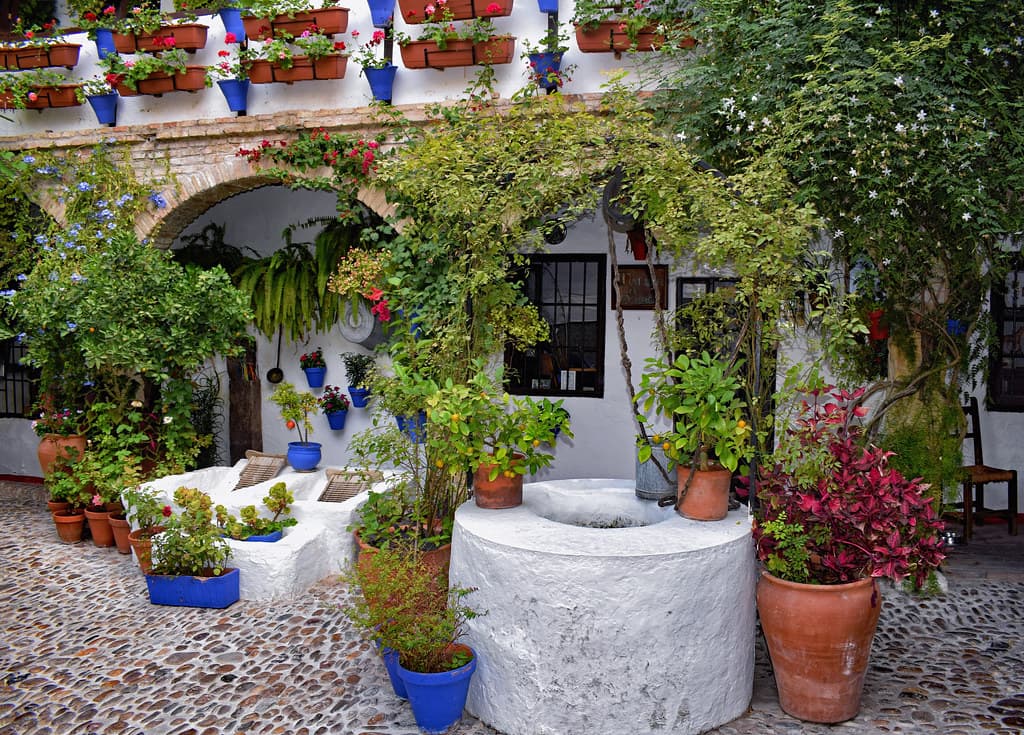
A courtyard in Córdoba in bloom
Photo by Jocelyn777 Love Europe / flickr · CC BY-SA 2.0
Planning your trip
Getting there
Córdoba is on Spain's high-speed rail line, under two hours from Madrid and under an hour from Seville and Málaga, the nearest major airports. The station is a short taxi ride or a 20-minute walk from the old town, and the patios are best explored on foot.
Where to stay
The old town, around the Mosque-Cathedral and the Jewish Quarter, is the most atmospheric base, with small hotels in converted houses, some with patios of their own. Rooms fill in May, the busiest month of the year, especially at weekends, so book ahead.
What it costs
Entry to the patios in the competition is free; the owners often keep a donation box or sell a few plants. Córdoba is an affordable city, with inexpensive tapas and drinks, though hotel prices rise in May.
Go like you know
- Leave a small donation or buy something from the hosts; keeping a patio in bloom takes months of work, and water.
- Try salmorejo, the cold, thick tomato soup of Córdoba, and flamenquín, a fried roll of ham and pork.
- Visit the Palacio de Viana, a palace with a dozen patios, open all year.
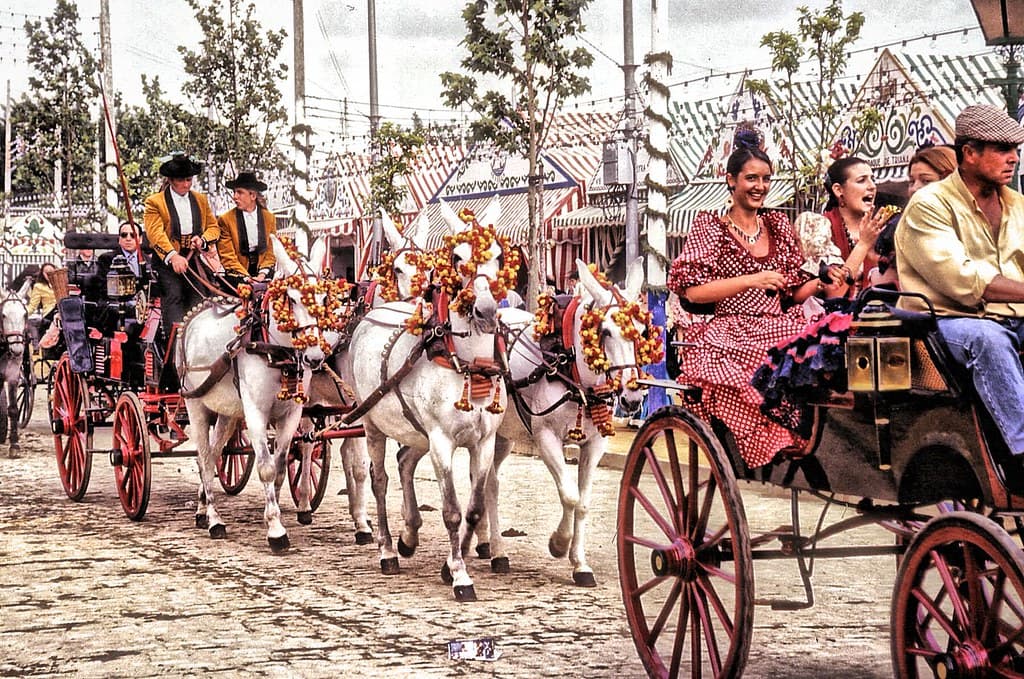
- Seville's Feria de Abril is Andalusia's great spring fair, a short train ride away.
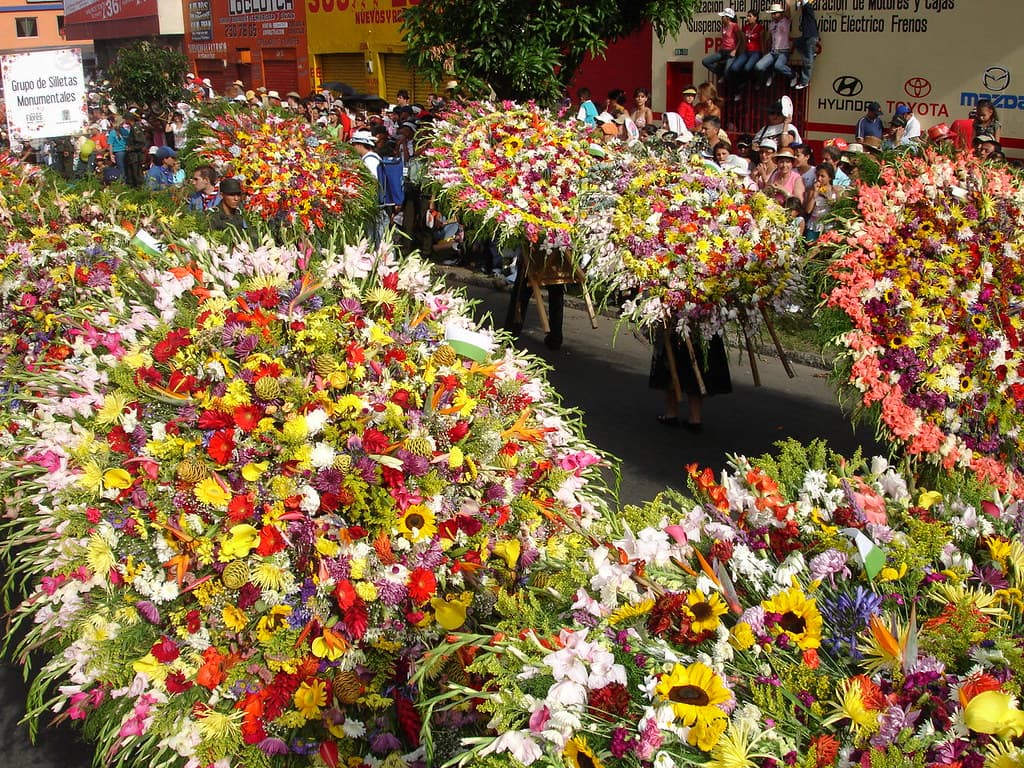
- Medellín's Feria de las Flores, in August, is another great festival built around flowers.
Frequently asked questions
When is the Fiesta de los Patios?
For about two weeks in the first half of May. In 2026 it ran from May 4 to 17. The 2027 dates are expected to follow the same pattern, around May 3 to 16, but check the city's official patios website, which also publishes the map and opening times.
Do I need tickets?
No. The patios in the competition are free and need no booking; you simply join the queue at the door. Some private tours offer guided visits, and some monumental patios outside the competition charge entry, but you can see the festival without spending anything.
Can I see the patios outside the festival?
Some, yes. A few patios in San Basilio open to visitors through the year, and the Palacio de Viana's patios are always open. But May is when the plants are at their best and the whole city takes part, and most patios are private homes that open only for the festival.