What is Meskel?
Meskel means "cross" in Amharic, and the festival celebrates the finding of the True Cross, on which Christ was crucified, by the Empress Helena, mother of the Roman emperor Constantine, in the 4th century. It is one of the most important feasts of the Ethiopian Orthodox Tewahedo Church, and in 2013 UNESCO added it to its list of the intangible cultural heritage of humanity.
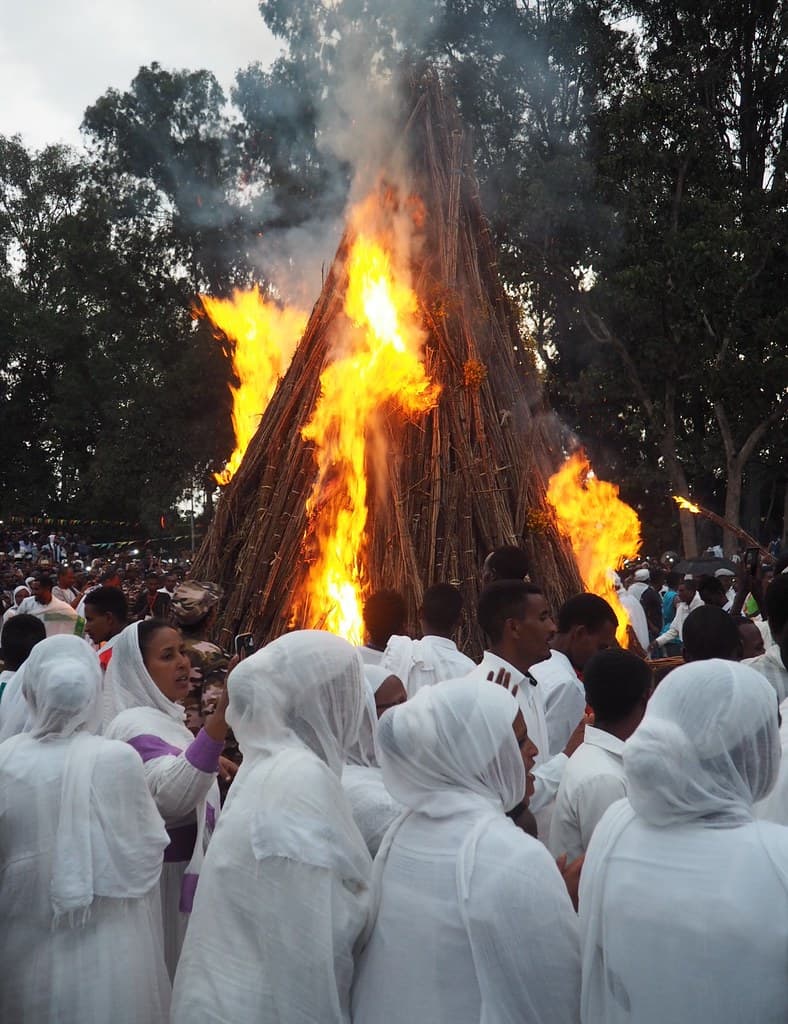
According to the legend, Helena, known in Ethiopia as Queen Eleni, searched for the cross in Jerusalem and was told in a dream to light a fire and follow its smoke. Where the smoke came down, she dug and found the cross. The heart of Meskel recalls that story: on the eve of the feast, Ethiopians gather around the demera, a tall pyramid of wooden poles topped with a cross and decorated with yellow Meskel daisies, which bloom across the highlands at this time of year, and set it alight.
The festival falls at the end of the long rainy season, when the countryside turns green and gold, and it carries the joy of a new beginning. In cities, towns and villages across Ethiopia, every parish builds its own demera, and many people travel home to their families for the holiday. As the fire burns, people watch where the smoke drifts and which way the pyre falls, and some take charcoal from the ashes to mark a cross on their foreheads.
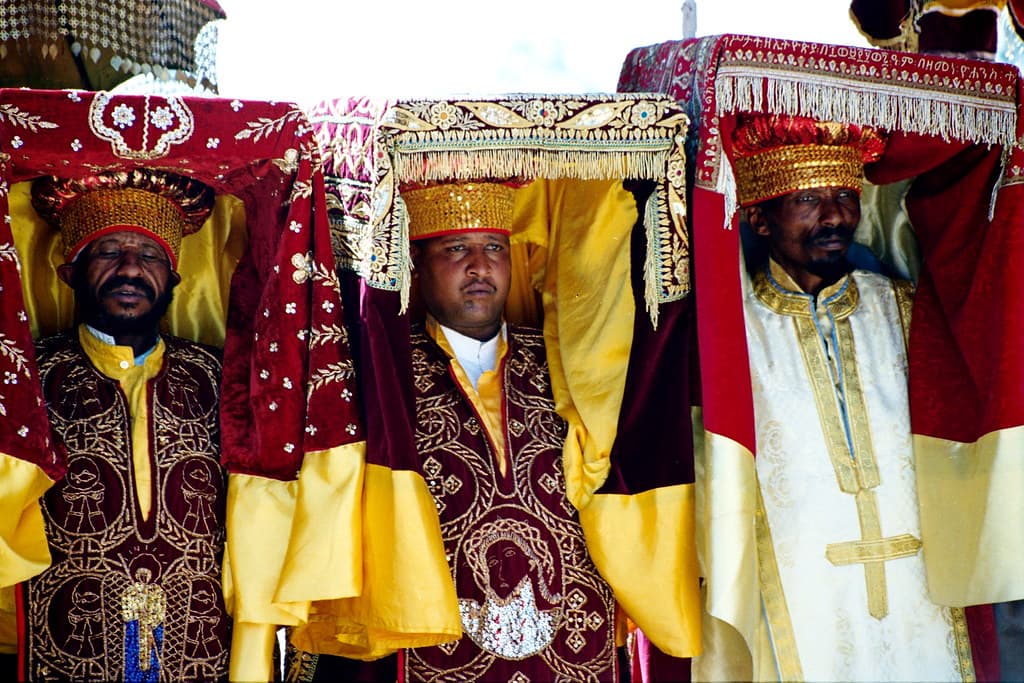
The largest celebration is in Addis Ababa's Meskel Square, a vast open space in the heart of the capital, named after the festival. On the afternoon of the eve, priests in embroidered robes, deacons, choirs of young people dressed in white, and brass bands process into the square, where tens of thousands gather around a giant demera. Church leaders and officials preside, and at nightfall the demera is lit with torches.
What to expect
The main celebrations take place on the eve of Meskel, with church services and family gatherings on the feast day itself.
Eve, afternoon
The procession
In Meskel Square, priests, deacons, choirs and bands arrive in procession, carrying crosses, torches and Meskel daisies, and circle the great demera while the crowd sings and claps.
Eve, nightfall
Lighting the demera
As darkness falls, the demera is set alight, and the fire roars up into the night as the crowd cheers. Smaller demeras burn in neighbourhoods and villages, with singing and dancing around them.
Meskel day
The feast
On the day itself, people go to church, visit the ashes of the demera, and gather with family and friends for a feast of injera, stews and tella, home-brewed beer, often with a slaughtered sheep or goat.
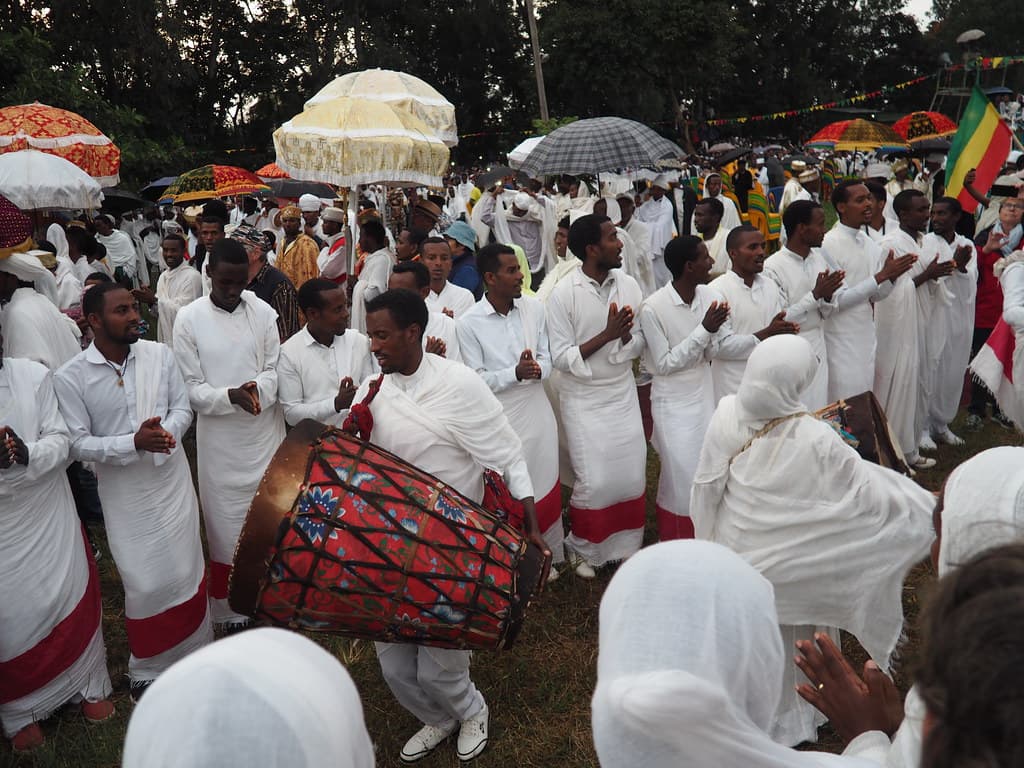
Drumming at the Meskel celebrations in Bahir Dar
Photo by scotted400 / flickr · CC BY 2.0
Planning your trip
Getting there
Addis Ababa's Bole International Airport is the hub of Ethiopian Airlines, with direct flights from across Africa, Europe, the Middle East and Asia. Meskel Square is in the centre of the city, near the light rail line, and a short taxi ride from most hotels.
Where to stay
Addis Ababa has hotels at every level, from international chains to simple guesthouses, many around Bole Road and the city centre. For the festival, a hotel within reach of Meskel Square makes the evening easier, as roads around it close and traffic is heavy.
What it costs
The celebrations are free. Ethiopia is good value for food and transport, and hotels in Addis Ababa range from cheap guesthouses to expensive international hotels, which fill around the festival. Flights are the main cost of the trip, so compare fares early.
Go like you know
- Wear white, like most of the crowd, and a netela, the light cotton shawl, if you have one.
- Try injera with doro wat, the spicy chicken stew of feast days, and a traditional coffee ceremony.
- Look out for the yellow Meskel daisies, sold in bunches and woven into the demera.
- Ethiopia's other great festival is Timkat, the Epiphany celebrations in January.
- For another great festival of the Orthodox calendar, see Orthodox Easter in Corfu.
Frequently asked questions
When is Meskel?
Meskel falls on 17 Meskerem in the Ethiopian calendar, which is September 27, or September 28 in the year before a Gregorian leap year. In 2027 it falls on September 28, so the demera bonfires are lit on the evening of September 27.
Can visitors attend the celebration in Meskel Square?
Yes. The celebration is public and free, and visitors are welcome alongside the crowd, though tight security and a dense crowd mean it is best to arrive early. Some tour operators arrange places or guides for the day, which can make the evening easier for first-time visitors.
Is Meskel celebrated outside Addis Ababa?
Yes, across the whole country and wherever there are Ethiopian Orthodox communities. Cities such as Gondar, Bahir Dar and Lalibela have their own celebrations, and in villages, the local demera is the centre of the festival. Many Ethiopians travel home to celebrate with their families.