What is the Kishiwada Danjiri Matsuri?
Kishiwada is a castle town on the coast south of Osaka. Every September, it hosts one of the most thrilling festivals in Japan: the Kishiwada Danjiri Matsuri. Teams of hundreds of people pull danjiri, ornate wooden floats weighing about four tonnes, through the narrow streets of the town at full speed, and swing them around corners in a dramatic manoeuvre called yarimawashi.
The festival dates back to 1703, when the lord of Kishiwada Castle, Okabe Nagayasu, prayed to the deity Inari for a good harvest. The danjiri are works of art in their own right, made of zelkova wood and covered in intricate carvings of battle scenes, legends and animals. Each one belongs to a neighbourhood, which maintains it and trains its team all year.
The most famous moments come at the corners. As a danjiri approaches a turn, the pullers on the ropes, sometimes hundreds of them, run at full speed, while the carpenters at the back steer the float with poles and brute force. On the roof, the daiku-gata, the leader, dances and leaps with fans, giving signals to the team as the float swings around the corner, sometimes just missing the buildings. The crowd holds its breath, and cheers when a team pulls off a perfect turn.
The city has 81 danjiri in total; 34 take part in the September festival, and the rest in another festival in October. Hundreds of thousands of people come to watch every year, and the evenings bring a calmer side, as the danjiri are hung with lanterns and paraded slowly through the town.
What to expect
The festival takes place over a weekend in mid-September, with a trial run the day before.
Friday
Trial pull
The teams take their danjiri out for a trial pull, a chance to see the floats in action with smaller crowds.
Saturday
Yoimiya
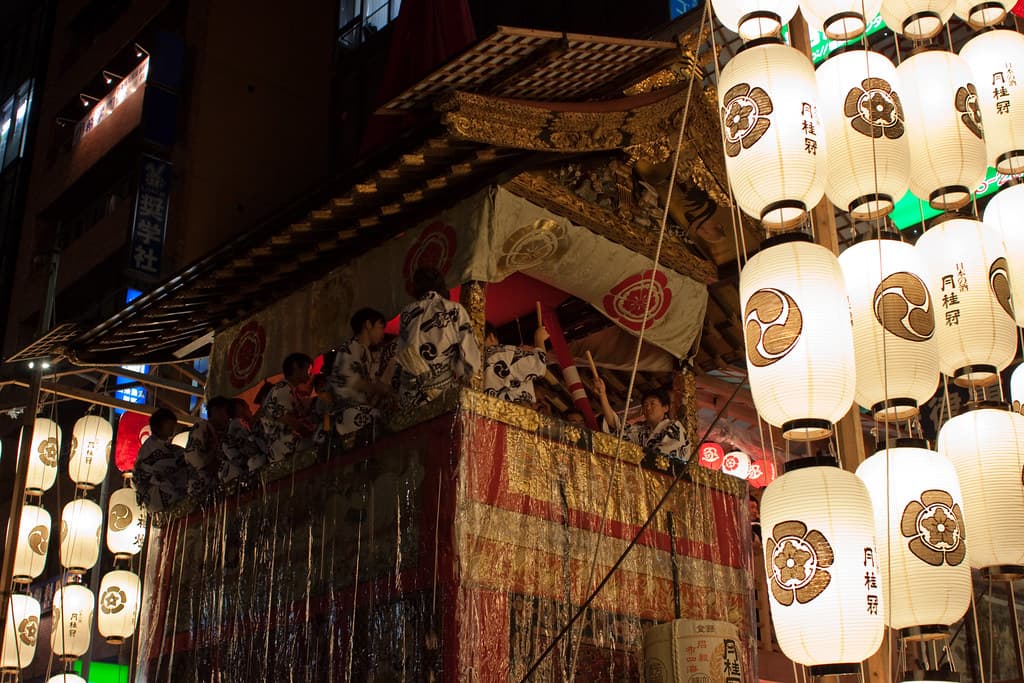
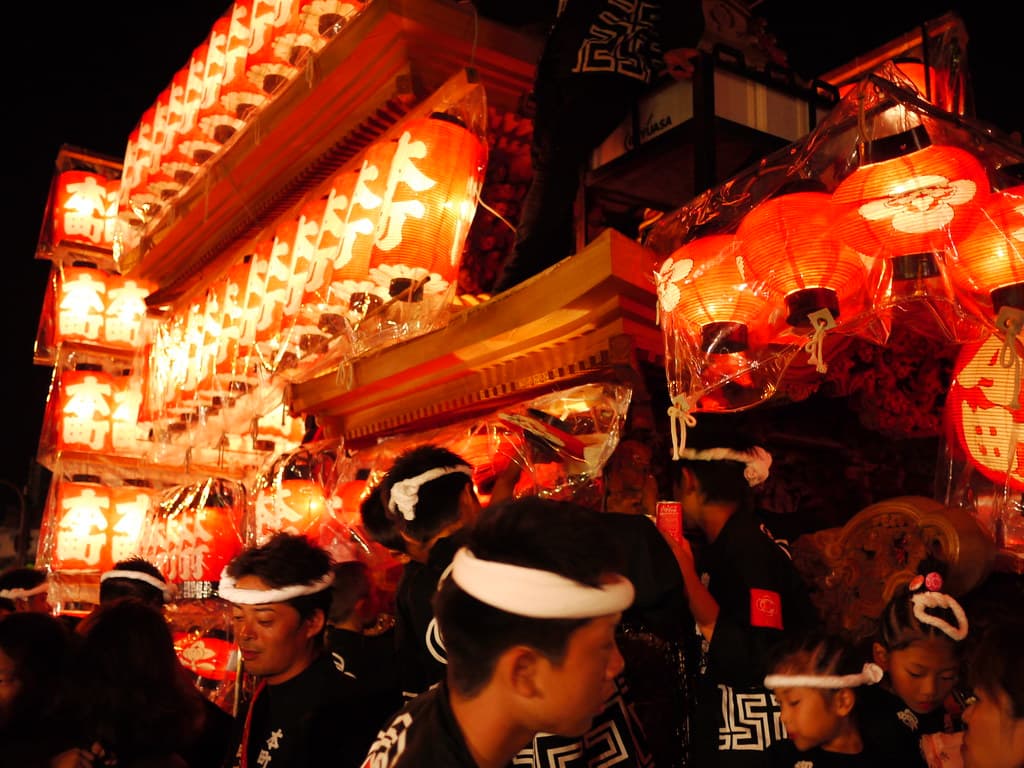
The first day of the festival brings the high-speed runs and corner turns through the day, and in the evening the danjiri are lit with lanterns and paraded slowly through the town.
Sunday
Honmiya
The main day brings more runs and turns, with the danjiri visiting the shrines, before the festival ends late in the evening.
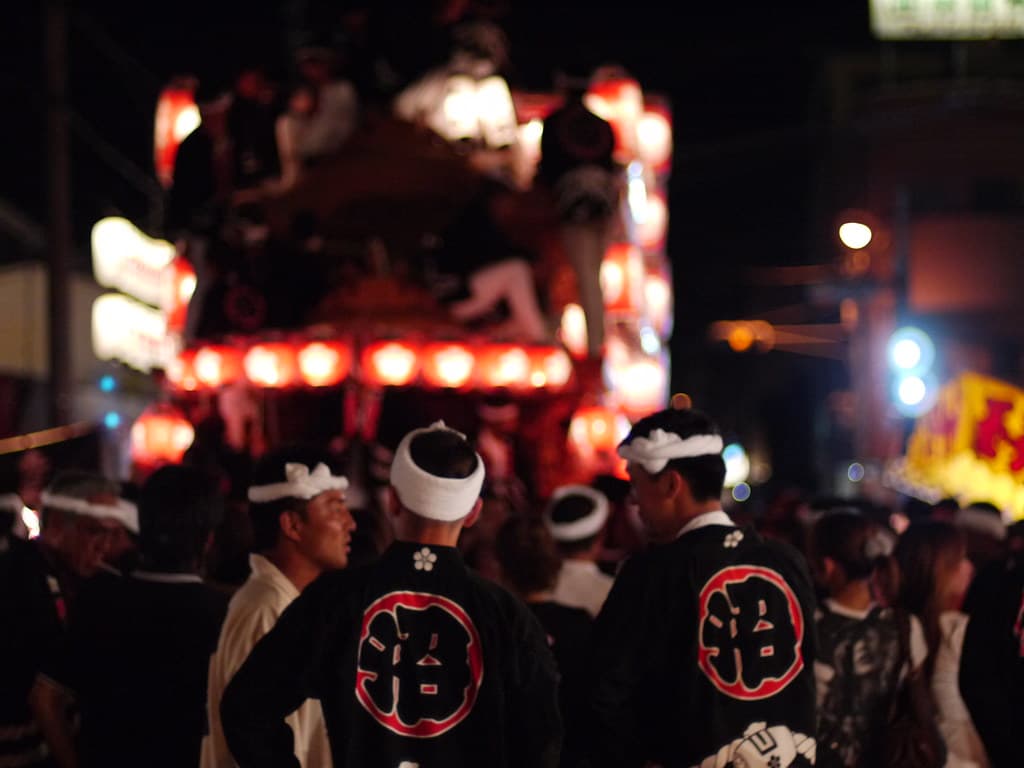
A lantern-lit danjiri on the evening run
Photo by Yakinik / flickr · CC BY 2.0
Planning your trip
Getting there
Kishiwada is about 25 minutes from Namba in central Osaka on the Nankai Line. Some express trains skip Kishiwada, so check before you board. Kansai International Airport is also on the Nankai Line, a short ride away.
Where to stay
Most visitors stay in Osaka, which has hotels for every budget, and take the train to Kishiwada. A few hotels near the airport and in Kishiwada itself are also convenient.
What it costs
Watching from the streets is free. Paid seats at the Kankan-ba corner cost a few thousand yen. Osaka offers good value for food and accommodation, and the trip from the city is cheap.
Go like you know
- Go to the trial pull on Friday for a closer look with fewer crowds.
- Listen for the drums, gongs and flutes played on each danjiri, which set the rhythm for the pullers and change pace before the turns.
- Wear comfortable shoes and stay alert; the floats come quickly, and crowds surge as they pass.
- Try local street food from the stalls, such as takoyaki, yakisoba and kakigori, shaved ice.
- Visit the Danjiri Kaikan museum to see a danjiri up close and learn about the carvings.
- Visit Kishiwada Castle, rebuilt in the twentieth century, with its rock garden.
- Osaka's Tenjin Matsuri, in July, is the city's great summer festival with boats and fireworks.
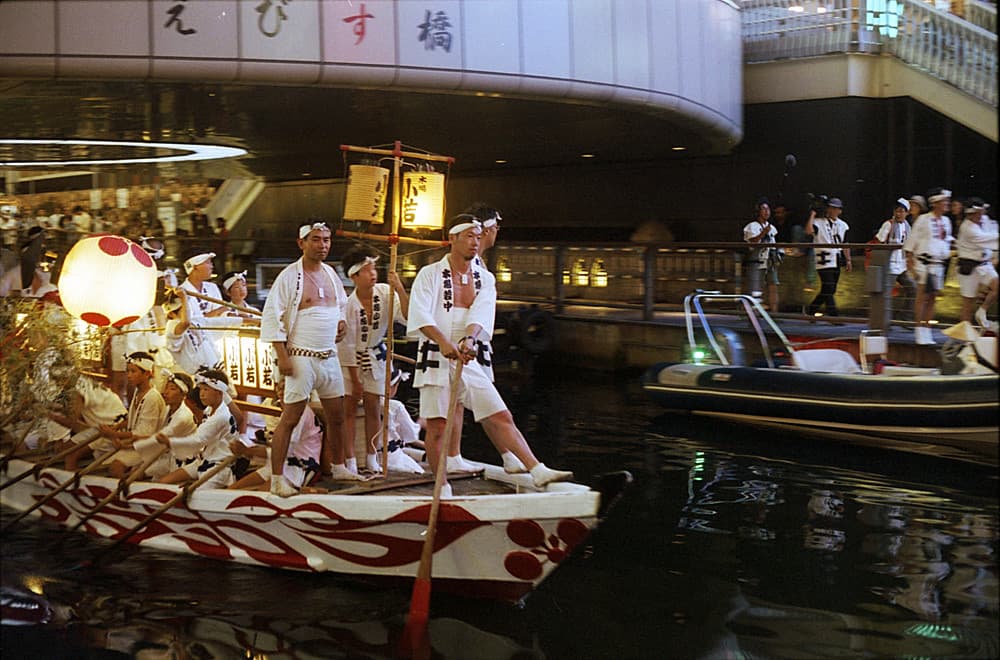
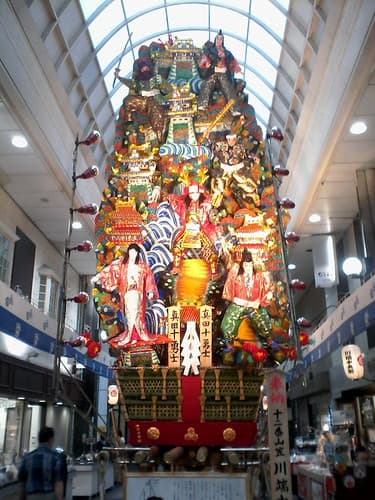
- Fukuoka's Hakata Gion Yamakasa, in July, races heavy floats through the streets at dawn.
Frequently asked questions
When is the Kishiwada Danjiri Matsuri?
On the Saturday and Sunday before Respect for the Aged Day, a national holiday on the third Monday of September, with a trial pull the day before. In 2026, it ran from September 18 to 20. In 2027, it is expected on September 18 and 19.
What is yarimawashi?
Yarimawashi is the dramatic manoeuvre in which a team swings its danjiri around a corner at high speed. The pullers run at full speed, the carpenters at the back steer the float, and the leader on the roof dances with fans. A perfect turn is a source of pride for the neighbourhood.
Is it safe for spectators?
Spectators who follow the rules are generally safe, but the danjiri are heavy and fast, and accidents happen. Stay behind barriers, never stand on the inside of a corner, follow the marshals, and keep children close. Paid seats at the main corner offer a safer view.