What is Hakata Gion Yamakasa?
Hakata Gion Yamakasa (博多祇園山笠) is the summer festival of Hakata, the old merchant quarter of Fukuoka on the island of Kyushu, and one of the most exciting festivals in Japan. For the first fifteen days of July, the city fills with towering decorated floats, and teams of men in short happi coats and loincloths run heavy floats through the streets in training, soaked by buckets of water thrown by the crowds. It all builds to a single, explosive race before dawn on July 15.
The festival is dedicated to Kushida Shrine, Hakata's guardian shrine, and is believed to be more than 770 years old. Tradition dates it to 1241, when the monk Enni, founder of Jōten-ji temple, was carried through the town on a platform, sprinkling holy water to drive away a plague. In the late 16th century, the warlord Toyotomi Hideyoshi reorganized Hakata into districts, and the seven nagare that compete today still trace their identities to that division.
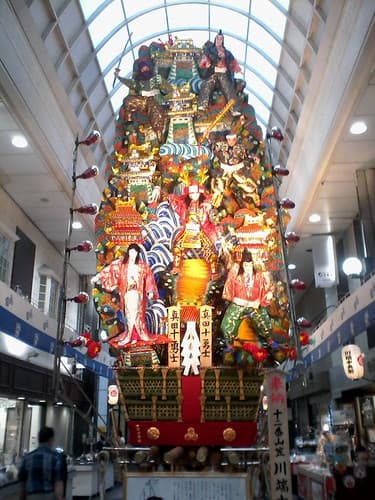
The festival has two kinds of float. The kazariyama are decorated display floats, up to 13 metres tall, covered in dolls of warriors, legends and current heroes, which stand across the city for the whole festival. The kakiyama are the racing floats, around a ton in weight, carried on the shoulders of the teams. The two were split in 1898, when power lines made it impossible to carry the tallest floats through the streets.
What to expect
The festival runs every day from July 1 to 15, building in intensity as the race approaches.
July 1 to 9
The display floats
The kazariyama go on display at Kushida Shrine, in shopping arcades and in front of department stores across Fukuoka. Walk between them to see the craftsmanship, as each year's floats are newly made.
July 10 to 14
Training runs
The teams start running their kakiyama through the streets in practice runs, including a run into the city centre around City Hall, the only time the floats leave Hakata. Spectators splash the runners with kioi-mizu, "power water", to cool them down.
July 15
The Oiyama
At 4:59am, the first team charges out of Kushida Shrine, and the floats race one after another around a five-kilometre course through Hakata, timed to the second. It is over in about an hour, as the sun comes up.
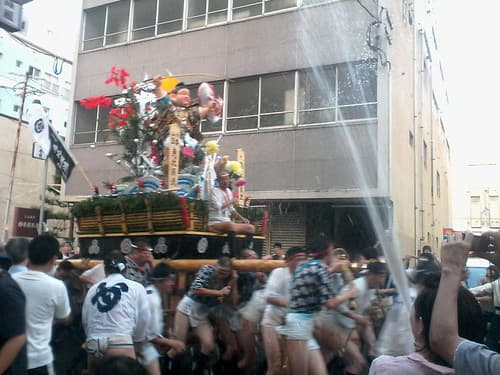
A kakiyama racing float and its team, drenched with water
Planning your trip
Getting there
Fukuoka's airport is one of the most convenient in Japan, just two subway stops from Hakata Station, with flights from across Asia and from Tokyo. Hakata Station is also a major stop on the Sanyo Shinkansen from Osaka and Hiroshima. Kushida Shrine is a short walk or subway ride from the station.
Where to stay
Hotels around Hakata Station and the Nakasu and Gion districts put you within walking distance of the course, which matters on race morning, when the subway isn't yet running. Book early for the nights of July 14 and 15. Fukuoka has plenty of hotels at good prices for a Japanese city.
What it costs
Everything is free, apart from the ticketed stands inside Kushida Shrine for the race and the rehearsal on July 13. Fukuoka is also one of Japan's great food cities, and the yatai food stalls along the river in Nakasu are a cheap and excellent way to spend the evenings.
Go like you know
- Try Hakata ramen, the city's rich pork-bone noodles, at a yatai stall after an evening of float-watching.
- Look for the nagare names on the happi coats; each team has its own design and colours.
- Don't miss the kazariyama on display at Kushida Shrine all year round, if you visit at another time.
- Kyoto's Gion Matsuri, in the same month, shares the Gion name and its plague-prayer roots.
- Osaka's Tenjin Matsuri follows in late July, with a procession of boats on the river.
Frequently asked questions
When is Hakata Gion Yamakasa?
Every year from July 1 to 15. The display floats are up from the first day, the teams' training runs are from July 10, and the climax, the Oiyama race, starts at 4:59am on July 15. The dates are fixed, so you can plan well ahead.
Can women take part?
The float-carrying teams are traditionally made up of men, though children of both sexes take part in some of the events and parades. Everyone can join in by watching and throwing water on the runners from the roadside. The atmosphere is welcoming to spectators of all ages.
Is it worth getting up for the 5am race?
Yes. The Oiyama is the moment the whole festival builds to, and the atmosphere on the streets of Hakata before dawn, with crowds waiting in the half-light and the roar as each float charges past, is unlike anything else. Get some sleep in the afternoon before.