What is the Kattenstoet?
Ypres, or Ieper in Dutch, is a small city in the west of Belgium, best known for the battles of the First World War and the Menin Gate, where the Last Post is still played every evening. Every three years, on the second Sunday of May, it shows a very different side. The Kattenstoet, the Festival of the Cats, is a parade devoted entirely to cats, with thousands of people in costume, giant cat figures, brass bands and a finale that is one of the strangest sights in Europe.
The festival recalls a grim medieval custom. In the Middle Ages, according to tradition, cats were thrown from the belfry of the great Cloth Hall on the market square. Historians offer two explanations. One links the practice to witchcraft, as cats were associated with evil spirits and throwing them from the tower was meant to drive evil away. The other is more practical: the Cloth Hall stored wool, and cats were kept there to hunt mice and rats. Once the wool had been sold in spring, the cats were no longer needed, and they were thrown from the tower.
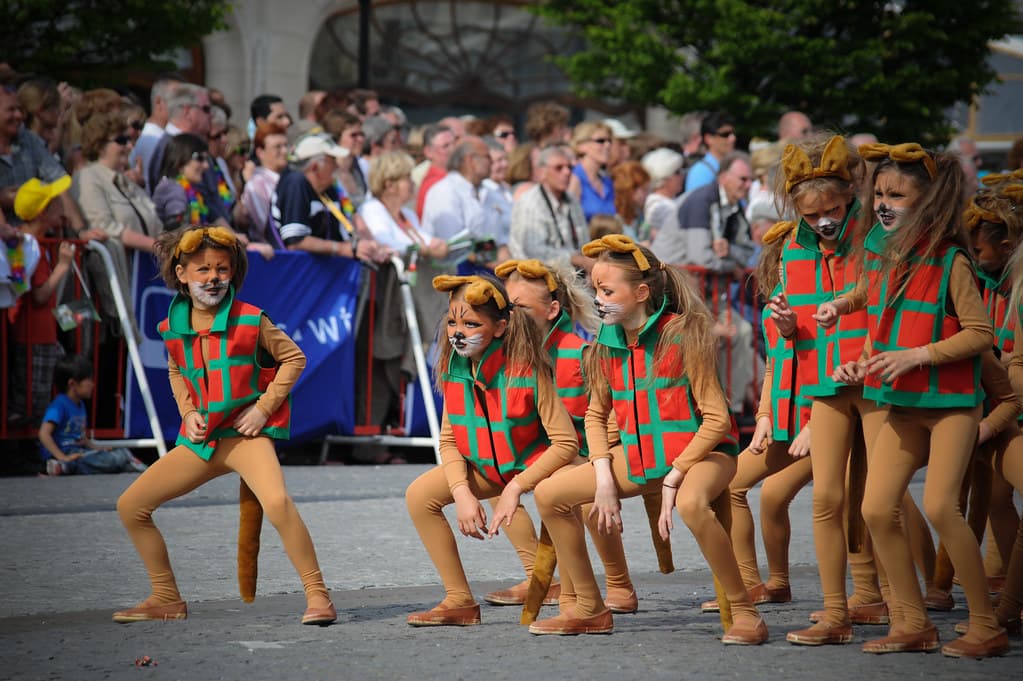
The modern Kattenstoet, held since 1955, turns this dark history into a celebration of the cat. The parade tells the story of the cat in history, legend and the life of the city, with floats and groups dressed as cats, witches, mice, medieval townspeople and characters from fairy tales. About 2,000 people take part, and the crowds that line the route come from across Belgium and beyond. The star is the giant cat Minneke Poes, one of several towering cat figures that sway through the streets.
At the end of the parade, a jester climbs the belfry of the Cloth Hall and throws plush toy cats down to the crowd on the square, who scramble to catch them, as they are said to bring good luck. The day ends with a mock witch burning on the square.
What to expect
The Kattenstoet takes place on a single Sunday, with the parade in the afternoon and the cat throwing as its finale.
Morning
The city fills
Visitors arrive and find their places along the route and on the Grote Markt, where stands are set up below the Cloth Hall. Cafés and bars fill with people in cat ears and painted whiskers.
Afternoon
The parade
The parade winds through the streets of the centre, with dancers, brass bands, floats and giant cats telling the story of the cat through the ages.
Late afternoon
The cats fly
A jester throws toy cats from the belfry of the Cloth Hall to the crowd below, followed by the mock burning of a witch on the square.
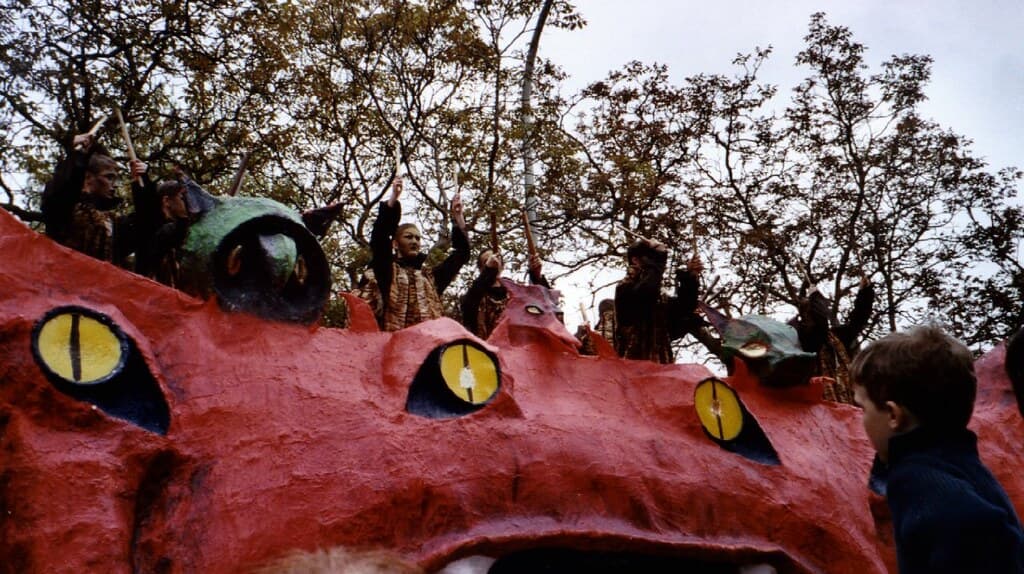
A float in the Kattenstoet parade
Photo by R/DV/RS / flickr · CC BY 2.0
Planning your trip
Getting there
Ypres is about 30 minutes by road from the French border and about two hours by train from Brussels, usually via Kortrijk. Lille, in France, is the nearest large city, about 40 minutes by car. The station is a short walk from the market square.
Where to stay
Ypres has a small number of hotels and guesthouses, which fill early for the Kattenstoet. Bruges, Kortrijk and Lille are good alternatives, with easy day trips by train or car. Book well ahead, as the festival only comes round every three years.
What it costs
Watching the parade from the streets is free, with paid seats in the stands for a better view. Ypres is moderately priced, with Belgian beer and food at reasonable prices in the cafés around the square.
Go like you know
- Paint whiskers on your face or wear cat ears; many spectators do.
- Try a Flemish beer in one of the cafés on the square, or one of the region's abbey beers.
- Visit the In Flanders Fields Museum in the Cloth Hall, and the Menin Gate for the Last Post at 8pm.
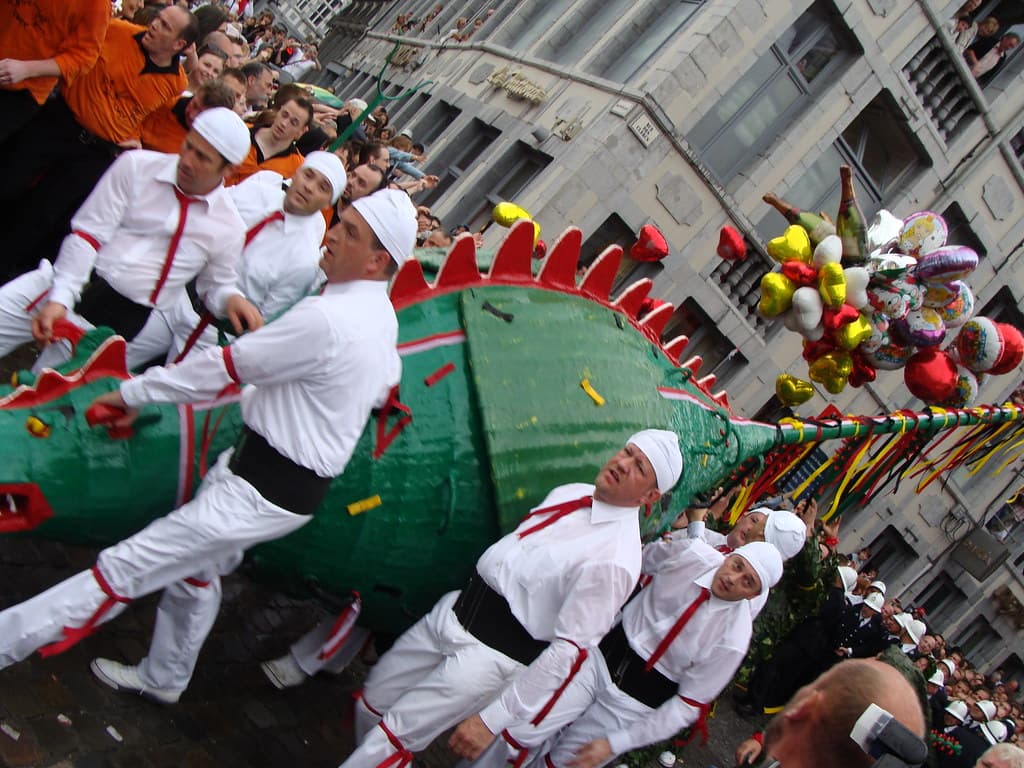
- Mons's Ducasse is Belgium's other great parade with a dragon and a fight in the square.
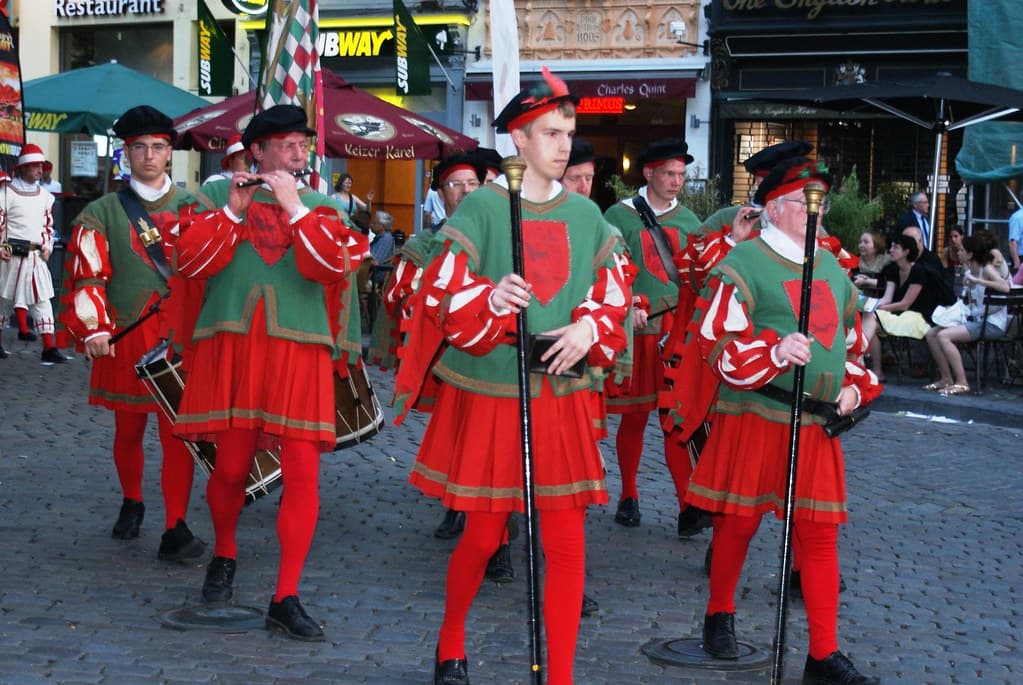
- Brussels' Ommegang recreates a royal pageant of 1549 on the Grand-Place.
Frequently asked questions
When is the next Kattenstoet?
The parade is usually held every three years on the second Sunday of May. The last edition was on May 12, 2024, and the next is expected on Sunday, May 9, 2027. Check the official festival or city of Ieper website to confirm the date and the programme.
Are real cats thrown from the tower?
No. Since the modern festival began, only plush toy cats are thrown from the belfry of the Cloth Hall. The festival commemorates the medieval custom, but today it celebrates cats, and the toy cats caught by the crowd are treasured as good-luck charms and souvenirs.
Is it suitable for children?
Yes. The parade is colourful and family-friendly, with dancers, giant cat figures and music, and children love trying to catch a toy cat. The mock witch burning at the end is theatrical but may frighten very young children, so you may want to watch from further back.