What is the Fiesta Nacional de la Vendimia?
Mendoza, at the foot of the Andes in western Argentina, is the heart of the country's wine industry, home to most of its vineyards and to the Malbec that made Argentine wine famous. Every year at the end of summer, when the grapes are harvested, the province celebrates the Fiesta Nacional de la Vendimia, the National Grape Harvest Festival, with parades, a blessing of the fruit, a vast open-air show and the election of a harvest queen.
The festival was first held in 1936, promoted by the governor of Mendoza, Guillermo Cano, and his minister Frank Romero Day, who had seen a harvest festival in Friuli, in Italy, the homeland of many of the region's immigrants. It was declared a national festival in 1972, and today it is one of the best-known harvest celebrations in the world, drawing visitors from across Argentina and abroad.
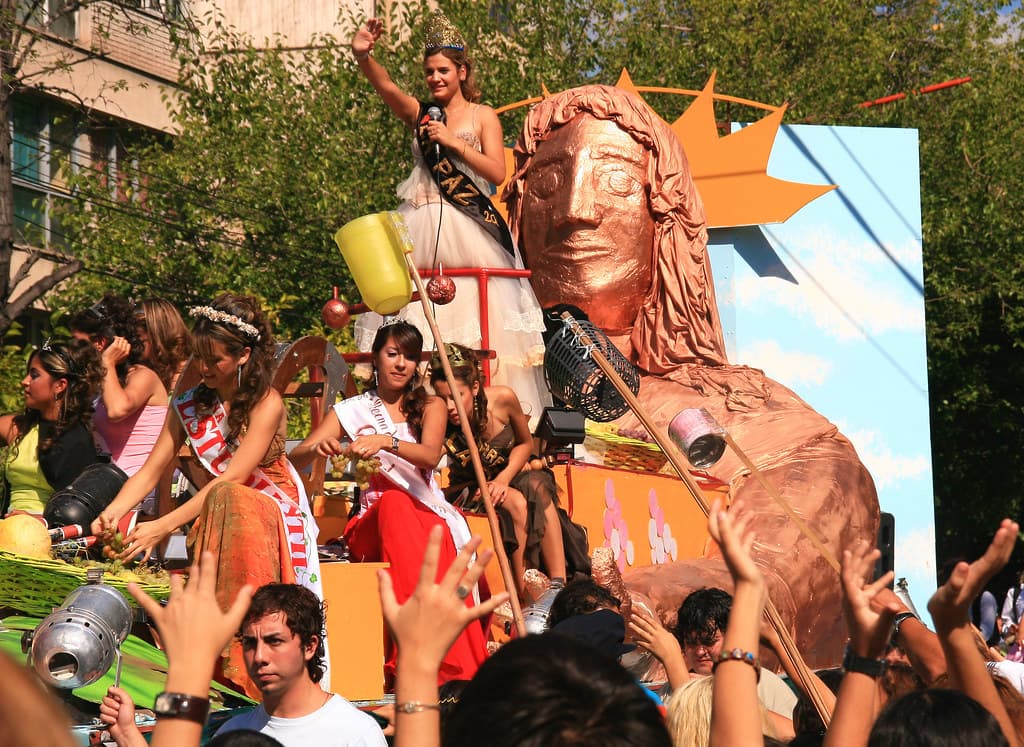
The festival builds over several weeks, as each department of the province holds its own harvest celebration and elects a queen. It culminates in the first days of March in the city of Mendoza. The Bendición de los Frutos, the blessing of the fruit, opens the main festivities with a Catholic ceremony dedicated to the Virgen de la Carrodilla, patron of the vineyards. The Vía Blanca de las Reinas is a night parade of illuminated floats carrying the queens of each department, followed the next morning by the Carrusel, a daytime parade of floats, gauchos on horseback and folk groups.
The highlight is the Acto Central, a huge show at the Teatro Griego Frank Romero Day, an open-air amphitheatre in the hills of the city's General San Martín Park. More than a thousand dancers and performers tell the story of wine and the region, and at the end of the night, the national harvest queen is elected and crowned, followed by fireworks.
What to expect
The main events take place over about a week at the end of February and the start of March.
Saturday before
The blessing
The Bendición de los Frutos blesses the harvest with a ceremony dedicated to the Virgin of the vineyards.
Friday night
Vía Blanca
The illuminated floats of the queens parade through the city centre in the Vía Blanca, watched by huge crowds.
Saturday
Carrusel and Acto Central
The Carrusel parades through the city in the morning, and at night the Acto Central fills the Teatro Griego with a show that ends with the crowning of the queen.
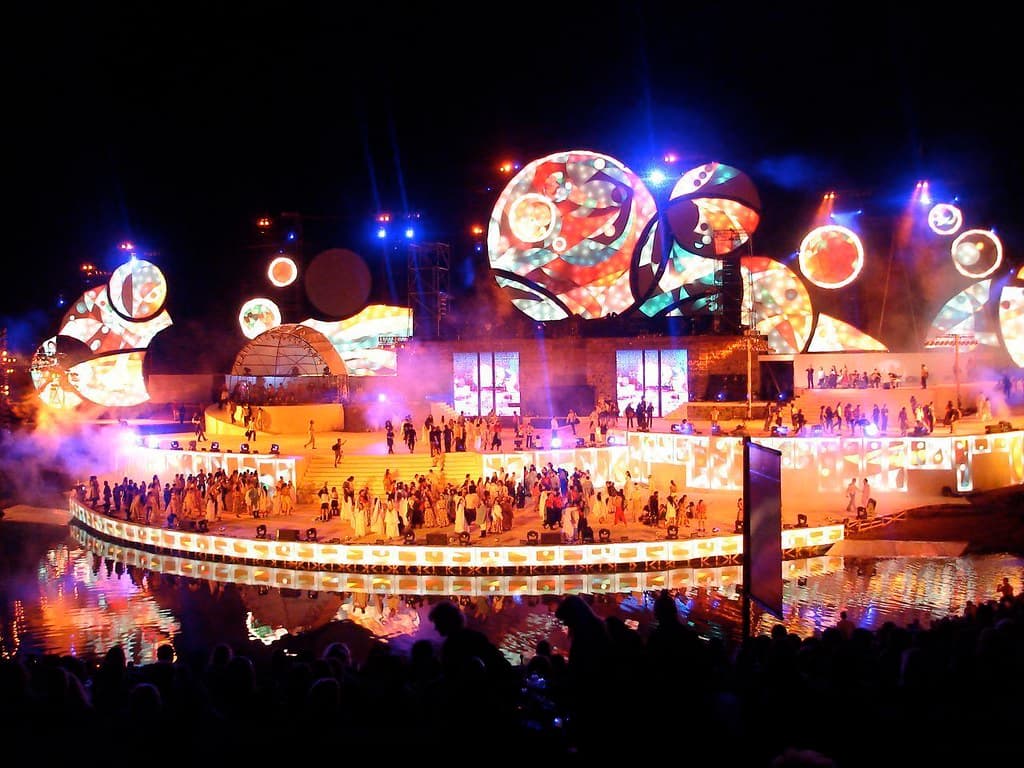
The Acto Central at the Teatro Griego
Photo by Moriz mdz / flickr · CC BY-SA 2.0
Planning your trip
Getting there
Mendoza has an international airport with flights from Buenos Aires, Santiago de Chile and other cities, and buses connect it with Santiago across the Andes and with the rest of Argentina. The parades are in the city centre, and the Teatro Griego is in the General San Martín Park.
Where to stay
Mendoza has hotels, hostels and apartments, and many wineries outside the city offer lodges among the vineyards. Book early, as the city fills up for the festival weekend.
What it costs
The parades are free. Tickets for the Acto Central are cheaper for Mendoza residents than for tourists, with prices for visitors in 2026 ranging from about ARS 45,000 to 70,000. Mendoza is good value for food and wine.
Go like you know
- Visit a winery in Luján de Cuyo, Maipú or the Uco Valley, and taste Malbec where it grows best.
- Find a spot early for the Vía Blanca; the pavements fill up hours before the floats arrive.
- Try an asado, Argentine barbecue, with a glass of local wine.
- Chile's Fiestas Patrias, across the Andes in September, is the region's other great celebration.
- Chile's Fiesta de La Tirana, in July, brings hundreds of dance troupes to the Atacama Desert.
Frequently asked questions
When is the Vendimia in 2027?
According to the provincial calendar, the Bendición de los Frutos is on February 27, the Vía Blanca on March 5, and the Carrusel and the Acto Central on March 6, 2027, with a second night on March 7. Check the official programme closer to the date.
How is the harvest queen chosen?
Each department of Mendoza elects its own harvest queen in the weeks before the festival. At the end of the Acto Central, the departmental queens are presented on stage, and the national queen and vice-queen are elected by a vote of delegates, then crowned in front of the crowd.
Do I need tickets?
Not for the parades, which are free and take place in the streets of the city. You need a ticket for the Acto Central at the Teatro Griego, sold online in the weeks before the festival, with different prices for residents and visitors.