What is the Círio de Nazaré?
Belém, the capital of the state of Pará, sits at the mouth of the Amazon, in the north of Brazil. Every October, it hosts one of the largest religious processions in the world: the Círio de Nazaré, in honour of Our Lady of Nazareth, the patron of the Amazon. On the second Sunday of October, around two million people follow the small image of the Virgin through the streets of the city, in an outpouring of faith that UNESCO inscribed on its list of the Intangible Cultural Heritage of Humanity in 2013.
The procession has been held since the end of the eighteenth century, with UNESCO dating it to 1793. Its date was fixed on the second Sunday of October in 1901. The word círio means a large candle, recalling the candles carried by pilgrims, and for the people of Belém and the Amazon region, the festival is the most important time of the year, often called "the Christmas of the Amazon", when families gather and travel home.
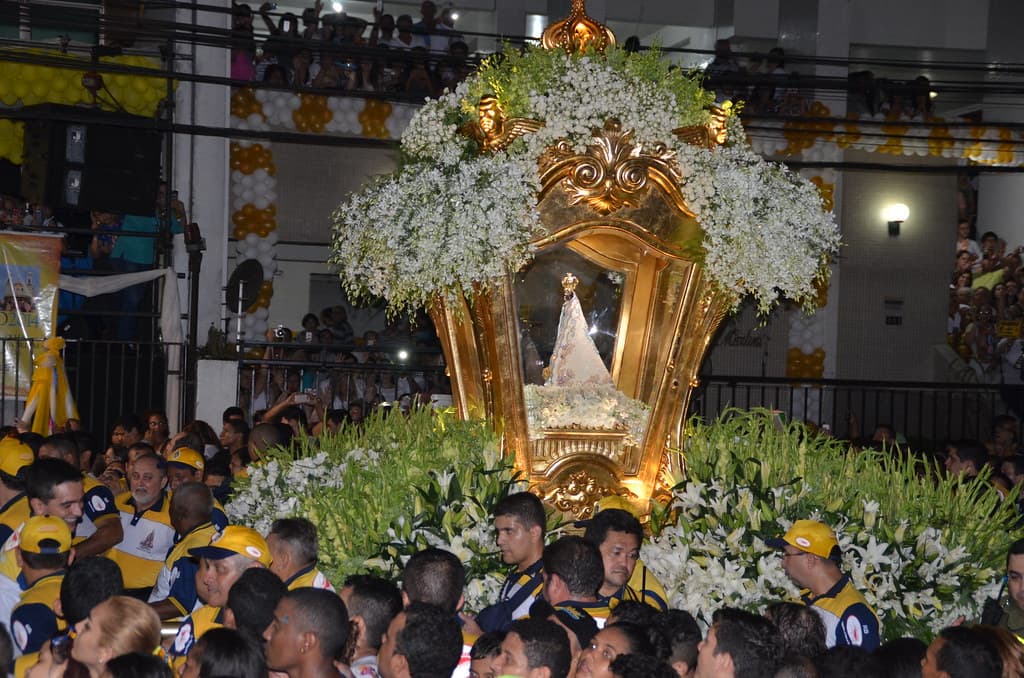
The most famous element of the procession is the corda, the rope. Since the nineteenth century, a rope about 400 metres long has been pulled by thousands of barefoot devotees, who hold on to it as the berlinda, the carriage holding the image of the Virgin, moves slowly along the route from the cathedral to the Basilica of Nazaré. Many walk to fulfil a promise made to the Virgin, and the effort, heat and emotion are overwhelming.
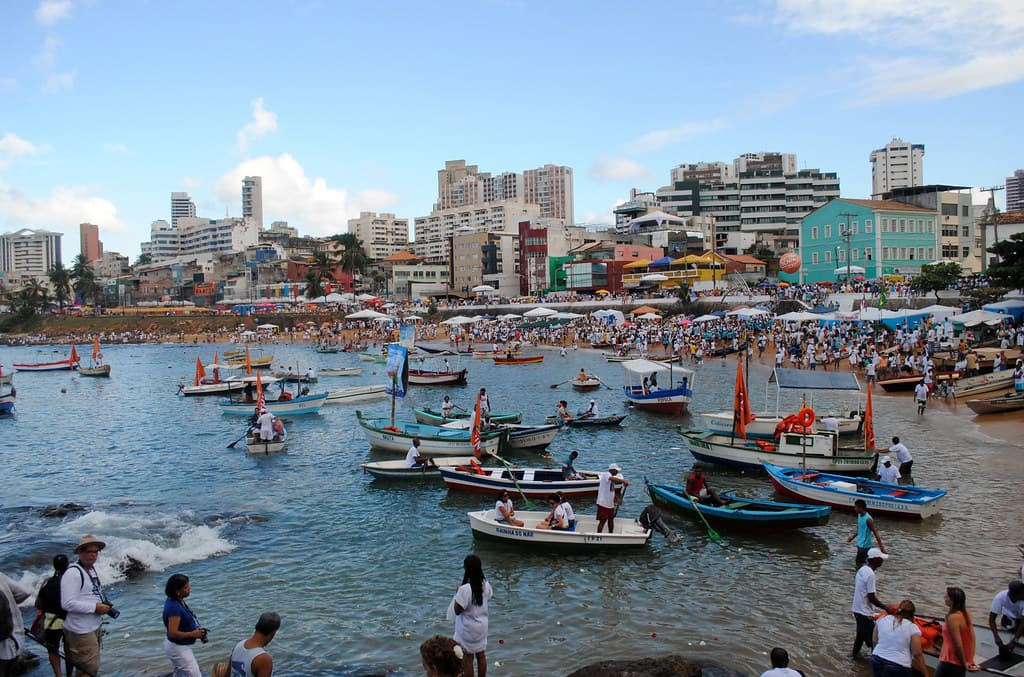
The Círio is part of a series of processions over two weeks. The trasladação, a night procession on the Saturday, carries the image to the cathedral, and a river procession crosses Guajará Bay with hundreds of decorated boats. After the Sunday procession, families gather for a feast of pato no tucupi, duck in a sauce made from cassava, and maniçoba.
What to expect
The main events take place over the second weekend of October, within a fortnight of processions.
Saturday
River procession and trasladação
Decorated boats escort the image of the Virgin across Guajará Bay, and at night the trasladação carries it through the streets to the cathedral.
Sunday morning
The Círio
From early morning, the procession leaves the cathedral, with devotees pulling the rope, and moves slowly through the city to the Basilica.
Sunday afternoon
The feast
Families gather for lunch with pato no tucupi and maniçoba, and the festivities continue in the square of the Basilica.
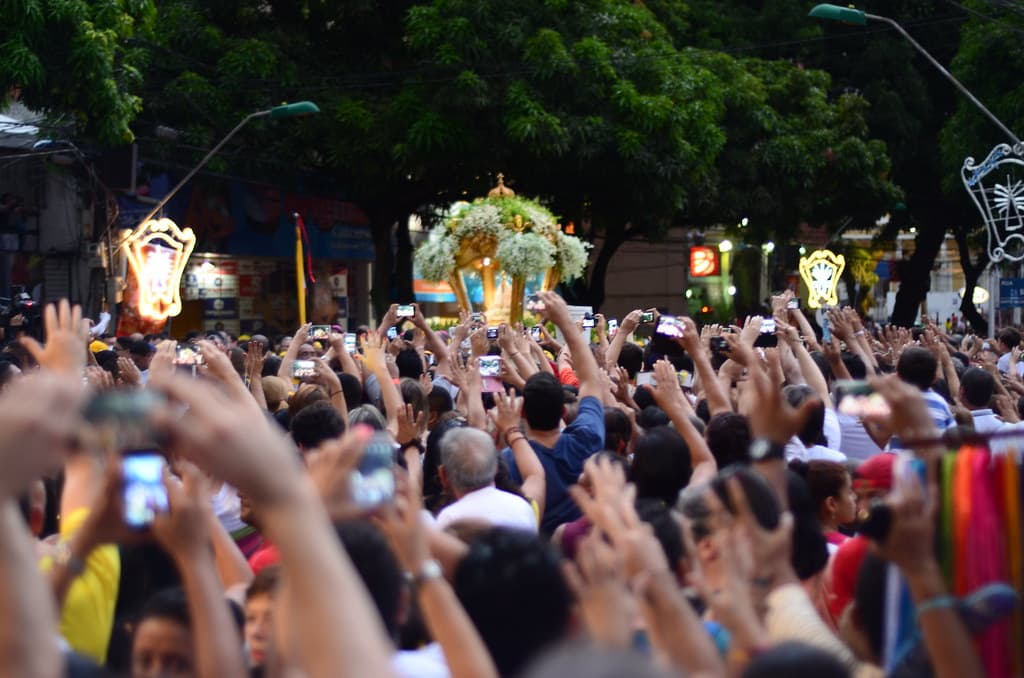
The Virgin's carriage passes through the crowd
Photo by Celso Abreu / flickr · CC BY 2.0
Planning your trip
Getting there
Belém's international airport is about 12 kilometres from the city centre, with flights from across Brazil and some international routes. During the Círio, roads in the centre are closed, so plan to walk.
Where to stay
Hotels in Belém fill up for the Círio, as millions of pilgrims come from across the region. Book well ahead, and choose a hotel within walking distance of the route if you can.
What it costs
The processions are free. Belém is affordable, with excellent and cheap food, from açaí to Amazonian fish, in its markets and restaurants.
Go like you know
- Wear white or light clothes, and comfortable shoes you don't mind getting dirty.
- Visit the Ver-o-Peso market, on the waterfront, for Amazonian fruit, fish and herbs.
- Try tacacá, a hot soup with tucupi and jambu, a herb that tingles on the tongue.
- Watch the river procession from the waterfront at Estação das Docas.
- For another great Brazilian festival of faith and the sea, see Salvador's Festa de Iemanjá, on February 2.
- The Amazon's Parintins Folklore Festival, in June, is the region's great folk spectacle.
Frequently asked questions
When is the Círio de Nazaré in 2027?
The Círio is held on the second Sunday of October, which in 2027 falls on October 10, with the trasladação and the river procession expected on Saturday, October 9. Processions and events continue for about two weeks around the main day. Check the official programme closer to the date.
What is the rope?
The rope, or corda, is a long rope, about 400 metres, pulled by thousands of devotees in front of the carriage carrying the image of the Virgin. Holding the rope is an act of faith and penance, often to fulfil a promise, and the effort in the heat and crush is part of the devotion.
Can non-Catholics attend?
Yes. The Círio is a religious procession, but it is also a cultural celebration for the whole region, and visitors of all backgrounds come to watch. Dress modestly, be respectful of the devotees, and avoid getting in the way of the procession and the rope.