What is the Carnival of Binche?
Binche is a small town in the Hainaut province of southern Belgium, near the French border. For three days before Lent, it hosts one of the most famous carnivals in Europe, recognized by UNESCO as a Masterpiece of the Oral and Intangible Heritage of Humanity in 2003 and inscribed on its Representative List in 2008. Its stars are the Gilles, hundreds of men in padded costumes, wax masks and towering hats of ostrich feathers, who dance through the streets to the beat of drums and throw oranges to the crowd.
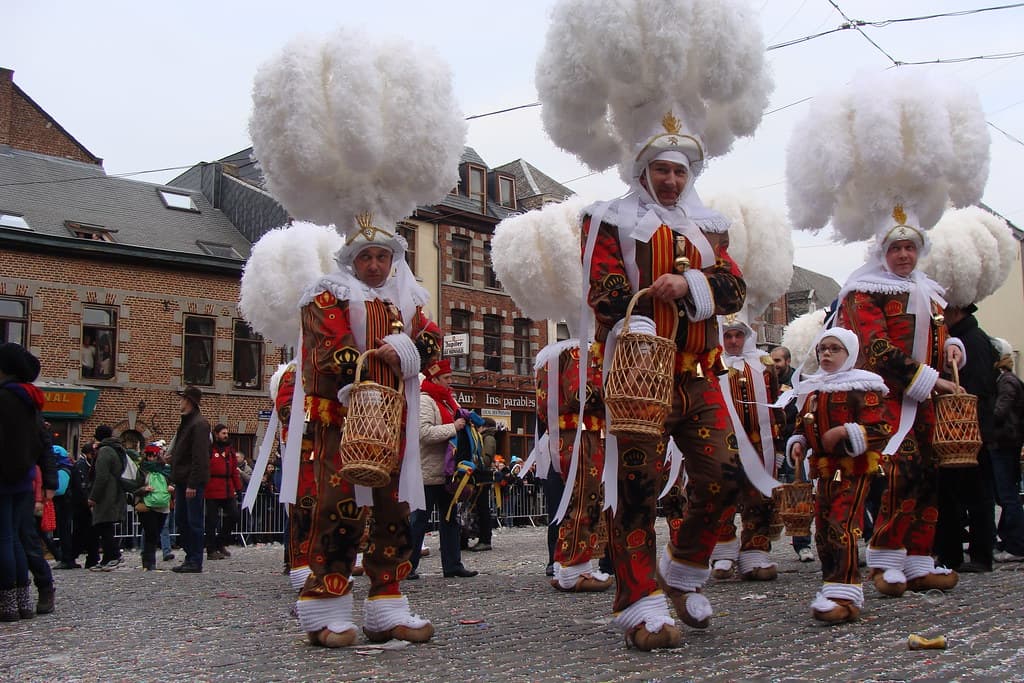
The carnival has deep roots. The first written mention of carnival in Binche dates from 1394, and the Gilles appear in records at the end of the eighteenth century. Their costume is unmistakable: a linen suit decorated with heraldic lions, crowns and stars in red, yellow and black, stuffed with straw to give the wearer a hunched back and a big belly, a belt of bells, and wooden clogs that pound the cobbles as they dance.
Being a Gille is an honour reserved for men from Binche, and the tradition passes from father to son. The Gilles belong to societies, each with its own musicians, and prepare for weeks with rehearsals and rituals. On the morning of Mardi Gras, they wear wax masks with green glasses and small moustaches, and in the afternoon, they put on their great ostrich-feather hats, which can be rented for hundreds of euros.
The most famous moment comes on the afternoon of Mardi Gras, when the Gilles parade through the town and throw blood oranges from their baskets into the crowd. The oranges are a gift, and catching one is said to bring good luck; throwing one back is considered an insult. Each Gille can throw around 30 kilos of oranges, and the windows along the route are protected with nets.
What to expect
The carnival lasts three days, from the Sunday before Lent to Mardi Gras.
Sunday
The costumes
The town fills with thousands of people in costume, and groups parade through the streets in a festive atmosphere that runs late into the night.
Monday
Young people's day
Young people and children parade with confetti and music, and the day ends with fireworks.
Mardi Gras
The Gilles
From dawn, the Gilles gather and dance through the streets to the beat of drums. In the afternoon, they parade in their feathered hats and throw oranges, and the night ends with a dance in the Grand-Place and fireworks.
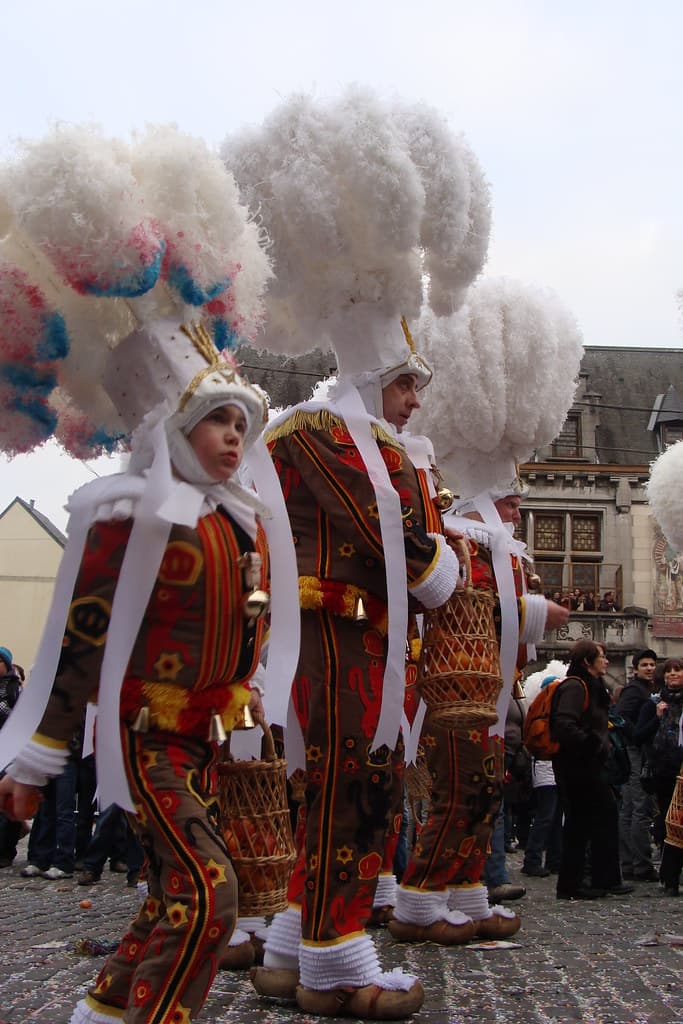
Gilles in their feathered hats on Mardi Gras
Photo by ines s. / flickr · CC BY 2.0
Planning your trip
Getting there
Binche is about an hour by train from Brussels, with a change on most routes, and close to Mons and Charleroi. Brussels and Charleroi airports are the nearest, and extra transport, including shuttle buses, is laid on during the carnival.
Where to stay
Binche has very few hotels, so most visitors stay in Mons, Charleroi or Brussels and travel in for the day. If you want to be there at dawn on Mardi Gras, book early in Mons or Charleroi.
What it costs
The carnival is free to watch. Binche is affordable, with Belgian beer and food at reasonable prices in the town's cafés, though they are crowded on carnival days.
Go like you know
- Catch an orange, don't throw one; it's a gift from the Gilles.
- Visit the International Carnival and Mask Museum in Binche to learn about the Gilles and carnival traditions around the world.
- Wear warm, waterproof clothes; February in Belgium is cold and often wet.
- Mons's Ducasse, in late spring, is the region's other great festival on UNESCO's list.
- Switzerland's Basel Fasnacht and Germany's Cologne Carnival are the region's other great pre-Lent celebrations.
Frequently asked questions
When is the Carnival of Binche?
On the three days before Ash Wednesday: Shrove Sunday, Monday and Mardi Gras. The dates follow Easter, so they change every year. In 2027, the carnival is expected from February 7 to 9, with the Gilles parading on Mardi Gras, February 9.
Who are the Gilles?
The Gilles are the men of Binche who wear the famous costume, with its padded suit, wax mask, bells, clogs and ostrich-feather hat. Being a Gille is an honour passed down through families, and only men from Binche can take part. They dance through the town and throw oranges on Mardi Gras.
Can I catch an orange?
Yes. The Gilles throw oranges into the crowd as a gift, and catching one is said to bring good luck. But never throw one back: it's considered an insult. The oranges are thrown hard, so keep an eye on the Gilles and protect your face and camera.