What is the Carnaval de Cádiz?
Cádiz is an ancient port city on a narrow peninsula on the Atlantic coast of Andalusia, in the south of Spain. Every February, it hosts the most famous carnival in Spain, and one of the most original in the world. While other carnivals are about parades and costumes, the Carnaval de Cádiz is about words: witty, satirical songs performed by groups who poke fun at politicians, celebrities and everyday life, and the whole city joins in.
The carnival has been documented since the sixteenth century, and the city's trade links with Genoa are often credited with its early influence. It was suspended during the Spanish Civil War and revived in 1947, and in 1980 it was declared a Fiesta of International Tourist Interest.
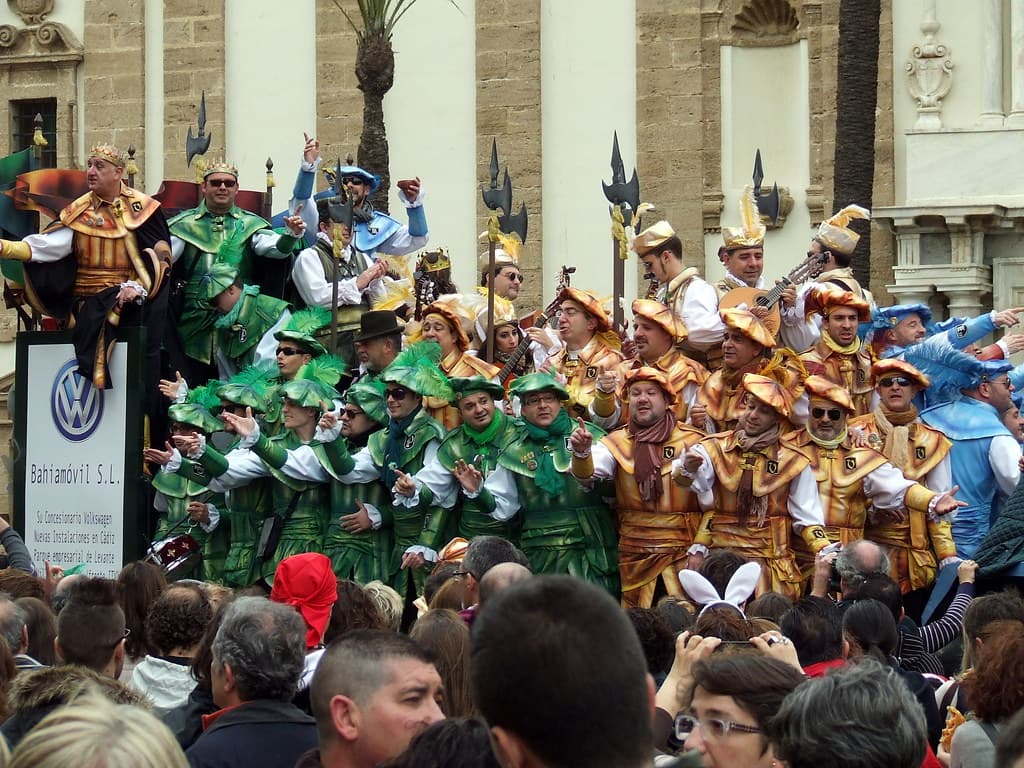
Its stars are the agrupaciones, groups who write and perform their own songs. Comparsas sing poetic, often critical songs with harmony and guitars; chirigotas are comic groups who sing humorous songs dressed in funny costumes; coros, larger choirs, sing from flat-bed carts with guitars and lutes; and cuartetos perform comic sketches with a kazoo and sticks. Each year, they compete in the Concurso Oficial de Agrupaciones Carnavalescas, the COAC, at the Gran Teatro Falla, in a contest that runs for weeks and is followed on television across Andalusia.
But the real carnival is in the streets. Once the contest is over, the groups, along with ilegales, unofficial groups of friends who sing just for fun, take their songs to the squares and corners of the old town, and the whole city dresses up and celebrates.
What to expect
The street carnival lasts about ten days, from the Thursday before Ash Wednesday to the following Sunday, after weeks of contest at the Falla.
January and early February
The contest
Groups compete at the Gran Teatro Falla, ending with the Grand Final on the Friday before the street carnival.
Carnival weekend
The streets
The city fills with people in costume, with groups singing on street corners, coros on carts, and a big parade on Sunday.
The last Sunday
Piñata Sunday
The carnival ends on Domingo de Piñata with the burning of the witch, the Bruja Piti, followed by fireworks.
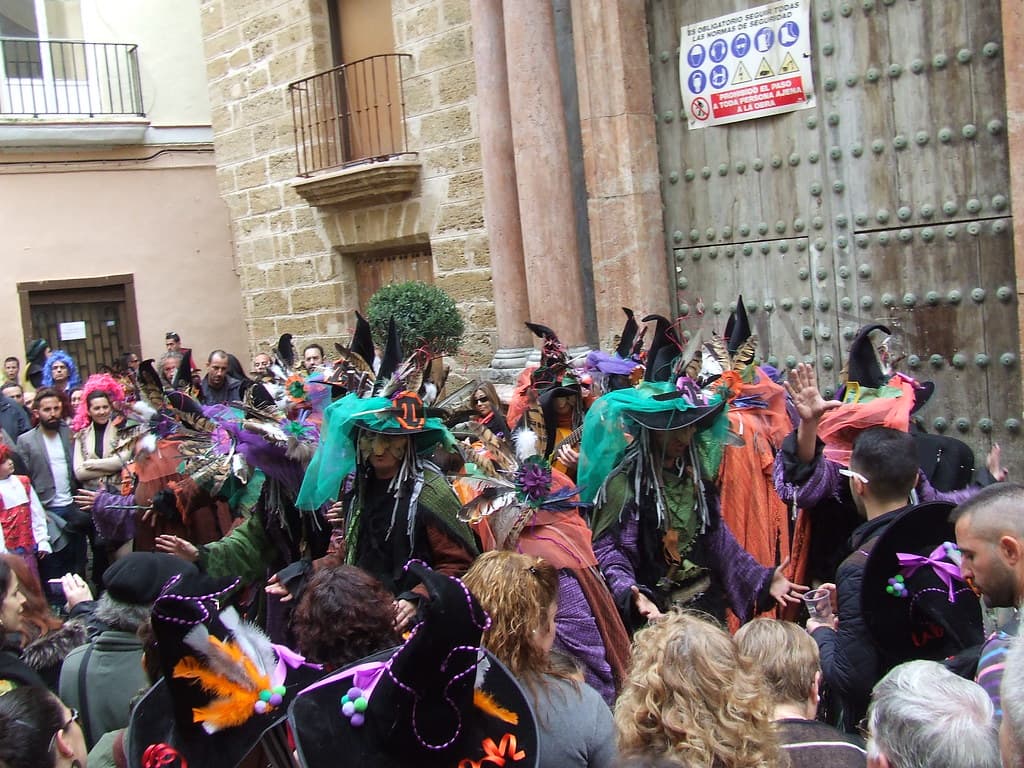
Carnival in the streets of Cádiz
Photo by Big Richard C / flickr · CC BY-SA 2.0
Planning your trip
Getting there
Jerez Airport, about 45 kilometres away, is the nearest, with a train station connecting it to Cádiz. Seville's airport is about an hour and a half away. Trains run to Cádiz from Seville, Madrid and other cities.
Where to stay
Hotels and apartments in Cádiz fill up quickly for the carnival, especially on the weekends. El Puerto de Santa María, Jerez and San Fernando are good alternatives, a short train or ferry ride away.
What it costs
The street carnival is free. Tickets for the contest at the Gran Teatro Falla sell out very quickly, but the sessions are broadcast live on local television. Cádiz is affordable, with fried fish and tapas at good prices.
Go like you know
- Learn a little Spanish slang; the songs are full of local jokes and wordplay.
- Wear a costume; almost everyone does.
- Eat at the Mercado Central, the city's covered market, between rounds of singing in the streets.
- Watch the coros on their carts on carnival Sunday, singing with guitars and lutes as they move through the old town.
- Stay for Carnaval Chiquito, the smaller carnival the weekend after, for a more local atmosphere.
- Watch a few contest sessions on local television before you go to get a feel for the songs.
- Try pescaíto frito, fried fish, from a freiduría, and tortillitas de camarones, shrimp fritters.
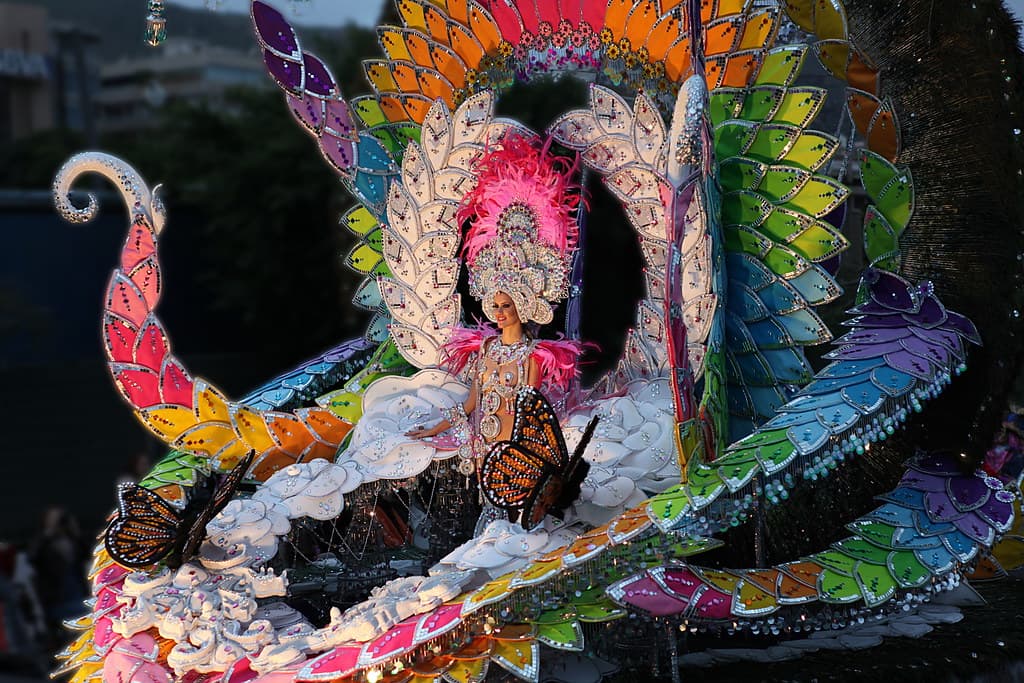
- Spain's other great carnival is in Santa Cruz de Tenerife, in the Canary Islands, in February.
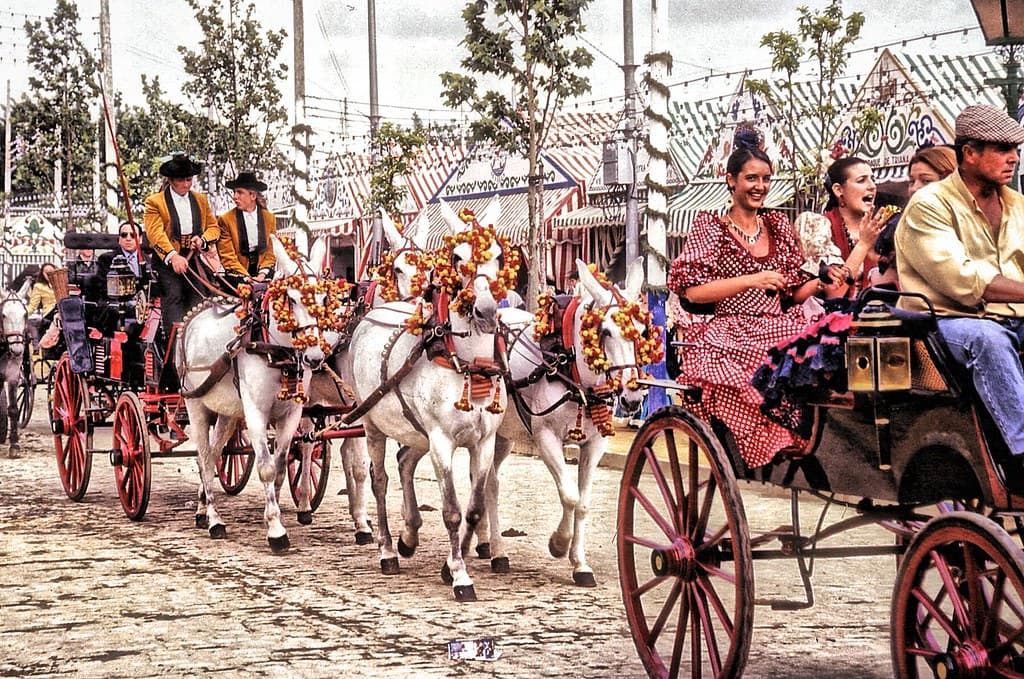
- Seville's Feria de Abril, in spring, is Andalusia's other great fiesta.
Frequently asked questions
When is the Carnaval de Cádiz in 2027?
The 2027 contest runs at the Gran Teatro Falla from early January, with the Grand Final on Friday, February 5. The street carnival follows from about February 4 to 14, ending the Sunday after Ash Wednesday, February 10. Check the city's programme for the exact dates.
Do I need to speak Spanish?
It helps. The songs are full of jokes, local references and wordplay, and the humour is best appreciated in Spanish. But the atmosphere, costumes and music can be enjoyed by anyone, and many visitors come just for the street parties, which are lively and welcoming.
What is a chirigota?
A chirigota is a comic group that writes and performs humorous songs, dressed in funny costumes that fit their theme. Chirigotas are the most popular groups of the carnival, and their songs poke fun at politicians, celebrities and everyday life with sharp wit and plenty of local humour.