What is the Bali Kite Festival?
The Bali Kite Festival (Pesta Layang-Layang Bali) is a dry-season competition in which village kite clubs from across the island haul giant bamboo-and-cloth kites onto Padang Galak Beach in Sanur and battle in heats for the Bali Governor's rotating cup. The scale is hard to overstate: the 48th edition, on June 6–7, 2026, put 1,077 kites into the air, flown by clubs from regencies and cities across Bali.
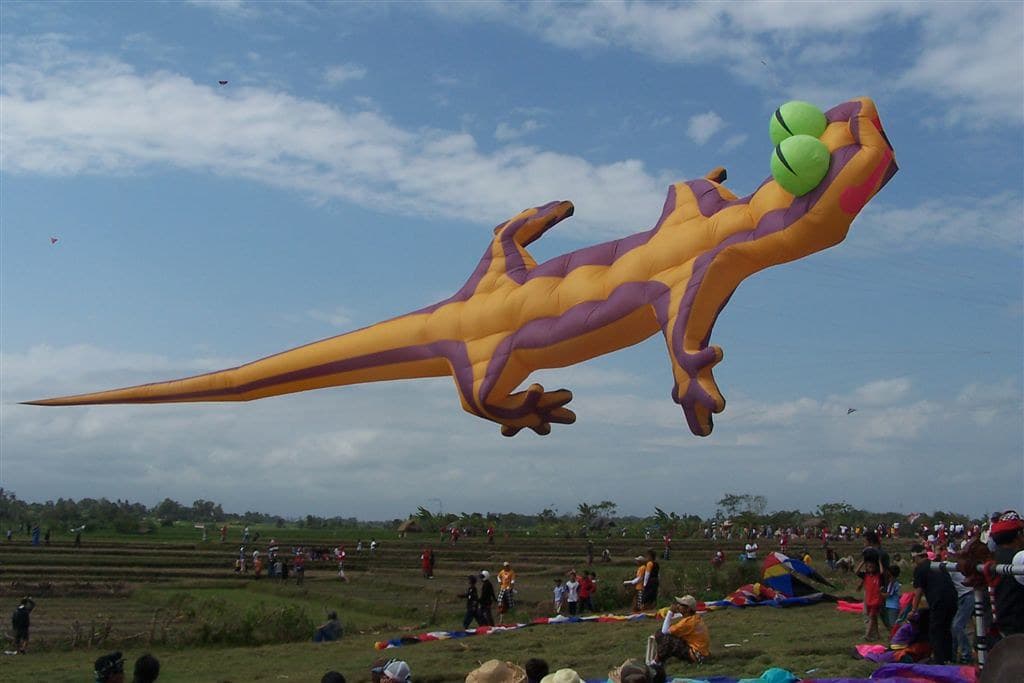
But the flying is worship before it is sport. The festival sends a message of thanks to the Hindu gods for abundant crops, honoring Rare Angon, the divine shepherd of kites, whose name ("child herder") reaches back to a post-harvest tradition of children flying kites over the fields. Three traditional classes compete: the bebean (fish-shaped), the janggan (a bird-dragon whose flowing cloth tail can run past 100 metres), and the pecukan (leaf-shaped). The giants measure roughly four metres wide by nearly ten long.
Each banjar, or village association, fields a squad of some 70 to 80 people: ten or more adult flyers on the ropes, flag bearers, and the village's own gamelan band, so every launch arrives with live percussion. The janggan especially are treated as sacred objects, credited with a guardian spirit, or taksu; teams gather for joint prayers and lay out offerings before a flight to keep it safe.
The kite is not a toy but a prayer: a thank-you to the gods, sent up on the dry-season wind.
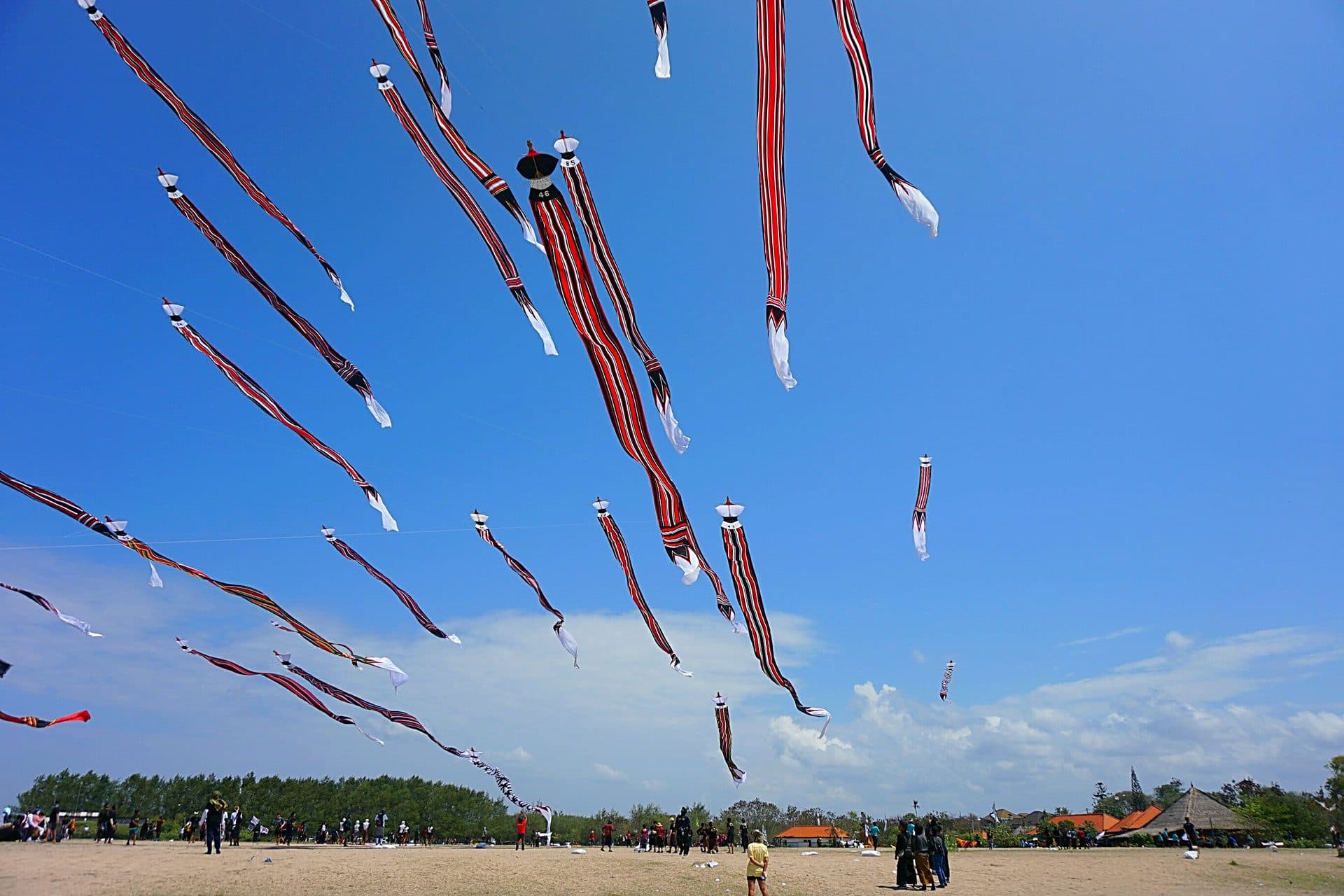
Giant traditional kites fill the sky at the Bali Kite Festival
Photo by Johannnindito Adisuryo (Yohanes Nindito Adisuryo) / wikimedia · CC BY-SA 4.0
What to expect
Because the dates are set only weeks out, plan around the shape of a competition day rather than a fixed calendar. A typical festival weekend unfolds like this:
Day 1, morning
Rituals and the first heats
Teams arrive early, assemble their kites on the sand, and hold prayers with offerings before the janggan leave the ground. The first heats, roughly ten teams at a time, begin once the wind steadies, judged on the best launch and the longest flight. Come early: the choreographed team launches are the best thing to watch, and the good viewing spots go first.
Day 1, afternoon
Full sky, food, and crafts
By midday the sky is crowded and the beachfront fills with local food stalls (kuliner lokal), handicraft and small-business exhibitions, and traditional art performances. Heats run through the afternoon across divisions for the traditional kites, the "big size" giants, and newer creative designs aimed at younger flyers.
Day 2
Finals and the Governor's cup
The second day narrows the field toward the finals and the handover of the Bali Governor's rotating cup. Winds and schedules shift with the weather, so the day's timing is loose: treat the posted order as a guide, not a timetable.
Planning your trip
Getting there
Padang Galak Beach sits at Sanur's northern end, in Kesiman, East Denpasar, reached via Jl. Padang Galak off the main Denpasar–Kesiman coastal road. Sanur's seafront promenade gives you kite views without ever setting foot on the competition sand. At Sanur's southern end, Mertasari Beach hosts the separate international Rare Angon Festival (July 23–26 in 2026, with flyers from 23 countries), a good satellite event if the main festival's weekend doesn't line up with your trip.
Where to stay
Base yourself in Sanur, which puts both beaches within easy reach. The honest truth about timing: the main numbered festival is announced only weeks ahead and can land almost anywhere between June and September. It ran July 20–21 in 2024, September 13–14 in 2025, and June 6–7 in 2026, so there's no fixed weekend and no reliable pattern. If pinning the exact competition is the whole point of your trip, build in flexibility and watch for the announcement close to your travel window rather than booking around a rumored date.
What it costs
Watching is free: there's no ticket for the festival grounds. Your real costs are Sanur lodging during the busy dry season, transport, and food, and the stalls on the grounds keep a full day of grazing cheap.
Go like you know
- Miss the festival weekend and you lose surprisingly little: the dry-season winds of roughly June–August keep giant kites over Sanur for months, free to watch from the promenade any breezy afternoon.
- It's an exposed beach with little shade, so bring sunscreen, a hat, sunglasses, and far more water than you think you need.
- Come hungry. The grounds fill with local food stalls and craft exhibitions, and grazing there beats leaving to find lunch.
- Watch a full launch sequence, not just the airborne kites: the teamwork of 70-odd villagers walking a bebean up into the wind is the real show.
- Listen for each team's gamelan. Every banjar brings its own, and the percussion tells you which launch to turn and watch.
- If your dates don't match the main event, aim for Mertasari's Rare Angon Festival instead; its July dates were published about six weeks out in 2026.
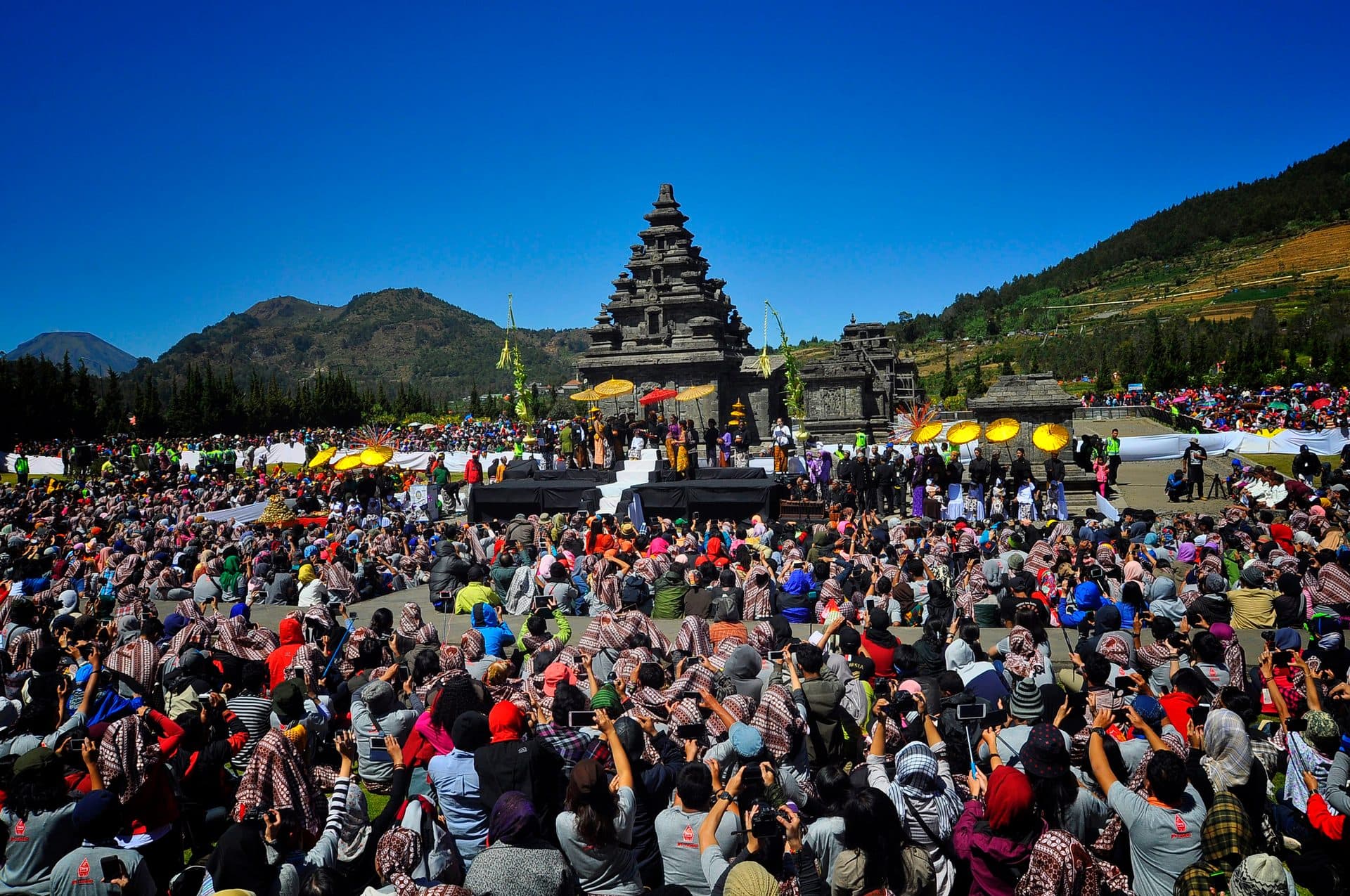
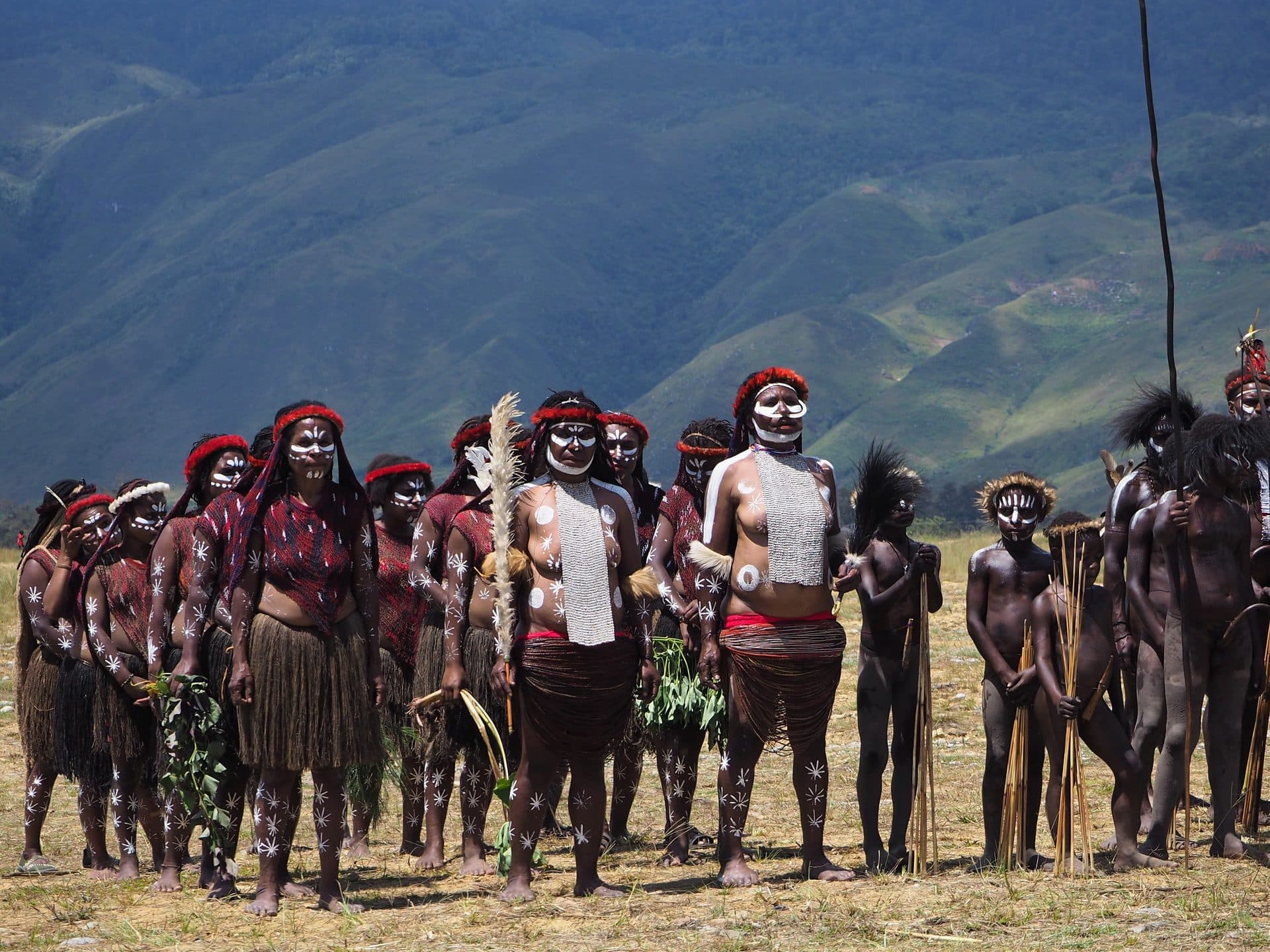
- Bali's other great street spectacle, Nyepi & Ogoh-Ogoh, falls in March, outside kite season. If you're in Indonesia in August, pair the kites with the Dieng Culture Festival on Central Java's highland plateau or the Baliem Valley Festival in Papua.
Frequently asked questions
When exactly is the Bali Kite Festival held?
There's no fixed date. The main numbered festival lands on one weekend somewhere between June and September and is announced only weeks ahead: June in 2026, September in 2025, July in 2024. Watch official Balinese sources close to your trip, and ignore recycled dates on aggregator sites.
Do I need a ticket, and how much does it cost?
No ticket needed: entry to the festival on Padang Galak Beach is free. Your only real costs are Sanur lodging in the busy dry season plus transport and food, all comfortably low-to-mid range. Food stalls and craft exhibitions on the grounds keep spending modest even across a full day out.
Can I still see the giant kites if I miss the competition?
Yes, easily. The same dry-season trade winds that make the festival possible keep giant bebean and janggan kites flying over Sanur and much of south Bali for months, at their best roughly June through August. Stroll the seafront promenade on any windy afternoon and you'll spot them for free.