What is Nyepi?
Nyepi is the Balinese Hindu new year in the Saka calendar, and it is like no other new year on earth. Instead of fireworks and parties, the island marks the start of the year with a day of complete silence, fasting and reflection. For twenty-four hours, from six in the morning, the Balinese observe the four prohibitions of Catur Brata Penyepian: no fire or light, no work, no travel and no entertainment.
The silence has a purpose. According to tradition, evil spirits roaming the island after the noisy ceremonies of the night before will see Bali empty and dark, conclude it is uninhabited, and leave. For people, it is a day of introspection, prayer and rest.
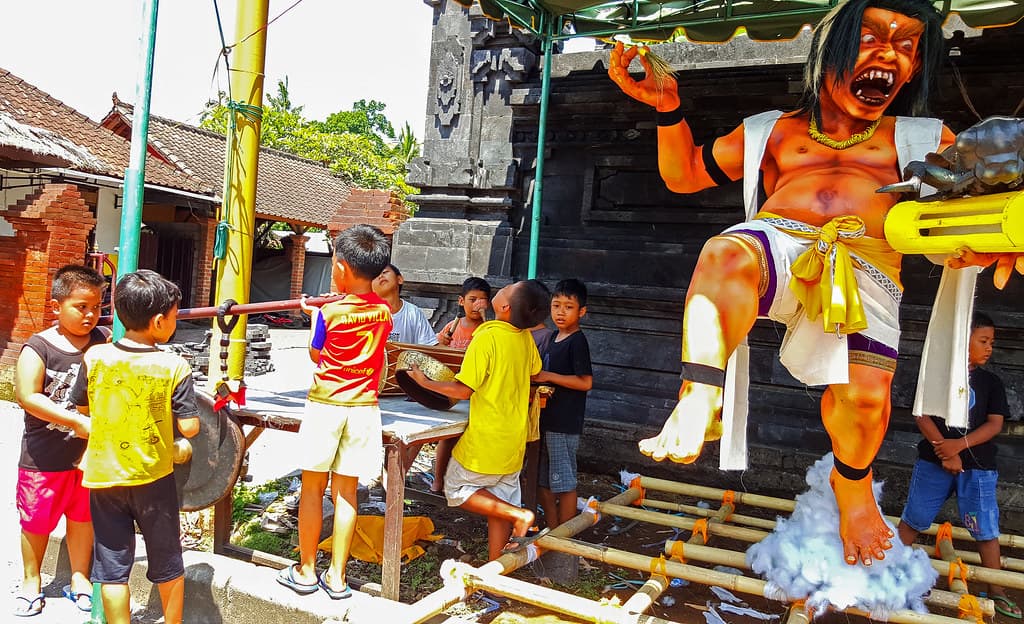
Before the silence comes the noise. On the eve of Nyepi, the Tawur Kesanga ceremonies purify the island, and in the evening villages parade ogoh-ogoh, giant effigies of demons and monsters, through the streets. Young people from each banjar, a village community, spend months building them from bamboo, paper and foam. After the parades, many are burned, symbolizing the destruction of evil.
One night to chase away the demons with noise, one day to fool them with silence.
What to expect
The celebration takes place over several days, with the parades and the day of silence at its heart.
Days before
Melasti
Processions carry sacred temple objects to the sea or springs for purification. Villagers in white walk in long lines to the beaches.
Eve
Tawur Kesanga and ogoh-ogoh
Purification offerings at crossroads in the afternoon, then the ogoh-ogoh parades after dark, with music, torches and crowds.
Nyepi
The day of silence
From six in the morning, the island stops for 24 hours. Streets are empty, the airport is closed, and the pecalang, traditional village security, patrol to make sure the rules are respected.
Day after
Ngembak Geni
Life resumes, and families visit each other to ask for forgiveness and begin the new year with a clean slate.
Planning your trip
Getting there
Bali's Ngurah Rai International Airport closes for the twenty-four hours of Nyepi, with no flights in or out. Plan your arrival at least a day before and your departure after the day of silence. Ferries to and from Bali also stop; in 2026 the crossings from Java (Ketapang to Gilimanuk) and Lombok (Padang Bai to Lembar) were suspended from the evening before or the early hours of the day itself until the next morning, so check the operator's schedule.
On the eve, the ogoh-ogoh parades are street events that begin around sunset in towns such as Kuta, Ubud and Denpasar. If you want to see the effigies up close before the parade, visit in the late afternoon, when they are lined up at village crossroads and banjar halls. Many villages hold small competitions, and the builders are usually proud to talk about their creation and the story it represents.
Where to stay
Choose your accommodation carefully. You will spend the whole day of Nyepi inside your hotel or villa, so pick somewhere with a pleasant garden or pool and food service. Many hotels offer Nyepi packages with meals, and lights are kept low or curtains drawn at night. Ask what is on offer when you book, since outdoor lighting, pools and entertainment are often limited for the day.
What it costs
The parades are street events open to visitors, so the money goes on the stay itself. Hotels often sell Nyepi packages with meals and indoor activities, because guests cannot leave the property, and you will want to stock up on food and water the day before. Prices vary by property, so compare packages before you book.
Go like you know
- Stock up on snacks and essentials the day before, as shops close for Nyepi.
- Step outside after dark on the day of silence, in your garden or courtyard, to see Bali's sky without light pollution.
- Watch the ogoh-ogoh being built in the weeks before Nyepi; banjars often work in the open in the evenings.
- Wear respectful clothing to ceremonies and parades, and avoid touching offerings or sacred objects.
- Use the quiet day for reading, yoga or rest; many visitors find it the most memorable day of their trip.
- Ask your hotel about its Nyepi rules in advance, including meal times and whether lights may be used in rooms.
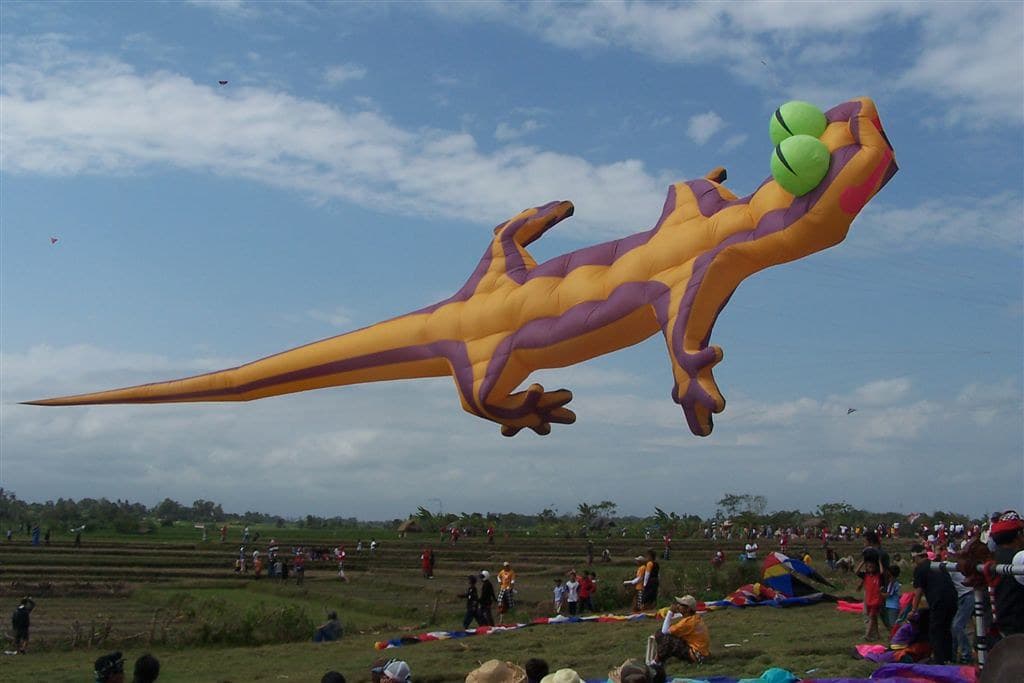
- Plan the rest of the trip around Indonesia's calendar: the Bali Kite Festival fills the skies near Sanur in the dry-season months, and Waisak at Borobudur follows on Java in May or early June. Holi in India falls in the same month as Nyepi in both 2026 and 2027.
Frequently asked questions
Can tourists go out during Nyepi?
No. Everyone in Bali, including tourists, must stay inside their accommodation for the twenty-four hours of Nyepi. Hotels remain open and serve guests, but beaches, streets and shops are off-limits. Only emergency services operate. Plan to relax and enjoy a day of silence.
Is the airport open during Nyepi?
No. Bali's international airport closes for the full twenty-four hours of Nyepi, with no arrivals or departures. Airlines adjust their schedules, so check your flights and plan to arrive at least a day before and leave after the day of silence.
Where can I see the ogoh-ogoh parades?
Almost every village holds a parade on the eve of Nyepi. Large towns such as Denpasar, Ubud and Kuta host big parades and competitions. Smaller villages offer a more local experience. Ask your hotel or local contacts where the nearest banjar will parade.
What should I do on Nyepi day?
Relax in your hotel or villa, read, meditate, enjoy the pool or garden, and rest. Keep noise and lights low. At night, step outside to see the stars over a dark Bali, one of the most extraordinary sights of the experience.