What is the Yi Torch Festival?
The Yi Torch Festival (彝族火把节) is the great midsummer rite of the Yi ethnic minority, and Chuxiong, a small city in the Chuxiong Yi Autonomous Prefecture of Yunnan, bills itself as "China's Fire City." It begins on the 24th day of the sixth lunar month, the traditional Yi date, and runs about three nights of torch processions, wrestling and horse racing, and mass bonfire dancing. Fire here is not decoration; in Yi belief it is spiritually protective, which is why the whole festival is built around carrying, throwing and dancing with flame.
The origin story locals tell is of the hero Atilabia, a wrestler who drove away a plague of locusts with torches cut from pine trees. Families still keep the memory literal, preparing torches to carry through the streets. What began as a rite to protect the harvest has become the prefecture's defining event. Chuxiong grants residents an official three-day public holiday for it, and the program spreads across the whole prefecture.
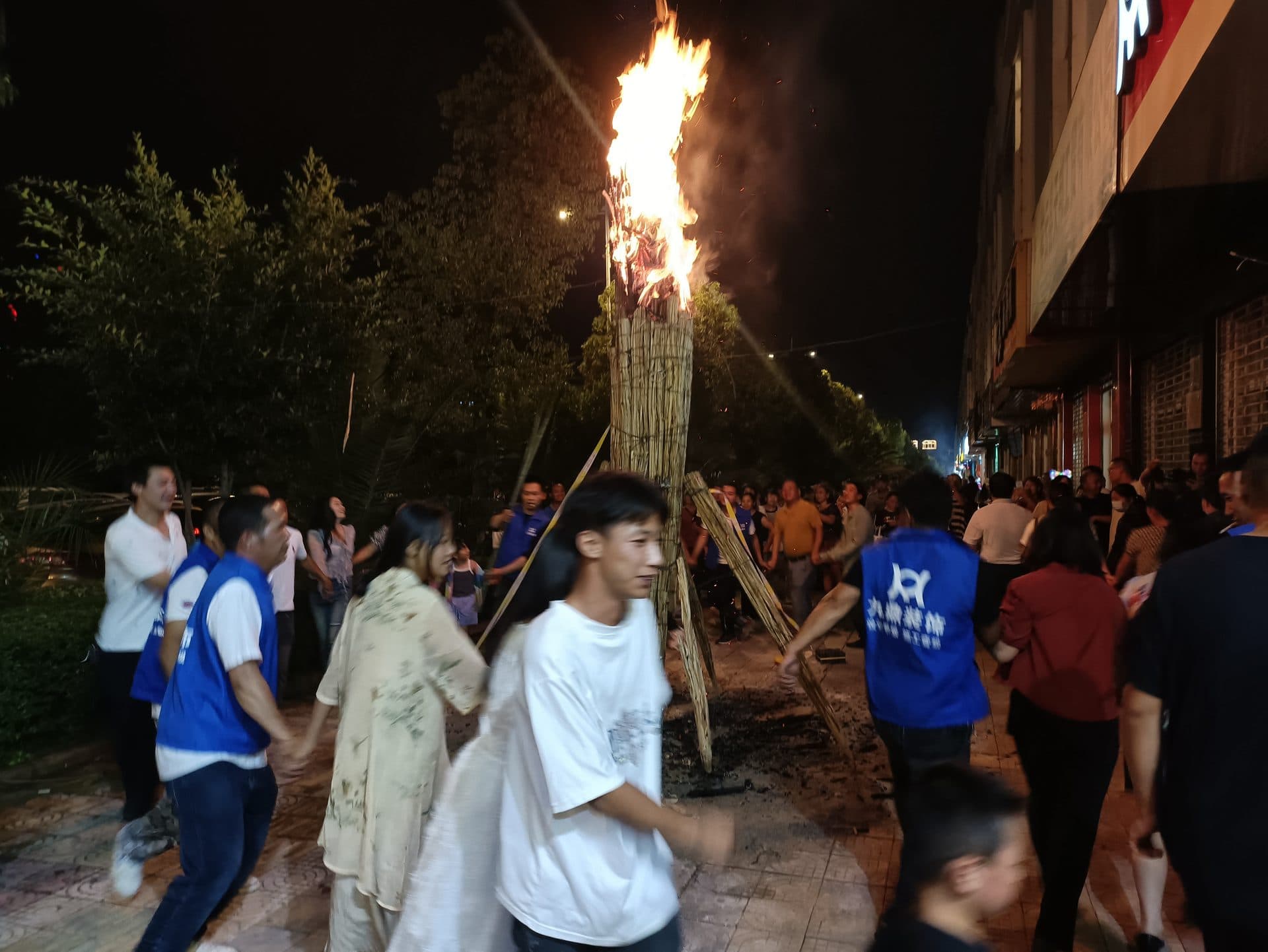
In villages, the festival traditionally opens with rites to honor the fire god and the ancestors, then turns to competition (wrestling, horse racing and bullfighting in the countryside) and, above all, to the bonfires, where people sing and dance until the fires burn down. Chuxiong's staged centerpiece is the Fire Sacrifice Ceremony (祭火大典) at the China Yi Ten-Month Solar Calendar Culture Park, but the soul of the thing is the free, sprawling street carnival around it.
Fire drove off the locusts once; now it guards the whole year.
What to expect
Opening day
Fire sacrifice and ancestors
The opening belongs to ritual: fire-sacrifice rites and honoring ancestors set the tone before the carnival builds. In Chuxiong the ticketed Fire Sacrifice Ceremony anchors the evening at Sun Square in the China Yi Ten-Month Solar Calendar Culture Park. In 2026 it ran nightly from 19:00 to 22:35.
Daytime
Wrestling, horses and craft markets
Daytime is for competition and craft. Yi wrestling and horse racing are staples of rural celebrations across the prefecture, and the 2026 program included a craft exhibition and a dragon-boat race at Yihai Park. Markets fill with Yi textiles, silver jewelry and embroidery. This is the part of the festival best chased outside the main park.
Every night
The torch-scattering and the left-foot dance
This is the evening you came for. The 2026 program put a free torch-scattering (撒火把) carnival and a mass left-foot dance (左脚舞) on every night from 20:00 until midnight, billed as a 10,000-person circle dance around the bonfires. Powdered rosin thrown on the torches bursts into bright flame overhead.
Planning your trip
Getting there
Access is refreshingly easy. Dozens of high-speed trains a day run from Kunming to Chuxiong on the Kunming–Dali line, the fastest taking a little over an hour, with second-class fares of roughly CNY 46–82. That makes Chuxiong a comfortable base or even a long day trip, though the festival rewards staying the night: the dancing runs until midnight.
Chuxiong offered free public transit for three days in 2026, which helps with the evening crowds around the park.
Where to stay
Chuxiong grants a three-day public holiday for the festival, so domestic travel peaks sharply and hotels and trains can sell out. Book well ahead, and consider a Yi guesthouse or a room near Yiren Ancient Town.
What it costs
Chuxiong itself is cheap: modest guesthouses, communal feasts of grilled and roasted meats and sticky rice, and traditional corn wine sold from festival stalls. The main extras are the ticketed Fire Sacrifice Ceremony and festival-week hotel rates, which spike during the local public holiday. A 2025 report put ceremony tickets at CNY 128–368, but we could not confirm 2026 prices, so check local ticketing platforms. Street parades, the torch processions and the square dancing are free.
Go like you know
- Set up Alipay or WeChat Pay before you arrive. In Chuxiong, cash and foreign cards are rarely accepted, and mobile pay is how everything from train snacks to festival stalls gets bought.
- Never step over a torch or touch sacred ritual objects. Fire is spiritually protective in Yi belief, and the etiquette around it matters.
- During the torch-scattering, when powdered rosin is thrown on the flames in bursts, keep your distance and wear natural-fiber clothing. Synthetics and open flame don't mix.
- Eat where the crowds eat: grilled and roasted meats, sticky rice and shared family feasts, washed down with corn wine from the stalls.
- Check your visa status early. Citizens of dozens of countries, including much of the EU, Japan and Australia, can currently enter China visa-free for up to 30 days. The policy was extended through 31 December 2026, so confirm the rules before booking.
- Buy Fire Sacrifice Ceremony tickets for one night only, and go free-range on the streets the rest.
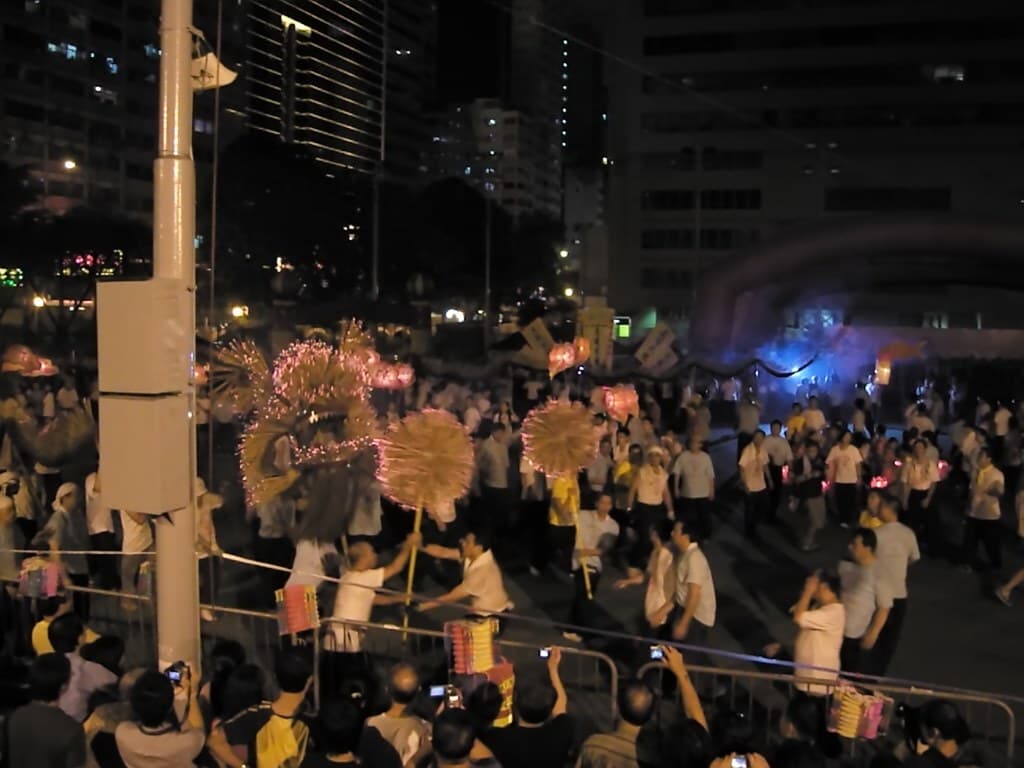
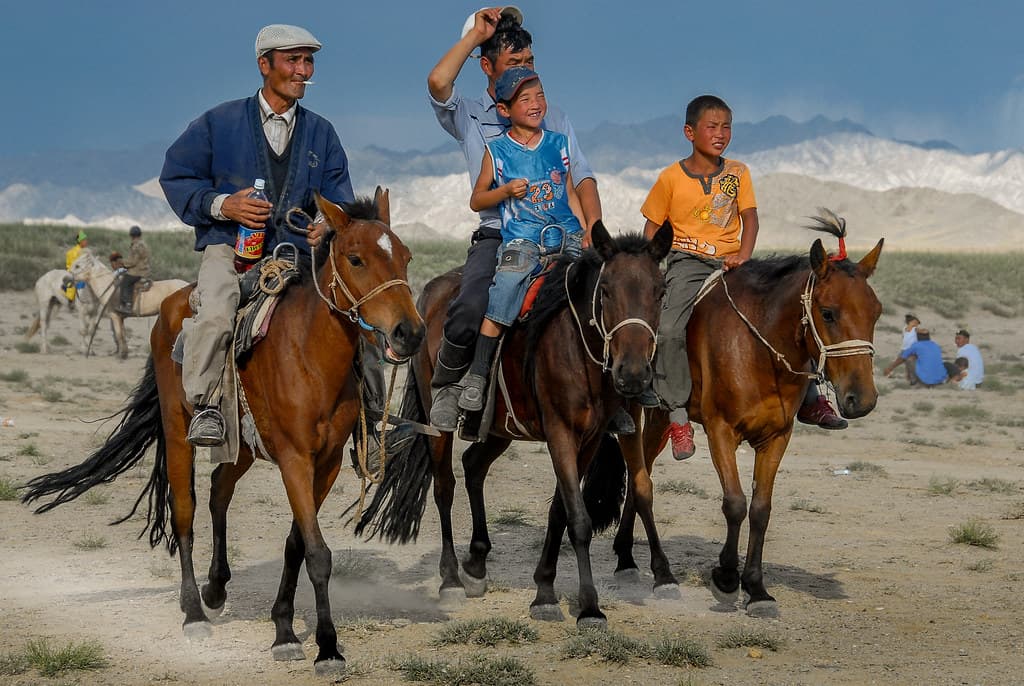
- Love the wrestling and horse racing? Naadam in Mongolia, every July, is the same contest on a national scale. For another fire ritual with a plague-fighting origin, see the Tai Hang Fire Dragon Dance in Hong Kong around Mid-Autumn.
Frequently asked questions
Do I need tickets for the Yi Torch Festival?
Only for the staged Fire Sacrifice Ceremony (祭火大典), which requires a purchased ticket. Everything that makes the festival feel alive, such as the street torch parades, the torch-scattering and the left-foot dance, is free. Buy one ceremony night, then follow the crowds outside, and check ticket prices locally.
Is Chuxiong the biggest place to see it?
Chuxiong is our canonical Yi Torch Festival, but one of the largest editions is across the border in Xichang, in Sichuan's Liangshan Yi Autonomous Prefecture. Its 2025 opening night drew about 245,000 people to a 4.8-kilometer avenue lit by 88 bonfires. Chuxiong offers the more manageable, immersive version; Xichang offers sheer scale.
When exactly does it happen?
It begins on the 24th day of the sixth lunar month and runs about three days, so the Gregorian date shifts each year, typically July or August. It fell on 18–20 July in 2025 and 6–8 August in 2026; 2027 is estimated at 27–29 July. Confirm the current year's program before booking.