What is Tết Nguyên Đán?
Tết Nguyên Đán, usually just called Tết, is the Vietnamese lunar new year. The name means roughly "the festival of the first morning", and it is by far the most important holiday in Vietnam, more significant than any birthday or national day. It falls on the same lunar date as Chinese New Year in most years, but its customs, food and feeling are distinctly Vietnamese.
At its heart, Tết is about family and ancestors. People travel across the country to be home, clean and decorate the house, and prepare an altar with offerings for ancestors, who are believed to return to celebrate with the living. Shortly before the new year, families send off the Kitchen Gods, Ông Công Ông Táo, to report on the household to the Jade Emperor, and many release live carp into lakes and rivers as their symbolic transport.
The first visitor to a house in the new year, the xông đất, is thought to shape its luck for the year, so families often invite someone successful and good-natured to cross the threshold first. Children receive lì xì, lucky money in red envelopes, and everyone tries to start the year with kind words, new clothes and no quarrels.
The year begins at home, with the living and the remembered at the same table.
What to expect
For travelers, Tết comes in phases, each with a different rhythm.
Two weeks before
The run-up
Markets swell with decorations, sweets and gifts. Flower markets appear: peach blossom dominates in the north, yellow apricot blossom, mai, in the south, with kumquat trees everywhere.
23rd day, 12th month
Farewell to the Kitchen Gods
Families make offerings and release carp to send the Kitchen Gods to heaven. Look for people at lakeshores and riversides with small buckets of fish.
New Year's Eve
Giao thừa
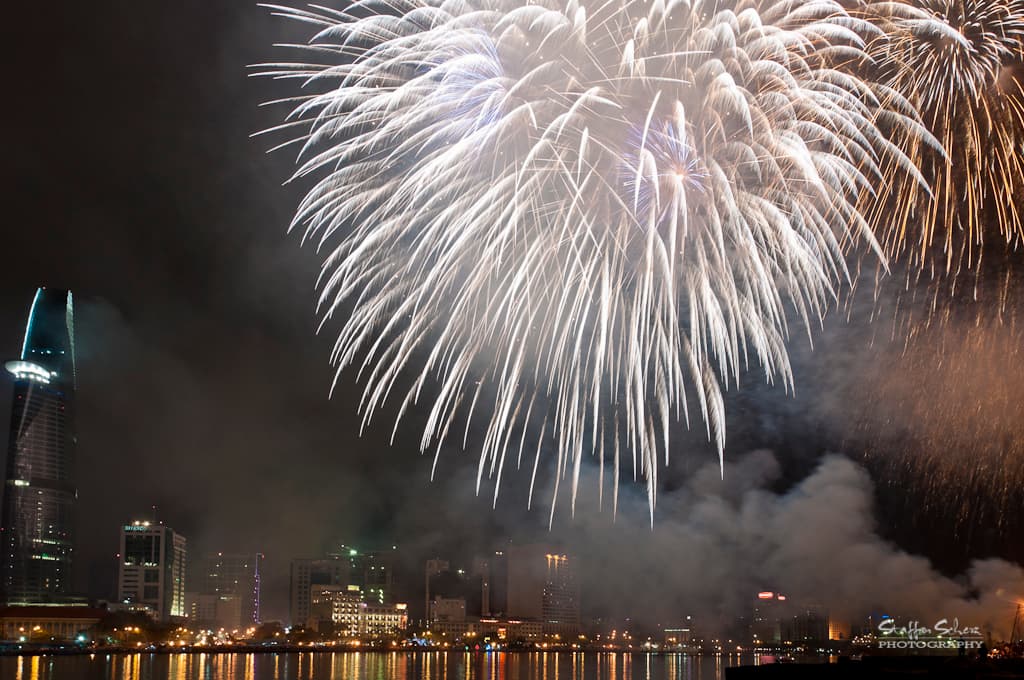
At midnight, families make offerings for the new year, and big cities host fireworks. Many people visit pagodas to pray and pick a sprig of green leaves for luck.
First three days
Family time
Visits to relatives, teachers and friends in a set order. Cities are quiet; many shops and restaurants close while families celebrate.
After Tết
Spring festivals
From around the third day, spring festivals begin across the north, among them the Hương Pagoda festival, drawing pilgrims through the following weeks as businesses reopen.
Planning your trip
Getting there
Transport is the main challenge. Flights, trains and long-distance buses sell out weeks ahead as millions travel home. Book early, and avoid travelling on the days just before Tết and at the end of the holiday, when everyone returns to the cities. The official holiday for civil servants ran from February 14 to 22 in 2026, and the government sets the window each year, so check it when you plan.
Where to stay
Choose your base with care. Hanoi and Ho Chi Minh City are spectacular in the run-up, especially their flower markets, but quieter during the first days. Tourist towns such as Hội An, Da Nang and Nha Trang keep more services open. If you have a Vietnamese friend or contact, an invitation to a family celebration is the best way to understand the holiday.
What it costs
Expect to pay more to move around: domestic flights, trains and sleeper buses cost noticeably more around Tết than on an ordinary week, with some guides reporting two to three times normal fares. Restaurants that stay open may add surcharges, and in beach towns that cater to domestic holidaymakers a 20 percent holiday surcharge is common. We have not found an official fare table, so check prices with the operator before you book. Carry small notes if you plan to give lì xì to children.
Go like you know
- Visit Ho Chi Minh City's Nguyễn Huệ Flower Street or Hanoi's flower markets in the evening just before New Year, when the lights and the crowds are at their best.
- Learn to say Chúc mừng năm mới (Happy New Year). It earns smiles everywhere.
- If invited to a home, bring a small gift such as fruit, tea or sweets, and do not arrive as the first visitor of the year unless you are explicitly asked to.
- Avoid arguments, sweeping out the house and talking about bad luck in the first days; Vietnamese families take a good start to the year seriously.
- Use the quiet days to explore cities at a slower pace; Hanoi and Ho Chi Minh City are rarely this calm.
- Vietnam's other big family holiday, Tết Trung Thu (Mid-Autumn), is a September or October lantern festival for children, a very different mood from Tết.
Frequently asked questions
Is Tết a good time to visit Vietnam?
It can be, if you plan for it. The run-up is lively and colorful, and the first days offer a rare glimpse of quiet cities and family rituals. The trade-off is closures and crowded transport. Many travelers arrive before Tết, stay put during the holiday, and travel again once services resume.
Is Tết the same as Chinese New Year?
Both mark the lunar new year and usually fall on the same date, but the customs differ. Vietnam has its own foods, such as bánh chưng, its own zodiac, which includes the cat instead of the rabbit, and distinctive traditions such as the Kitchen Gods' farewell and the first visitor of the year.
Will restaurants and shops be open?
Many family-run businesses close for several days, especially in the first three days of the new year. Large hotels, international chains, convenience stores and tourist areas generally stay open, sometimes with reduced hours. Plan meals and essential shopping ahead, and expect a quieter city.
What should I wear or bring?
The north is cooler at Tết than the south, so pack layers and a light jacket for Hanoi, while Ho Chi Minh City is much warmer. Bring something smart for visits or temple trips; red and bright colors are considered lucky, while all-black or all-white outfits are best avoided.