What is Syttende Mai?
On May 17, 1814, at Eidsvoll, north of Oslo, an assembly of Norwegians signed a constitution declaring Norway an independent kingdom. Union with Sweden followed, and full independence did not come until 1905, but May 17 became the nation's day, and Norwegians celebrate it with a joy that surprises many visitors. They call it simply Syttende mai, "the seventeenth of May".
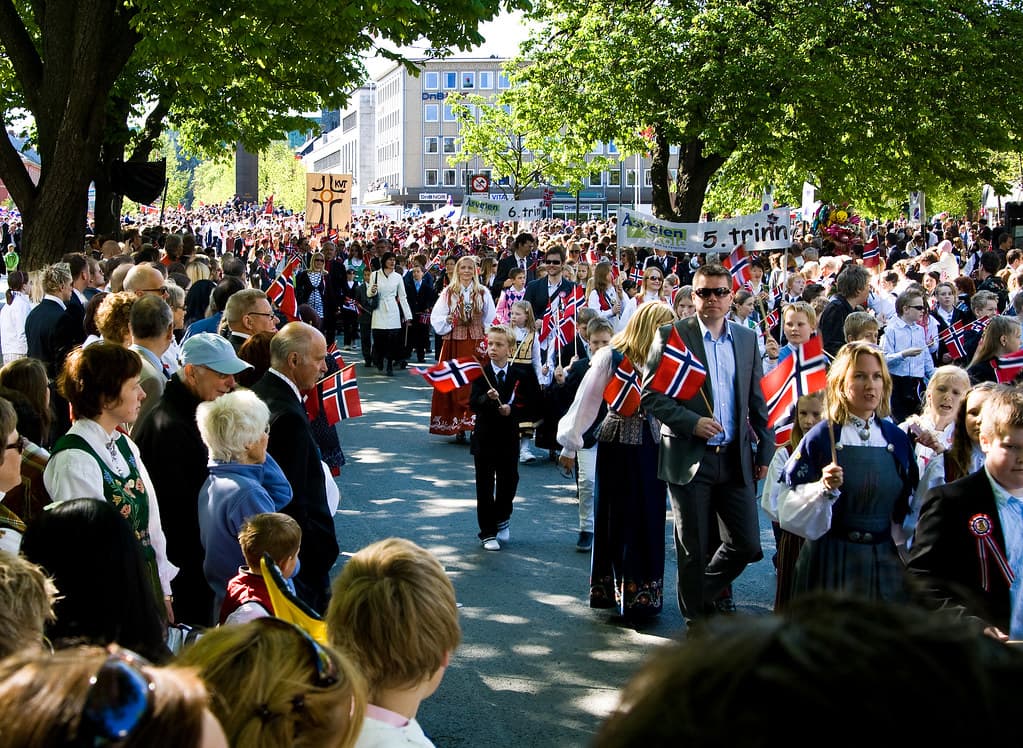
What makes it unusual is that it is not a military day. It is, above all, a day for children. From the 1860s onwards, schools began holding children's parades, the barnetog, and today every town and village in Norway has one. Schoolchildren march through the streets with their classes, behind school banners and marching bands, waving Norwegian flags and shouting "Hurra!", while their families line the pavements. In Oslo, the great children's parade walks up Karl Johans gate, the main street, to the Royal Palace, where the royal family waves to the marchers from the balcony.
The day is also a festival of national dress. Many Norwegians wear their bunad, the traditional costume of the region their family comes from, with embroidered skirts or waistcoats and silver jewellery, so the streets become a parade of regional colours. After the parades come speeches, church services, games for children, and a day of ice cream, hot dogs and cake. The russ, students finishing secondary school, add their own noisy celebrations in red and blue overalls.
Celebrations were banned during the German occupation in the Second World War, which gave the flags of May 17 an even stronger meaning afterwards.
What to expect
The celebrations last the whole day, starting early in the morning.
Early morning
The flags go up
The day begins with flag-raising, salutes and wreath-laying at monuments, and families dress in their bunads and best clothes.
Morning
The children's parades
The barnetog fills the streets in every town. In Oslo, the long children's parade marches up Karl Johans gate to the Royal Palace, greeted by the royal family on the balcony.
Afternoon
Games, ice cream and the citizens' parade
Schools and neighbourhoods hold games and fairs for children, and in many towns a citizens' parade of clubs, bands and organizations follows. The celebrations go on into the evening.
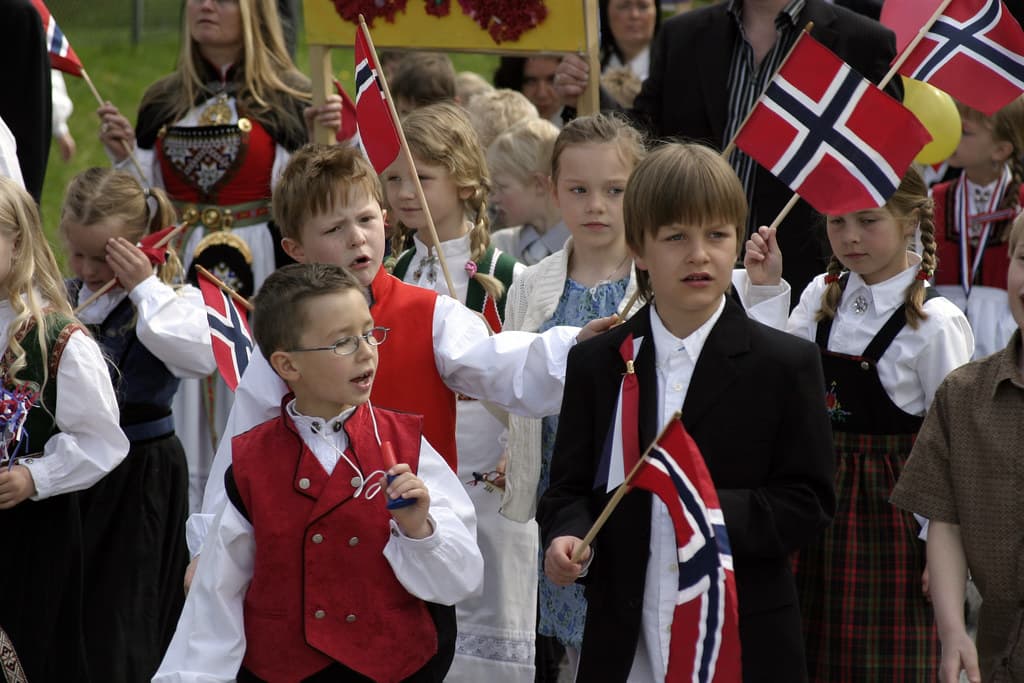
A children's parade in Førde, western Norway
Photo by arnybo / flickr · CC BY-SA 2.0
Planning your trip
Getting there
Oslo's Gardermoen airport has flights from across Europe and beyond, with fast trains to the city centre. Karl Johans gate runs from the central station to the Royal Palace, so the parade route is a short walk from anywhere in the centre. Other cities, such as Bergen and Trondheim, have their own large parades.
Where to stay
Central Oslo, around Karl Johans gate and the waterfront, is the most convenient. Norway is expensive, and hotels fill for the holiday, so book early. Bergen is a good alternative, with its own distinctive traditions, including the buekorps, boys' brigades that march with crossbows.
What it costs
The celebrations are free. Norway is one of the most expensive countries in Europe, with high prices for hotels, restaurants and drinks. Ice cream and hot dogs from street stalls are the classic, affordable food of the day.
Go like you know
- Bring or buy a small Norwegian flag; everyone carries one.
- Eat as many ice creams and hot dogs as you like; it's tradition.
- Say "Gratulerer med dagen!", "congratulations on the day", to the people you meet.
- Look out for the russ in their red overalls, finishing their final year of school with their own parades and celebrations.
- If you're in Bergen, watch the buekorps, boys' brigades that march with wooden crossbows and drums, a tradition unique to the city.
- Visit Eidsvoll, north of Oslo, where the constitution was signed, on another day of your trip.
- For midsummer in Scandinavia, see Midsummer in Sweden, in June.
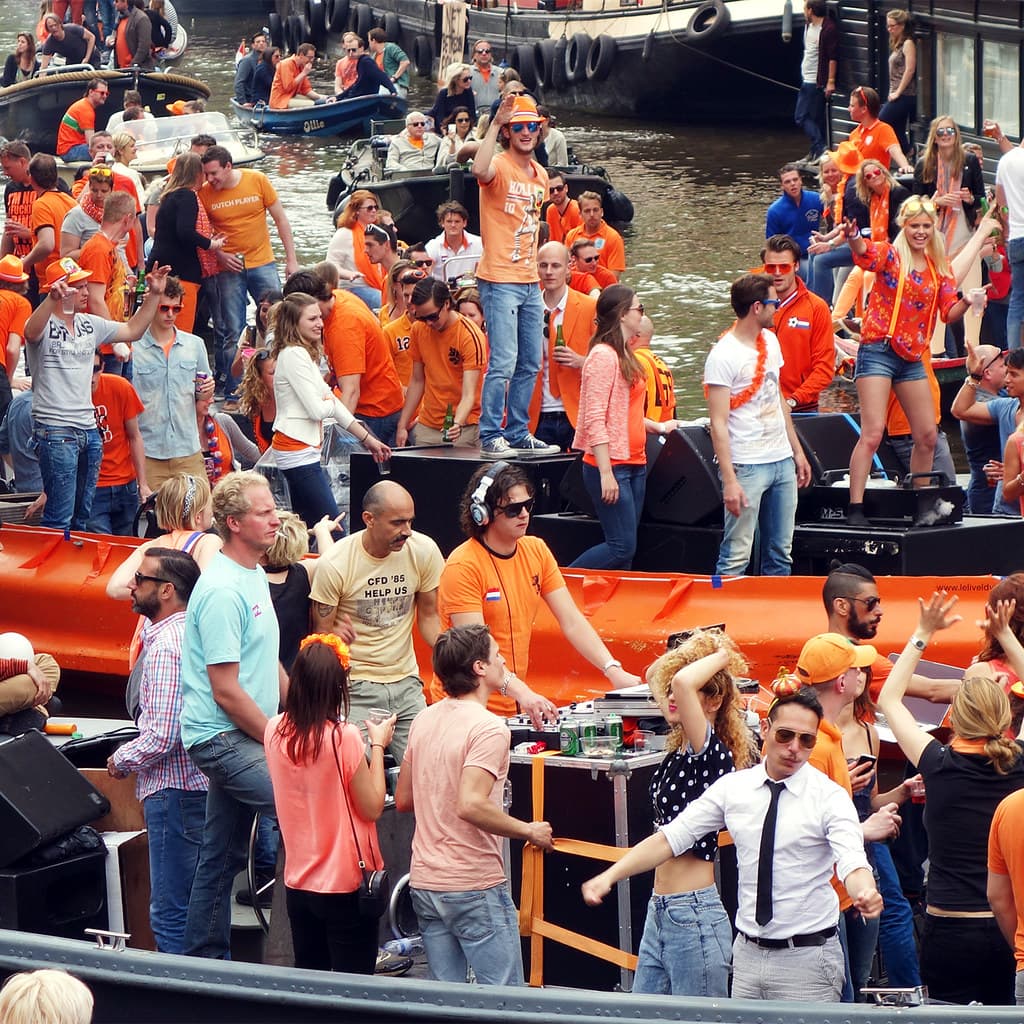
- The Netherlands' national day, King's Day, in April, is another national celebration that turns a country orange.
Frequently asked questions
When is Syttende Mai?
Every year on May 17, Norway's Constitution Day and a public holiday. In 2027 it falls on a Monday. The children's parades take place in the morning in most towns, and the celebrations continue all day, ending in the evening.
What is a bunad?
A bunad is a traditional Norwegian costume, with designs specific to different regions and valleys. Bunads are usually hand-embroidered, decorated with silver jewellery, and handed down or made to order. May 17 is the day most Norwegians wear theirs, and the variety is remarkable.
Can visitors join the celebrations?
Yes. The parades are public, and visitors are welcome to watch, wave flags and cheer along the routes. The children's parades are for schools, but the atmosphere is open and friendly, and many towns hold games and events for everyone in the afternoon.