What is Sechseläuten?
Sechseläuten means "the six o'clock ringing". In medieval Zurich, the craftsmen's guilds set the city's working hours, and in spring, when the days grew longer, the church bells rang at six in the evening to mark the end of the working day. The change to summer hours became a celebration, and over the centuries it grew into Zurich's great spring festival, usually held on the third Monday of April.
Its heart is still the guilds, or Zünfte. Zurich's guilds governed the city for centuries, and they remain proud social institutions today. On Sechseläuten Monday, thousands of guild members march through the old town in historic costume, with bands, horses, carriages and floats, carrying flowers given to them by the crowds along the way. The day before, a children's parade fills the same streets with costumes from Swiss history and folklore.
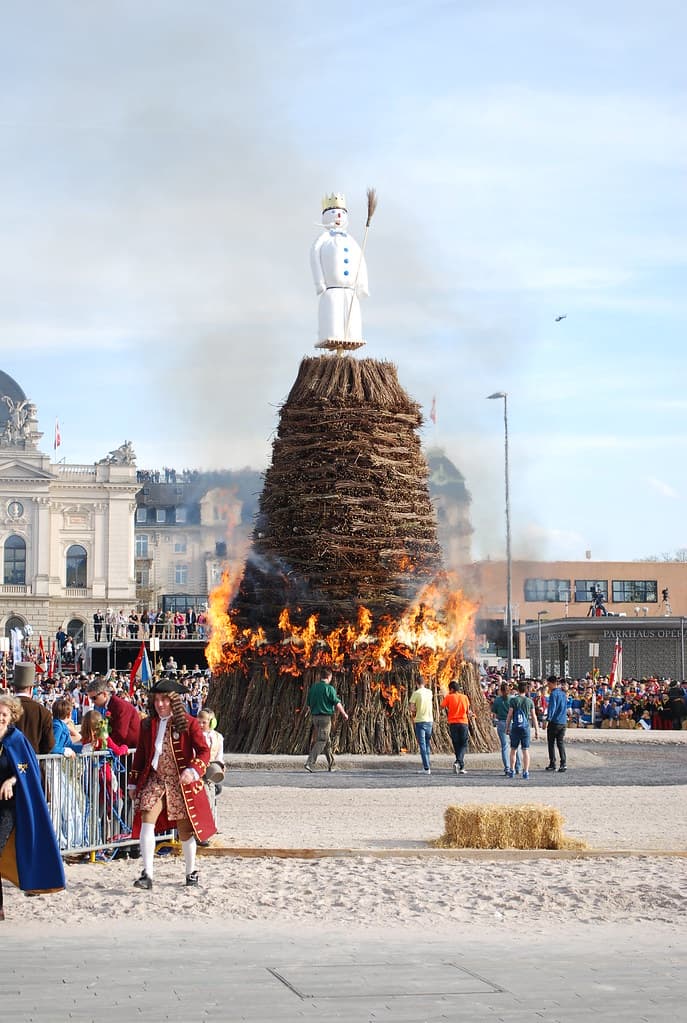
The climax comes on the Monday evening by the lake. On the Sechseläutenplatz, a towering bonfire is topped by the Böögg, a giant snowman made of cotton wool and packed with fireworks, a symbol of winter. When the bonfire is lit, horsemen from the guilds gallop around it in circles, and the whole city, and much of Switzerland watching on television, waits for the Böögg's head to explode. Tradition says the faster it goes, the warmer and sunnier the summer will be.
The guilds took over the burning of the Böögg in 1892 and joined it to their parade in 1902. The record for the slowest explosion is 57 minutes, in 2023; the fastest, just over five minutes, in 1974.
What to expect
The festival runs over the weekend, with the children's parade on Sunday and the guilds and the Böögg on Monday.
Sunday
The children's parade
Thousands of children in historical and traditional costumes parade through the city centre, followed by bands, in a colourful afternoon for families.
Monday afternoon
The guilds' parade
The guilds march through the old town in costume, with bands, horses and floats. Spectators hand flowers to the marchers, who soon carry armfuls of them.
Monday evening
The Böögg
At the Sechseläutenplatz, the bonfire is lit, the riders gallop around it, and the crowd counts the minutes until the Böögg's head explodes.
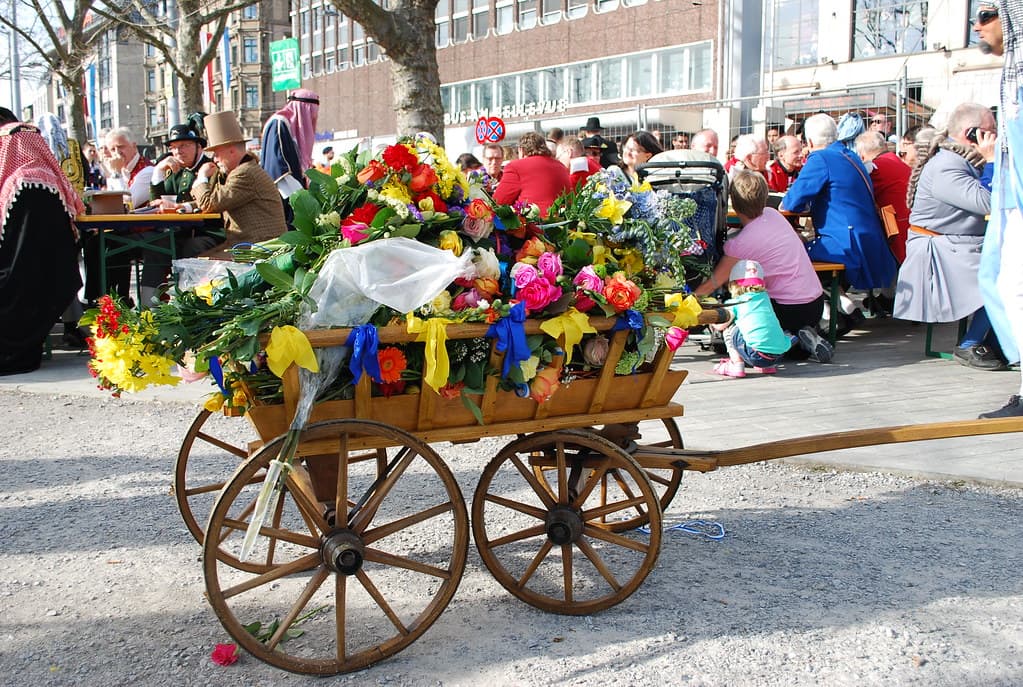
A flower cart in the guilds' parade
Photo by Zürich, Switzerland. / flickr · Public Domain
Planning your trip
Getting there
Zurich's airport has direct flights from around the world and trains to the main station in about ten minutes. The parade route runs through the city centre, and the Sechseläutenplatz is next to the Opera House by the lake, an easy walk or tram ride from the station.
Where to stay
Zurich's old town, the area around the main station and the lakeside districts are all convenient. Hotels are expensive all year, but April is not peak season, so rooms are easier to find than in summer.
What it costs
The parades and the burning of the Böögg are free to watch, with paid grandstand seats along the route and at the square. Zurich is one of the most expensive cities in Europe, especially for rooms and meals out, so budget accordingly.
Go like you know
- Stand near the Sechseläutenplatz early, or watch on a big screen elsewhere in the city if the square is full.
- Look out for the guild houses in the old town, many of them historic buildings with restaurants open to the public.
- After the Böögg, the guilds visit each other's houses in the evening, and the old town stays lively late into the night.
- Take a boat on Lake Zurich or walk the lakeside promenade in the afternoon before the crowds gather for the bonfire.
- Look out for the guests of honour: each year a Swiss canton is invited to join the parade with its own costumes and traditions.
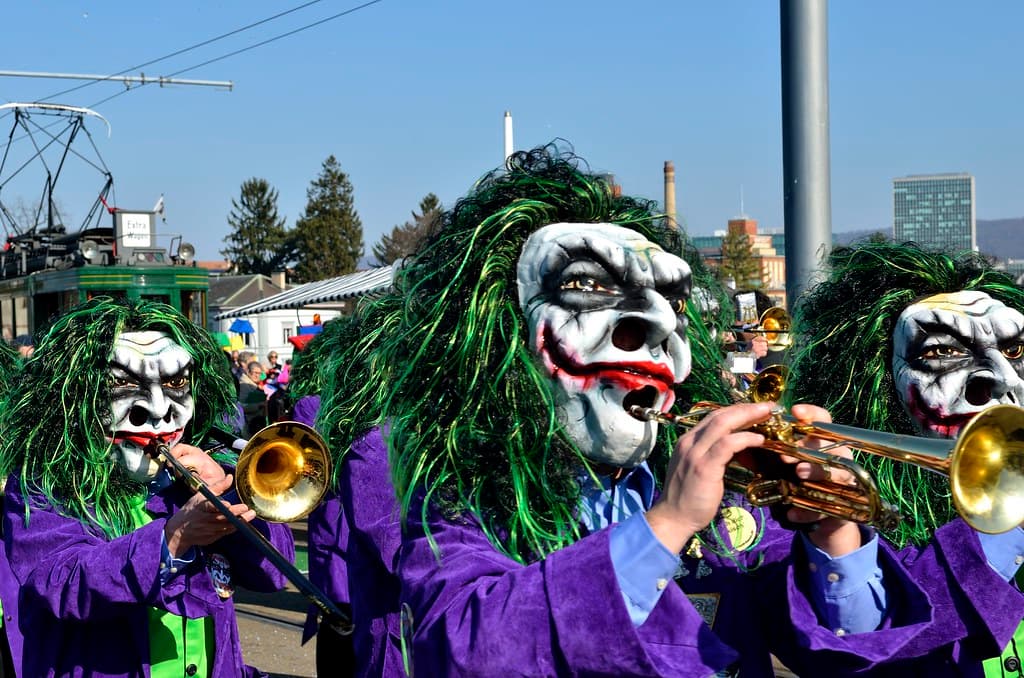
- For Switzerland's great carnival, see Basel Fasnacht, in late winter.
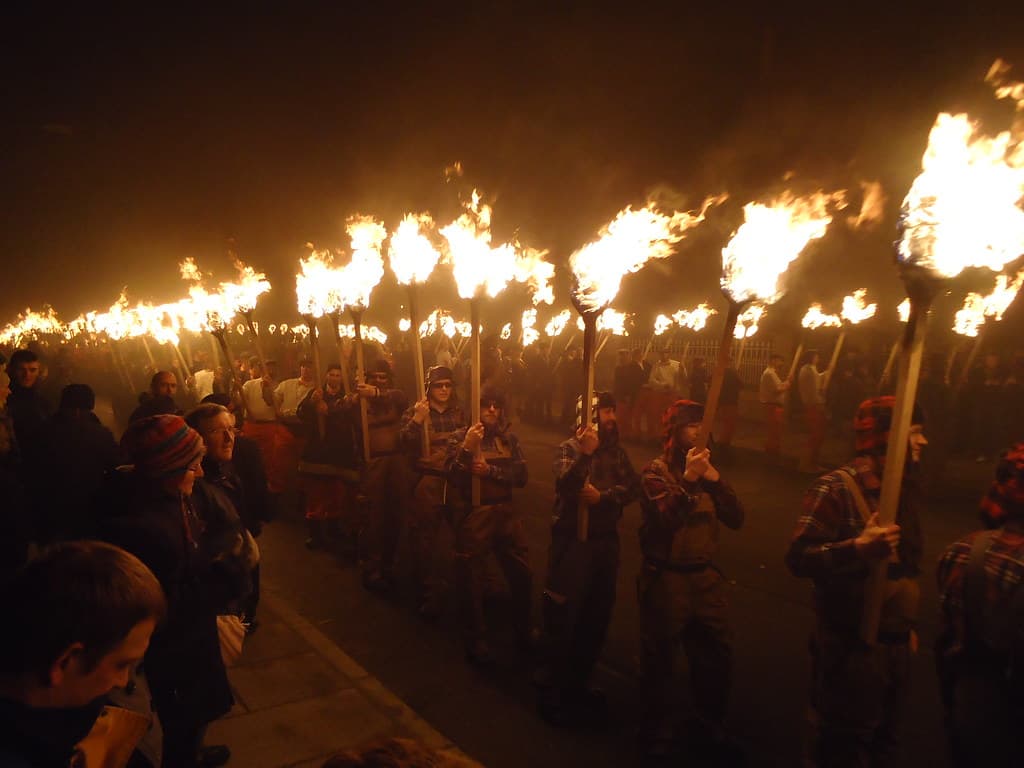
- Shetland's Up Helly Aa is another festival that ends by setting a great figure on fire.
Frequently asked questions
When is Sechseläuten?
Usually on the third Monday of April, with the children's parade on the Sunday before. In 2027 it falls on Monday, April 19, with the children's parade on April 18. The Böögg is traditionally set alight at 6pm on the Monday, by the lake.
What is the Böögg?
The Böögg is a large snowman figure made of cotton wool, stuffed with fireworks and set on top of a bonfire. It represents winter, and burning it welcomes spring. The time it takes for its head to explode is said to predict the summer: the quicker, the better.
Can visitors join the parade?
The guilds' parade is for members of Zurich's guilds and their guests, but visitors are very welcome along the route. Spectators traditionally hand flowers to the marchers, and the whole city turns out to watch, especially for the burning of the Böögg in the evening.