What is the Nice Carnival?
The Carnaval de Nice is the biggest carnival in France and one of the most famous in the world. For about two weeks every February, the city on the French Riviera fills its streets with giant floats, parades by day and by night, and its signature Batailles de Fleurs, the flower battles, in which costumed performers throw flowers to the crowd along the Promenade des Anglais, with the Mediterranean as a backdrop.
Carnival in Nice has a long history: the first mention dates from 1294. The modern carnival took shape in 1873, when a committee led by the artist Alexis Mossa turned the celebration into a parade of floats. The flower battles began in the nineteenth century, when the wealthy visitors who wintered on the Riviera threw flowers from their carriages, and the region is still known for its flower growing.
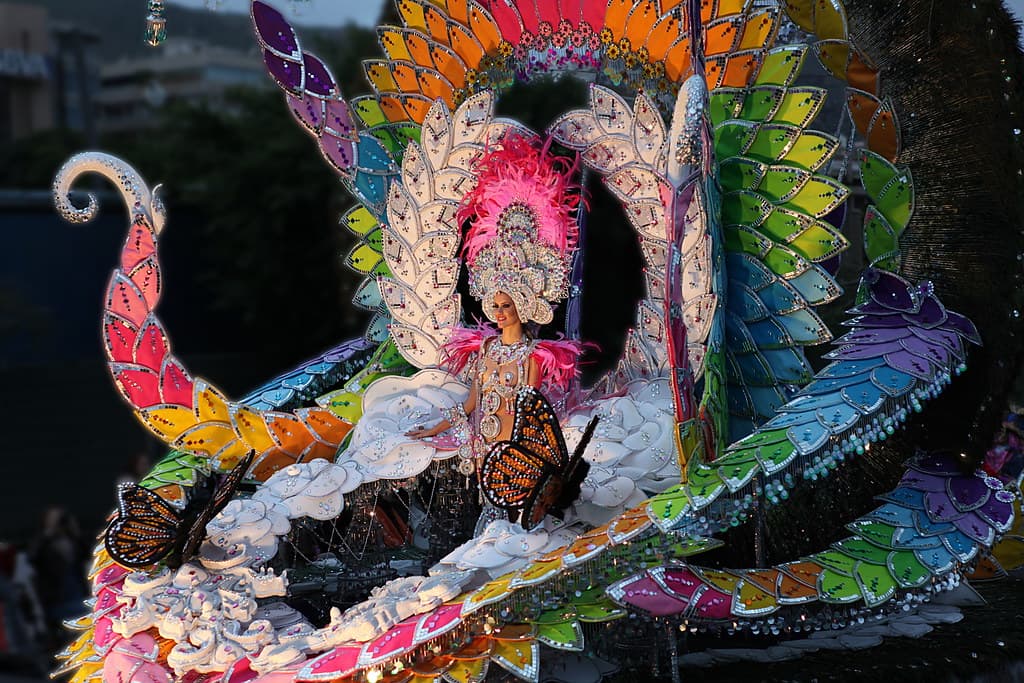
Each year has a theme, and the floats are built around it, with a King of Carnival leading the parade and satirical figures poking fun at politics and current events. The parades, called corsos, take place both during the day and at night, when the floats are lit up. The big papier-mâché heads, the grosses têtes, worn by dancers, are a Nice tradition.
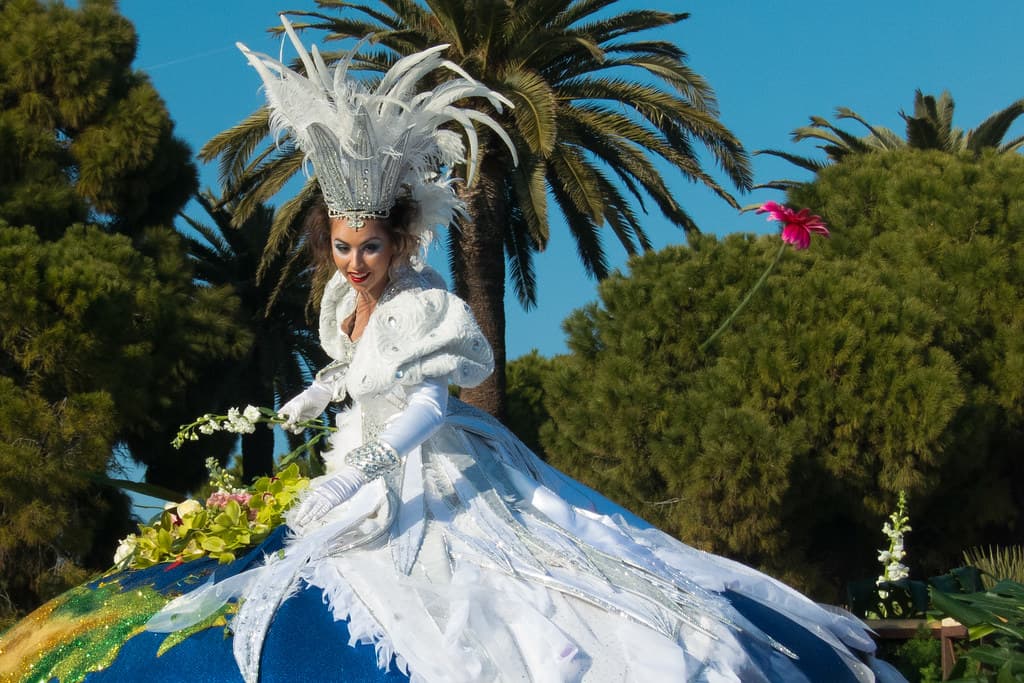
The Batailles de Fleurs are the most elegant part of the carnival. Floats covered in fresh flowers, many grown in the region, glide along the Promenade des Anglais, while performers in extravagant costumes throw mimosa, lilies and gerberas to the spectators. The carnival ends with the burning of the King on the last night, followed by fireworks over the bay.
What to expect
The carnival runs for about two weeks in February, with parades on several days each week.
Opening
The King arrives
The carnival opens with the arrival of the King and the first parade of floats at Place Masséna.
During the carnival
Corsos and flower battles
Day and illuminated night corsos parade around Place Masséna, and the flower battles take place on the Promenade des Anglais, with flowers thrown to the crowd.
Final night
The King burns
The carnival ends with the burning of the King of Carnival and fireworks over the Baie des Anges.
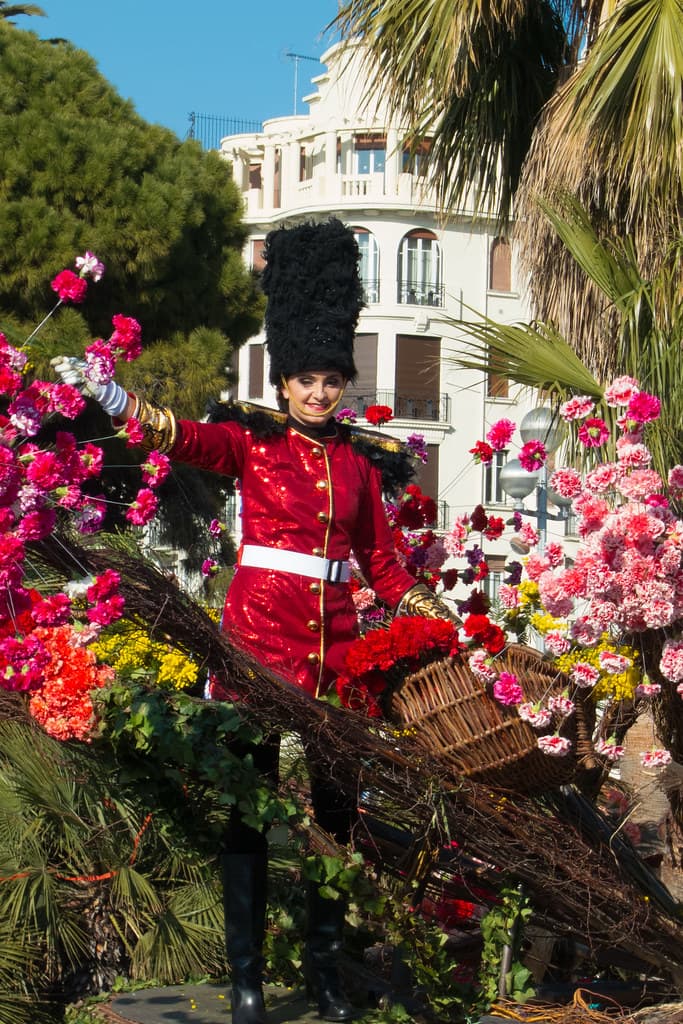
A flower battle on the Promenade des Anglais
Photo by Mark Fischer / flickr · CC BY-SA 2.0
Planning your trip
Getting there
Nice Côte d'Azur Airport has flights from across Europe and beyond, and is a short tram ride from the city centre. Trains connect Nice with Paris, Marseille, Monaco and Italy. Tram line 1 serves Place Masséna, the heart of the carnival.
Where to stay
Nice has hotels and apartments for every budget, and February is the low season, so prices are lower than in summer, though they rise during the carnival. The old town and the area around Place Masséna are convenient.
What it costs
Tickets are needed for the parade areas. In 2026, seats in the stands cost about €23 to €28 for adults and €8 to €10 for children, with cheaper standing areas; visitors in full costume could enter the standing areas for free, except for the flower battles. Nice is pricey, but February offers good deals.
Go like you know
- Come in costume for free entry to the standing areas at the parades.
- Visit the flower market in the Cours Saleya, in the old town.
- Book a seat in the stands for at least one night parade; the illuminated floats are at their best after dark.
- Walk up Castle Hill for views over the Baie des Anges and the old town.
- Keep a bag free to carry home the flowers you catch at the flower battles.
- Try socca, a chickpea pancake, and pissaladière, onion tart, in the old town.
- Take a day trip to Menton for the Fête du Citron, its lemon festival, held around the same time.
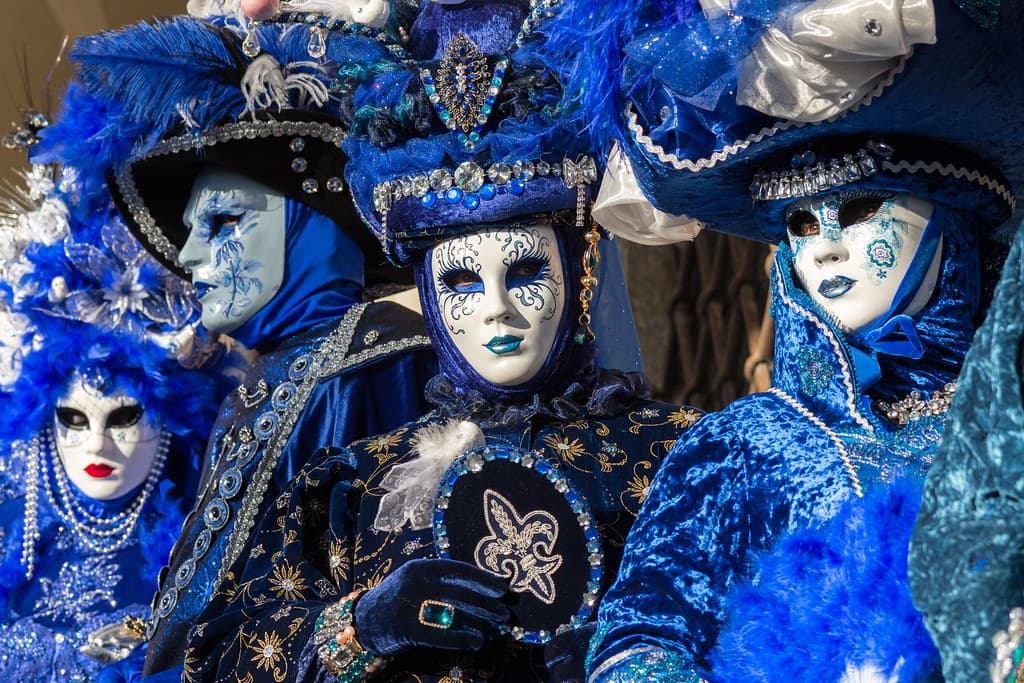
- For another great carnival, see the Venice Carnival or the Carnaval de Santa Cruz de Tenerife.
Frequently asked questions
When is the Nice Carnival in 2027?
From February 9 to 28, 2027, with the theme "Vive l'Amour" (long live love). The carnival runs for about two to three weeks in February, with parades and flower battles on several days each week. Check the official website for the programme and ticket prices.
What is a flower battle?
A flower battle, or bataille de fleurs, is a parade of floats decorated with fresh flowers along the Promenade des Anglais. Performers in costume throw flowers, such as mimosa, to the spectators. The tradition dates from the nineteenth century and is one of the highlights of the carnival.
Do I need tickets?
Yes, for the parade areas around Place Masséna and the Promenade des Anglais, which are fenced off. You can choose between seats in the stands and cheaper standing areas. Visitors in full costume can usually enter the standing areas for free, except for the flower battles.