What is the National Eisteddfod?
The Eisteddfod Genedlaethol Cymru, the National Eisteddfod of Wales, is the largest festival of competitive music and poetry in Europe, and the great annual gathering of Welsh language and culture. Held in the first week of August, it moves every year to a different part of Wales, alternating between the north and the south, so that each edition belongs to a new community.
Its roots go back to 1176, when Lord Rhys held a festival of poetry and music at his castle in Cardigan, with a chair awarded to the best poet. The modern National Eisteddfod has been held almost every year since 1861, when it took place in Aberdare. Since 1950, a rule requires all competitions and performances on the main stages to be in Welsh, and the festival has become a symbol of the survival and revival of the language.
The festival takes place on the Maes, a temporary field of pavilions, tents and stalls, with a great pavilion at its centre. Some 6,000 competitors take part in contests of singing, choirs, poetry, recitation, dance, brass bands, drama and visual arts, and the festival draws more than 100,000 visitors over its eight days. Around the competitions, the Maes fills with concerts, theatre, talks, food stalls and stands of Welsh organizations, and the evenings bring gigs and concerts.
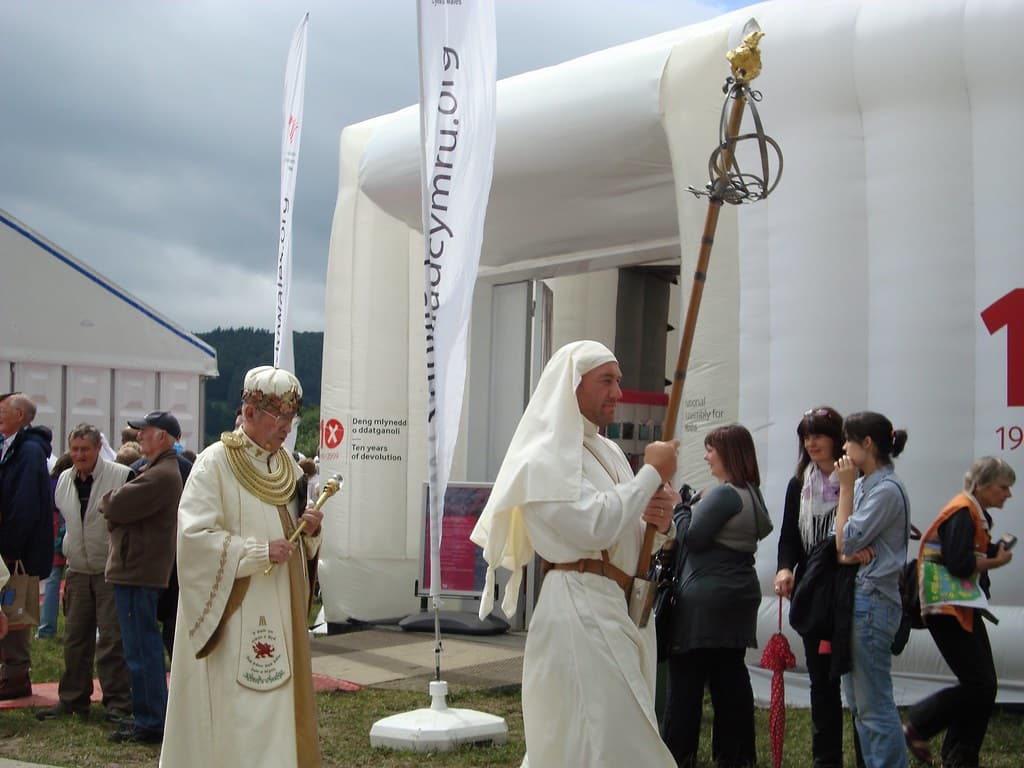
The highlights are the ceremonies of the Gorsedd, a society of poets, writers and musicians created in the 1790s by the antiquarian Iolo Morganwg. Dressed in white, green and blue robes, its members take part in the Crowning of the winning poet in free verse and the Chairing of the winning poet in strict metre, with the Archdruid presiding, in some of the most solemn and moving moments of Welsh cultural life.
What to expect
The festival runs for eight days, from Saturday to Saturday, in the first week of August.
Every day
Competitions on the Maes
Competitions run from morning until evening in the main pavilion and smaller stages, with choirs, soloists, poets and dancers competing for prizes, while the rest of the Maes hums with activity.
Early in the week
The Crowning
The Archdruid and the Gorsedd crown the winning poet in free verse, in one of the festival's great ceremonies in the main pavilion.
Friday
The Chairing
The winning poet in strict metre is chaired, the festival's most prestigious award, in a ceremony full of tradition and emotion.
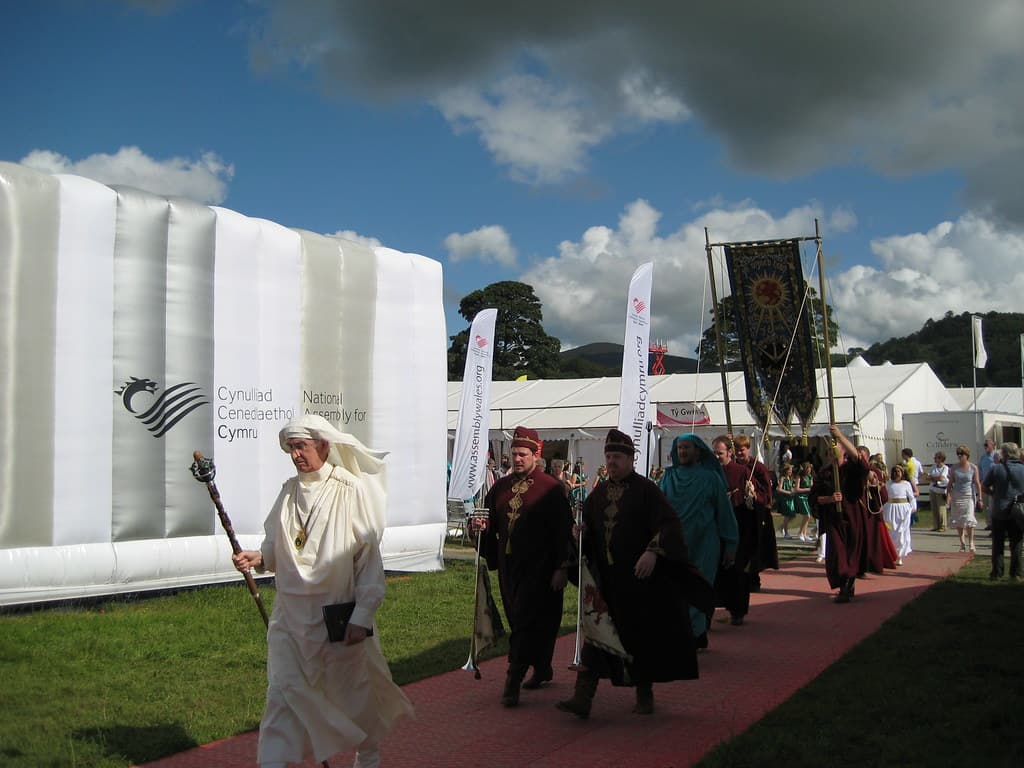
The Gorsedd of Bards on the Maes
Photo by National Assembly For Wales / Cynulliad Cymru / flickr · CC BY 2.0
Planning your trip
Getting there
The location changes every year, so check the festival website for the venue, transport links and shuttle buses. In 2027, the Eisteddfod will be held at Glantwymyn, in rural Powys in mid Wales. Many visitors drive, with large car parks near the Maes, and shuttle buses run from the nearest railway stations.
Where to stay
Accommodation near the Maes fills quickly, especially in rural areas, so book as soon as the venue is announced. Many visitors camp in the festival's campsites, including Maes B, the youth campsite with its own music festival. Towns within driving distance offer more options.
What it costs
A day ticket to the Maes is moderately priced, with discounts for children, students and families. Evening concerts and gigs are ticketed separately. Wales is generally less expensive than much of Britain, and camping keeps costs down.
Go like you know
- Learn a few words of Welsh, such as "diolch" (thank you); people appreciate the effort.
- Watch the Crowning and the Chairing, the festival's most moving moments.
- Try Welsh cakes, warm from the griddle, from a stall on the Maes.
- Visit the Lle Celf, the visual arts exhibition, and the science and technology pavilion.
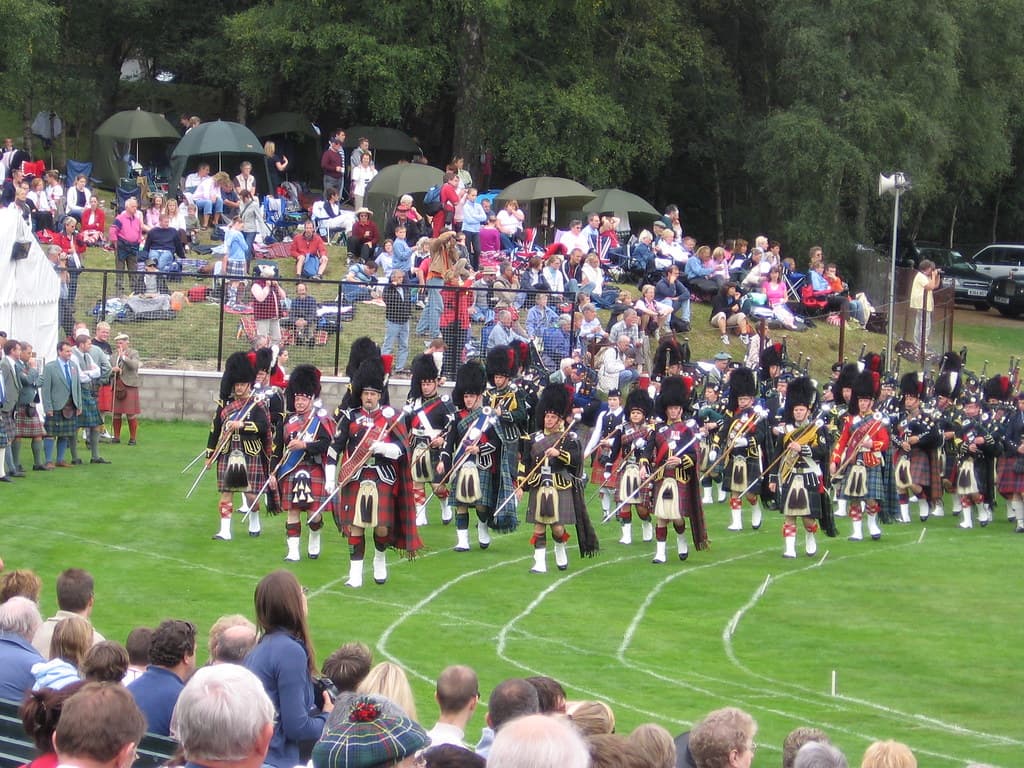
- Scotland's Braemar Gathering, in September, is another great celebration of Celtic culture in Britain.
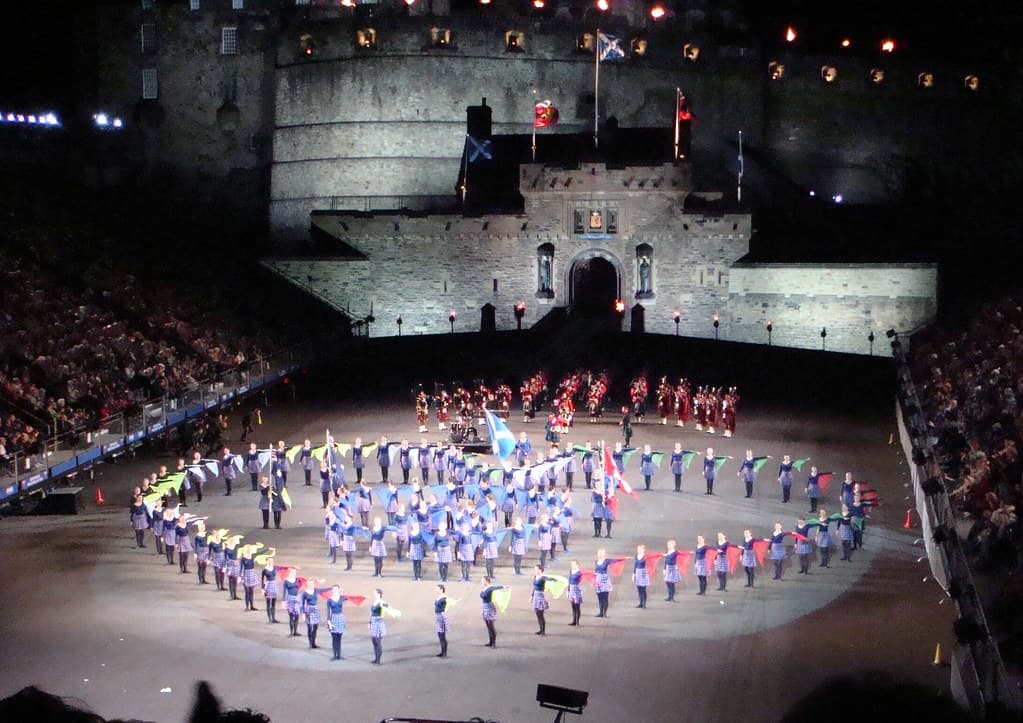
- The Edinburgh Festival Fringe, in August, is Britain's other great summer festival of the arts.
Frequently asked questions
When is the National Eisteddfod?
Every year in the first week of August, from Saturday to Saturday. In 2027, it is expected from July 31 to August 7 at Glantwymyn in Powys. The venue changes every year, alternating between north and south Wales; check the official website for confirmed dates and details.
Do I need to speak Welsh?
No. All competitions and ceremonies on the main stages are in Welsh, but free translation headsets are available in the main pavilion, and most signs and information are bilingual. Visitors who don't speak Welsh are warmly welcomed, and many come to learn about the language.
What is the Gorsedd?
The Gorsedd is a society of poets, writers, musicians and others who have contributed to Welsh culture, created in the 1790s by Iolo Morganwg. Its members, dressed in white, green and blue robes, lead the festival's main ceremonies, including the Crowning and the Chairing of poets.