What is the Edinburgh Festival Fringe?
The Fringe began as gatecrashing. In 1947, when Edinburgh launched its first International Festival of music and theatre, eight theatre companies turned up uninvited and put on their shows anyway, in smaller halls around the edge of the official programme. The next year the Scottish playwright Robert Kemp called them the "fringe", and the name stuck.
The principle hasn't changed: the Fringe is open access, with no selection committee. Anyone who can find a venue and pay to register can put on a show, which is why the programme runs from big-name stand-up and touring theatre to student sketch troupes, solo cabaret, magic, dance and experiments that may never be performed again. In 2025 it featured 3,893 shows in 301 venues and sold more than 2.6 million tickets, and the 2026 programme passed 4,000 shows. It calls itself the world's largest performing-arts festival, and nothing really competes.
A charity, the Fringe Society, publishes the programme and runs the central box office, but doesn't choose what goes on. The 2027 Fringe is its 80th edition. It also shares August with the city's other festivals, including the official International Festival and the Military Tattoo on the castle esplanade, so Edinburgh in August is several festivals at once.
Anyone can take part in the Fringe.
What to expect
There is no centre to the Fringe, just a city where every second doorway seems to be a venue. A typical day might start with a free comedy hour in a pub back room at lunchtime, move on to a play in a university lecture hall, and end at a late-night cabaret.
First weekend
Previews and 2-for-1 days
The Fringe opens on a Friday. Many shows run cheaper previews in the first days, and in 2026 the first Monday and Tuesday were 2-for-1 days. It is the best time to take chances on unknowns.
Middle weeks
Peak Fringe
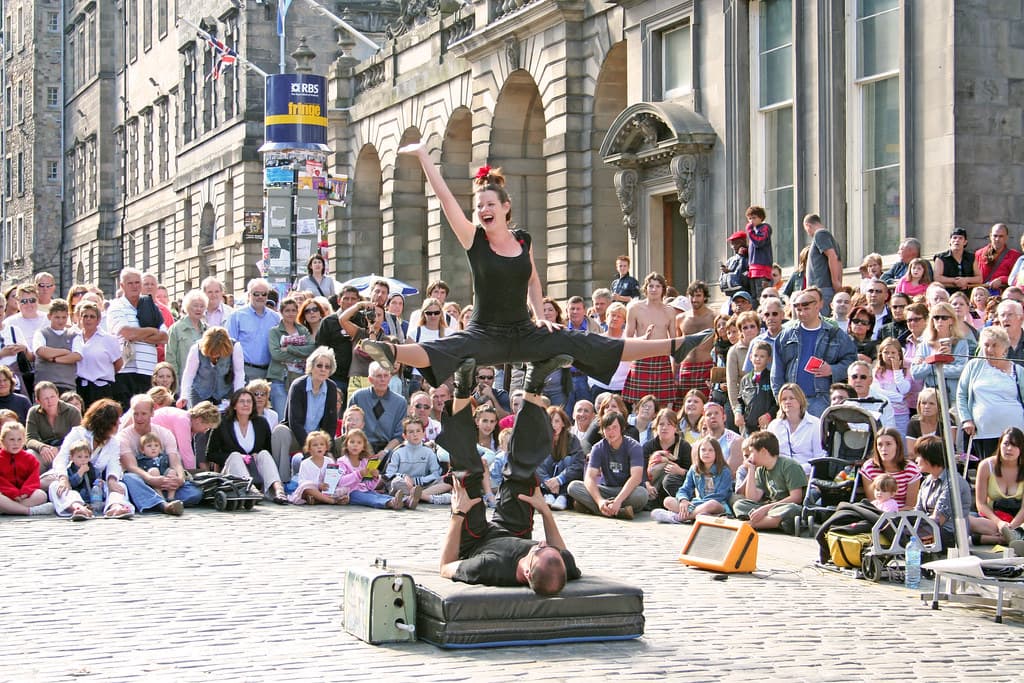
From the second week the reviews are out, the hits sell out, and the Royal Mile and the Mound are solid with performers handing out flyers. The Half Price Hut opens from the first Wednesday, with same-day tickets for shows that want to fill seats.
Final weekend
Last chances
Shows close one by one, last-minute tickets for the hits get harder to find, and the city starts emptying on the final Monday.
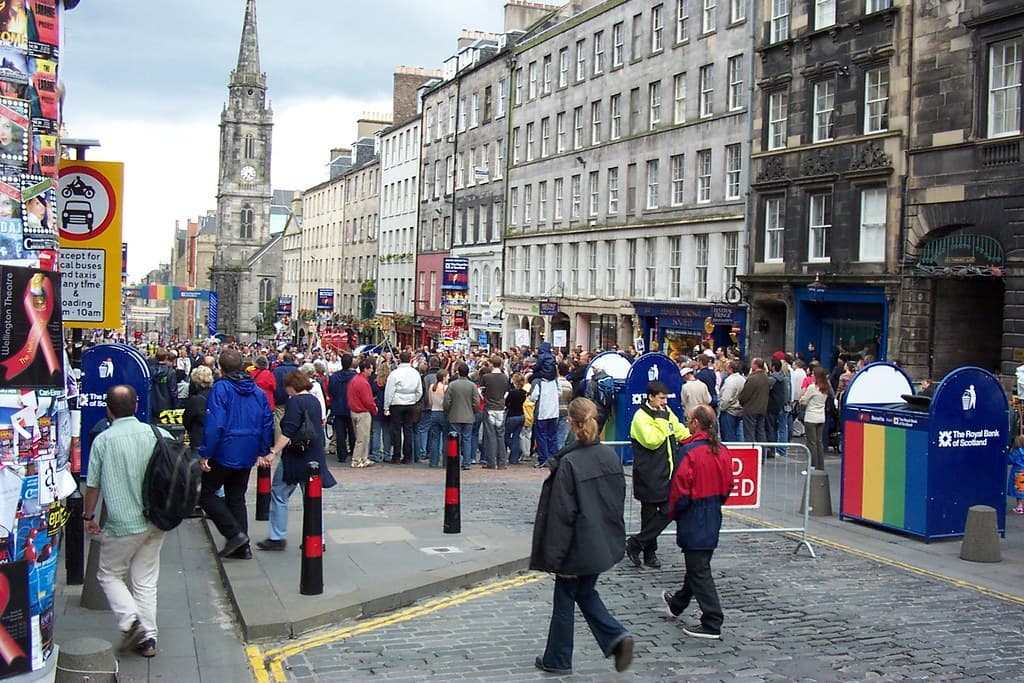
The Royal Mile in Fringe season
Photo by raymccrae / flickr · CC BY 2.0
Planning your trip
Getting there
Edinburgh's airport is linked to the city centre by tram and bus, and Waverley station, in the middle of town, has direct trains from London in about four and a half hours. Once you're there, walk: most venues are in the Old Town and around the university, a short walk apart.
Where to stay
Anywhere in the Old Town, the New Town or the streets around the university keeps you on foot. Prices fall as you move out to Leith, Bruntsfield or Portobello, all a short bus ride away, and some visitors commute from Glasgow, under an hour by train.
What it costs
Shows averaged about 13 pounds a ticket in 2026, with headline comedy and big theatre costing more. More than 400 shows were free, asking only for a donation at the end, and the street performances on the Royal Mile and the Mound are free too. The Half Price Hut halves same-day prices for the shows that join it. The real cost is the bed: accommodation will be most of your budget.
Go like you know
- Book the few shows you really want to see, then leave the rest of your days open for free shows and Half Price Hut tickets.
- Drop cash in the bucket at free shows. That donation is the performers' income.
- Go to at least one show you'd never pick at home: a dance piece, a children's show, something in a language you don't speak.
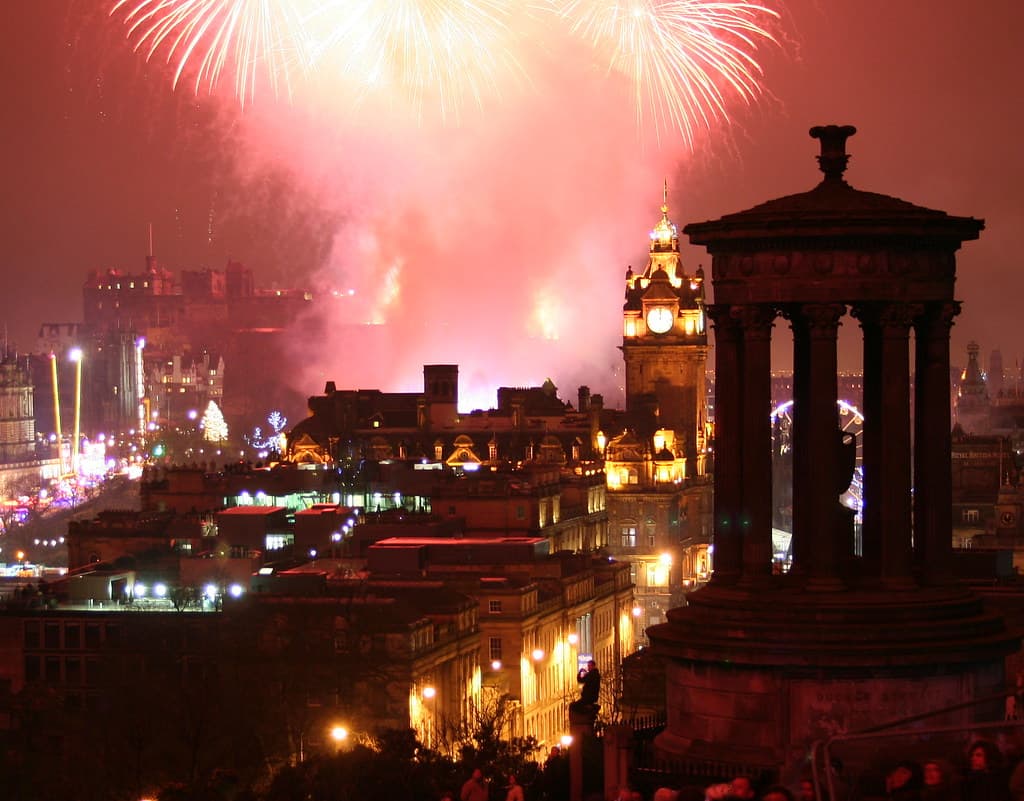
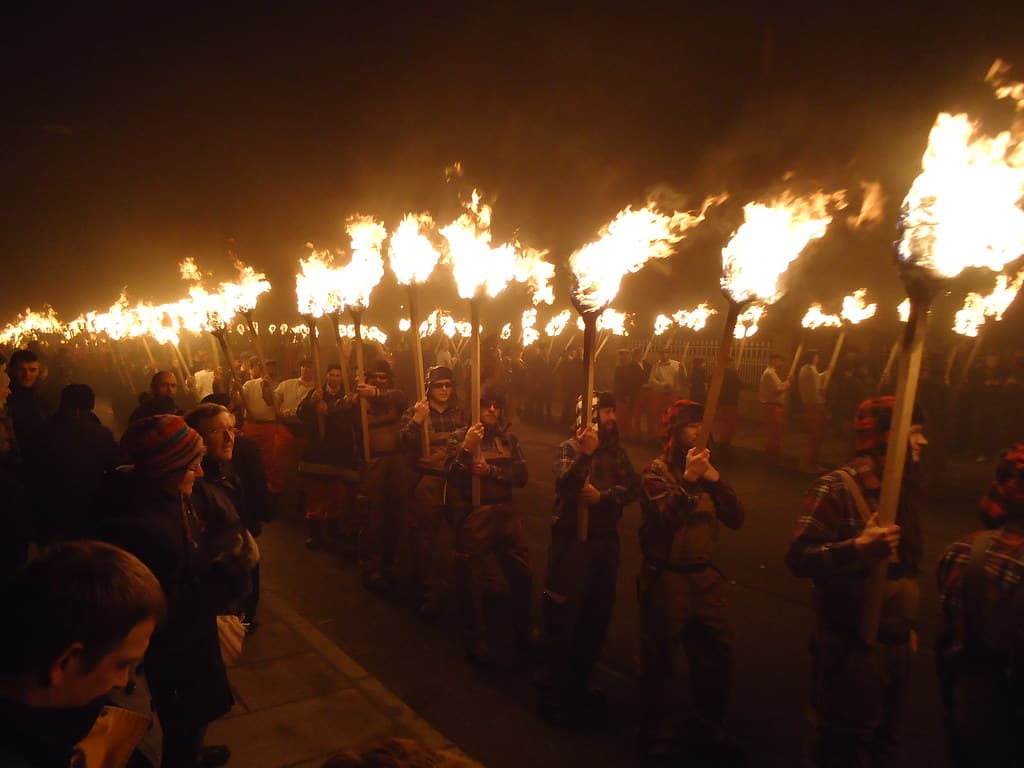
- Edinburgh's other great festival is Hogmanay, four months later, and Shetland's Up Helly Aa is the Scottish fire festival to pair it with in winter.
- For more music in a northern capital, Reykjavík's Iceland Airwaves is the November equivalent of a festival-takes-over-the-city week.
Frequently asked questions
How many shows can I see in a day?
Three or four comfortably, five if you're organized. Most shows last an hour, and venues are close together, but queues and late-running shows eat time. Mix booked shows with free ones, and leave gaps to eat and to catch a street act on the Royal Mile.
Is the Fringe only comedy?
No, though comedy is the biggest section. The programme also covers theatre, musicals, cabaret, dance, music, magic, spoken word, children's shows and exhibitions. Because there's no selection, quality varies enormously, which is part of the fun: reviews and word of mouth matter more here than anywhere.
When should I book?
Accommodation as early as possible, ideally months ahead. For shows, book headliners and sell-out theatre once the programme is published, and leave everything else until you arrive. Previews in the first days are cheaper, and the Half Price Hut opens from the first Wednesday.