What is the Festino di Santa Rosalia?
Palermo, the capital of Sicily, has a patron saint who is said to have saved the city. In 1624, during a terrible plague, the bones of Saint Rosalia, a hermit who had lived in a cave on Monte Pellegrino in the twelfth century, were found on the mountain above the city. When they were carried in procession through Palermo the following year, the plague was said to end, and the city has honoured her ever since. Every July, the Festino di Santa Rosalia is Palermo's biggest celebration, and one of the most spectacular religious festivals in Italy.
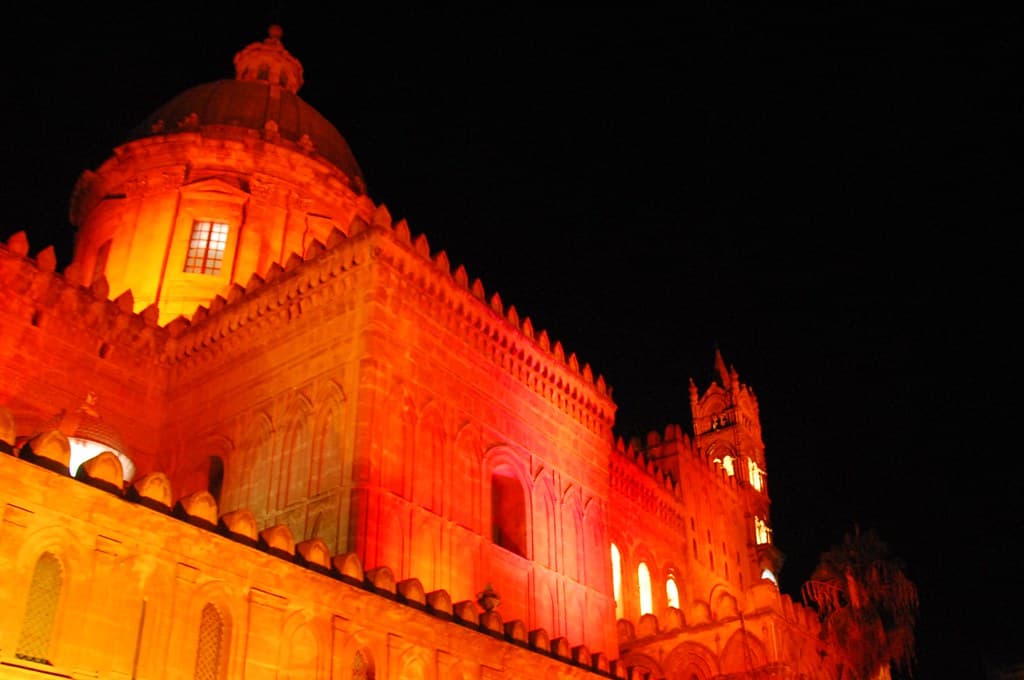
The heart of the Festino is the night of July 14. A towering carro trionfale, a triumphal chariot carrying the statue of the saint, is pulled through the old city along the Cassaro, Palermo's ancient main street, from the Royal Palace past the Cathedral and the Quattro Canti crossroads to the sea at Porta Felice. Each year the chariot and the show around it are designed around a new theme, with music, dance and theatre accompanying it through the crowds, which can number in the hundreds of thousands.
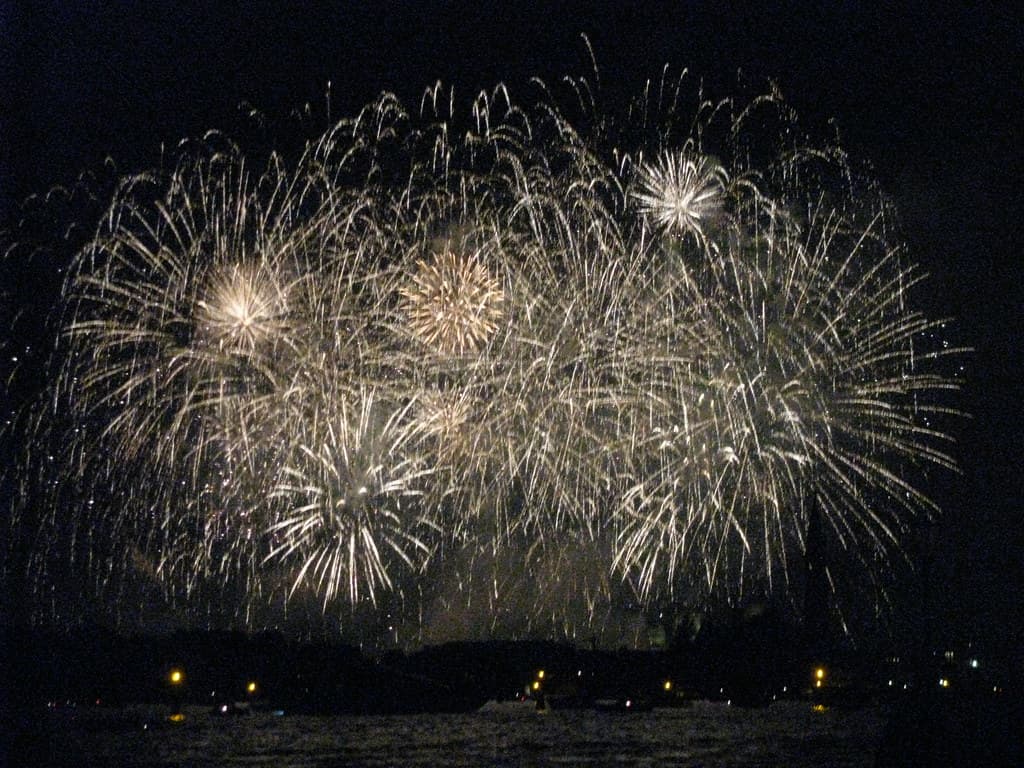
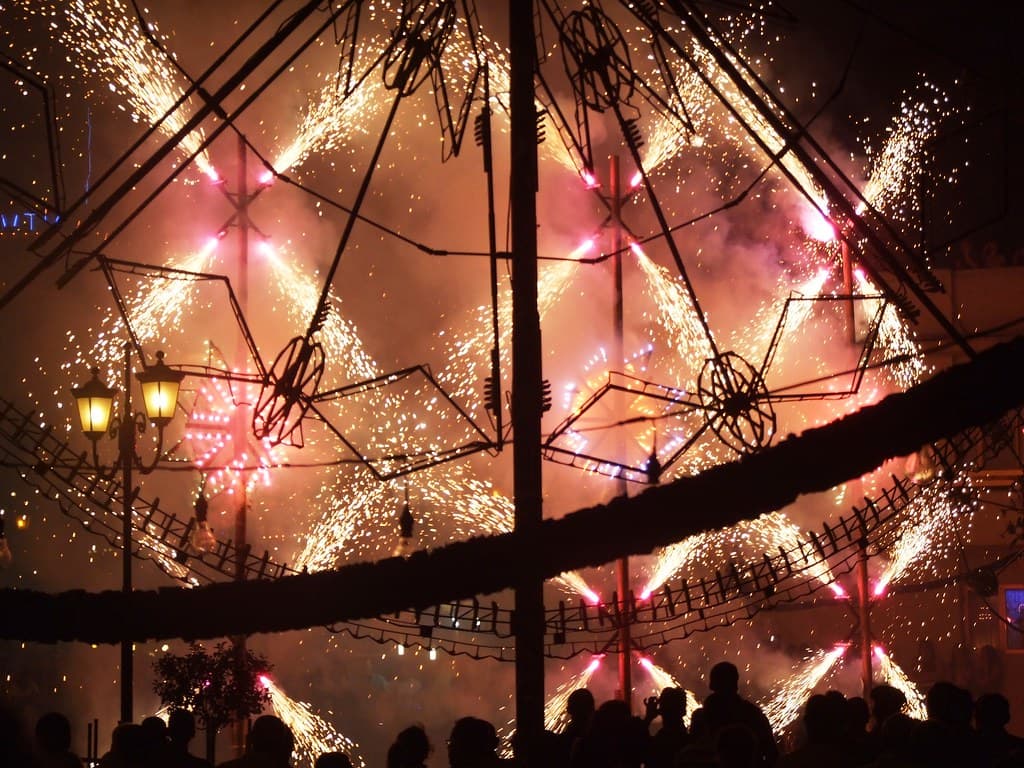
At the end of the procession, as the saint reaches the sea, the night explodes with a great fireworks display over the Foro Italico, the waterfront promenade, while the crowd cries "Viva Palermo e Santa Rosalia!".
On July 15, the feast day itself, the religious celebration takes over. The silver urn holding the saint's relics is carried in a solemn procession through the city, followed by the clergy, brotherhoods and thousands of devotees. In 2026, the Festino celebrated its 402nd edition.
What to expect
The religious programme runs over several days in mid-July, with the main events on the nights of July 14 and 15.
July 10 to 13
Preparations
Religious celebrations and events lead up to the Festino, and the city fills with lights and stalls.
July 14, night
The triumphal chariot
The chariot of Saint Rosalia travels from the Royal Palace along the Cassaro to the sea, followed by fireworks over the Foro Italico.
July 15, evening
The relics
The silver urn with the saint's relics is carried in procession through the city and back to the Cathedral.
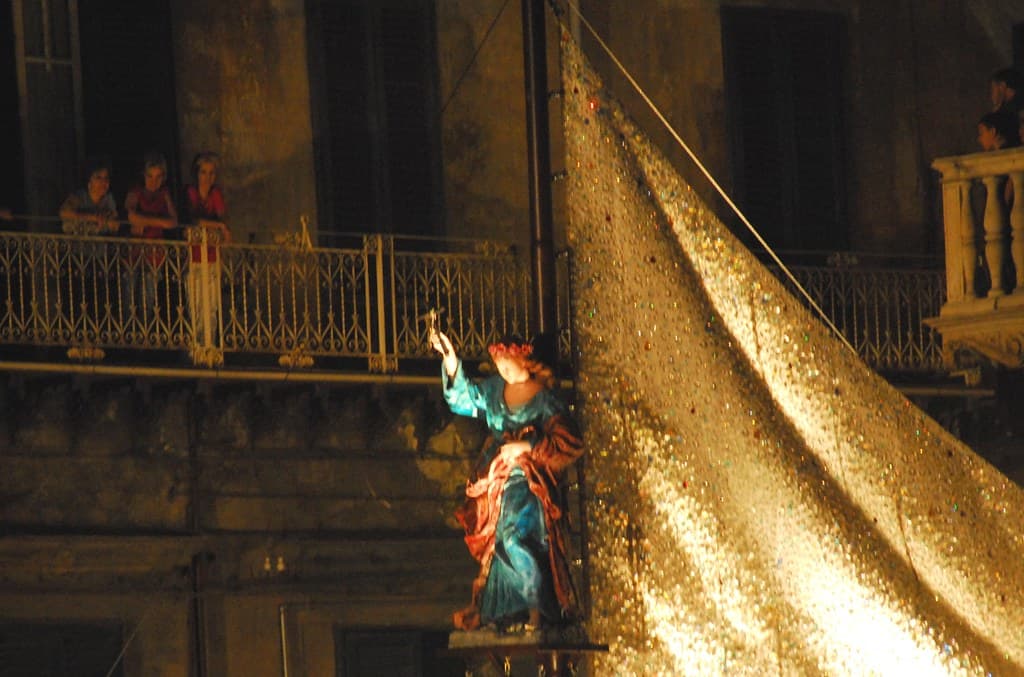
Saint Rosalia on the night of the Festino
Photo by Rino Porrovecchio / flickr · CC BY-SA 2.0
Planning your trip
Getting there
Palermo's Falcone-Borsellino Airport is about 35 kilometres west of the city, with trains to Palermo Centrale about every half an hour. Extra trains run on the night of July 14 to take people home after the fireworks.
Where to stay
Palermo has hotels, guesthouses and apartments for all budgets, many in the old city near the procession route. July is high season, so book early.
What it costs
The Festino is free. Palermo is affordable, with some of Italy's best street food, from arancine to panelle.
Go like you know
- Eat sfincione, Palermo's thick pizza, and babbaluci, small snails, a traditional Festino snack, from the street stalls.
- Walk or drive up Monte Pellegrino to the sanctuary of Santa Rosalia, in the cave where she lived, on a quieter day.
- Shout "Viva Palermo e Santa Rosalia!" with the crowd.
- Explore Palermo's markets, Ballarò and the Vucciria, for food and atmosphere.
- Venice's Festa del Redentore, on the third weekend of July, also marks the end of a plague with fireworks.
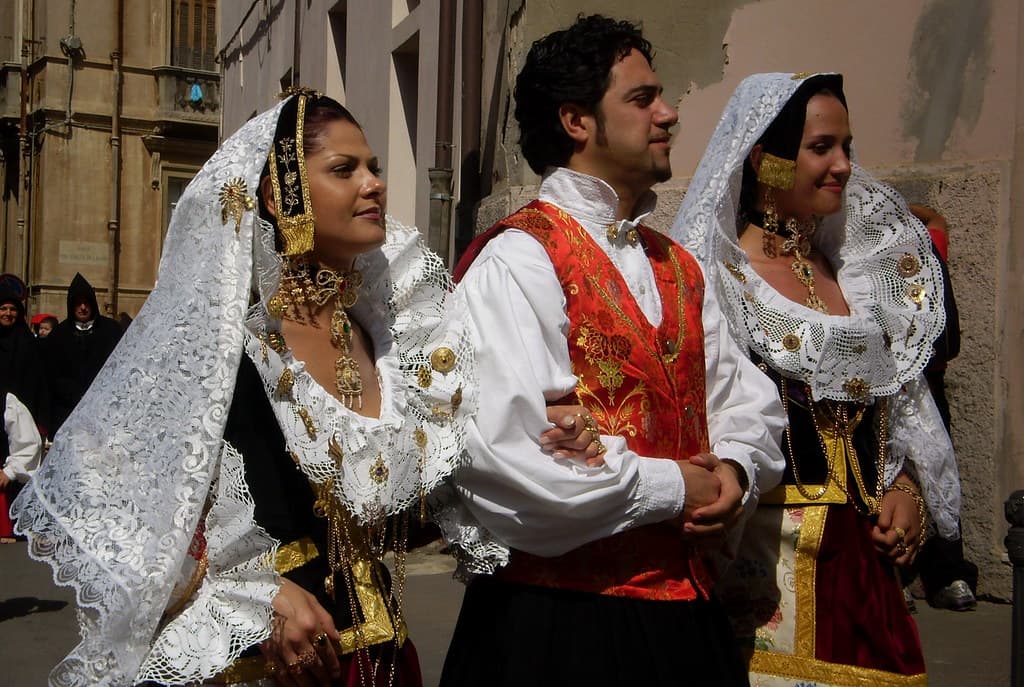
- Cagliari's Sant'Efisio, on May 1, is Sardinia's great procession of thanks for deliverance from plague.
Frequently asked questions
When is the Festino di Santa Rosalia?
Every year on July 14 and 15. The triumphal chariot procession and the fireworks take place on the night of July 14, and the procession of the relics on July 15, the saint's feast day. In 2027, July 14 falls on a Wednesday. Check the city's programme for timings.
Who was Saint Rosalia?
Rosalia was a young noblewoman who, according to tradition, left Palermo in the twelfth century to live as a hermit in a cave on Monte Pellegrino. Her bones were found there in 1624, during a plague, and when they were carried through the city, the plague was said to end.
Is it a religious or a secular festival?
Both. The night of July 14 is a popular celebration, with the chariot, music, theatre and fireworks, enjoyed by everyone. July 15 is more religious, with the procession of the relics and masses. Visitors of all backgrounds join the celebrations.
Where is the best place to watch the fireworks?
The fireworks are launched over the sea at the end of the chariot's journey, and the Foro Italico, the long waterfront promenade, is the main viewing area. It fills up hours before the show, so arrive early, or follow the chariot down the Cassaro and watch from near Porta Felice.