What is Eurochocolate?
Perugia, the hilltop capital of Umbria, has been a chocolate town for more than a century. It is home to Perugina, the company behind Baci, the hazelnut chocolates wrapped with a love note inside, first sold in 1922. In the early 1990s, a local organizer named Eugenio Guarducci decided to celebrate that heritage with a festival, and Eurochocolate was born. (Sources split on whether the first edition was 1993 or 1994.)
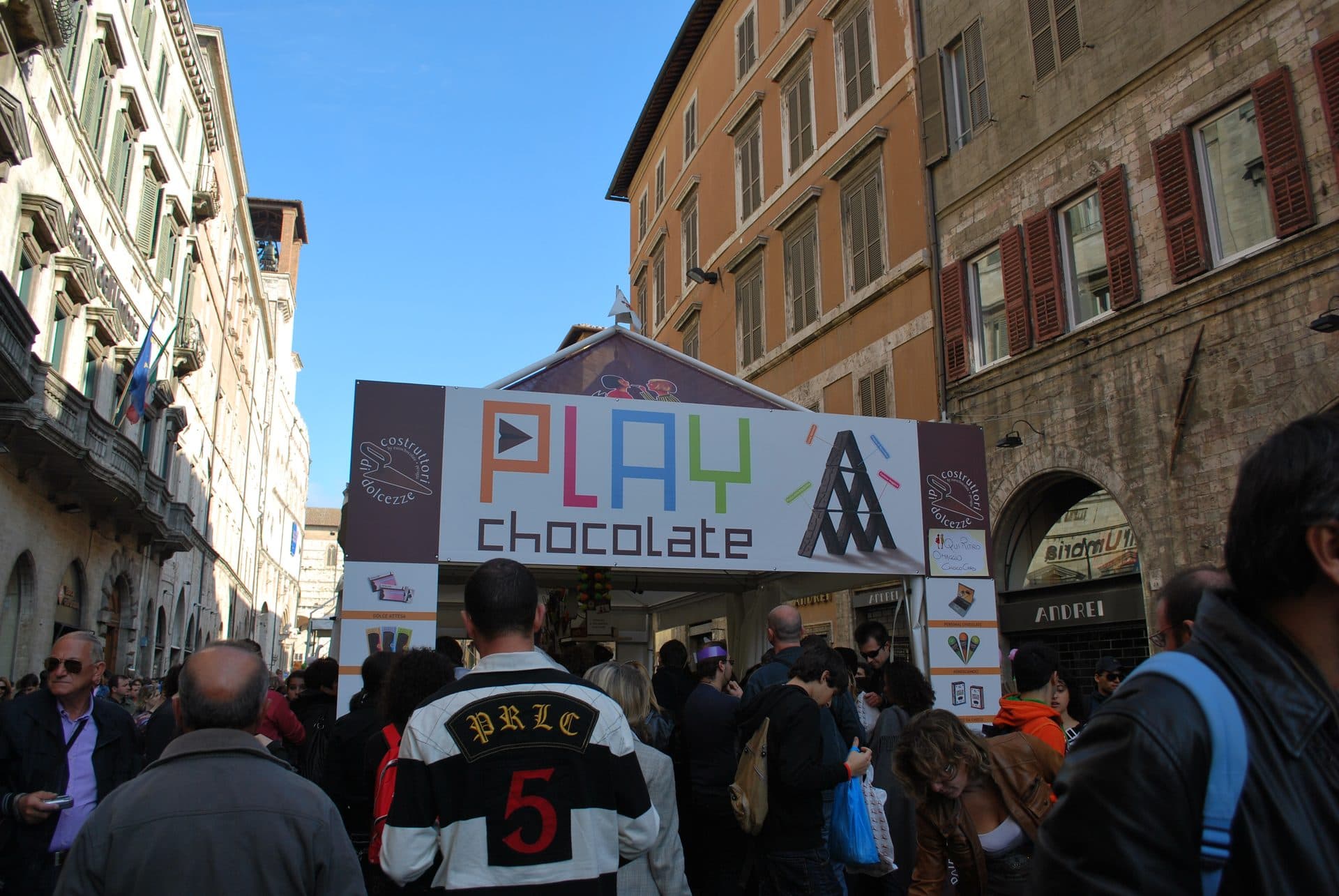
It has grown into one of Europe's best-known chocolate festivals, drawing crowds that have reached several hundred thousand people in busy years. Across its run, the streets and squares of Perugia's historic center fill with stalls from Italian and international chocolate makers, alongside tastings, cooking workshops, talks and shows. The festival has a different theme every year, and it loves a stunt: in 2003 organizers built a chocolate confection more than seven meters long from nearly six tonnes of dark chocolate and hazelnuts.
The setting is half the point. Perugia is an Etruscan and medieval city of steep lanes, arches and palaces, with one of central Italy's great promenades, the Corso Vannucci, running along its spine. For the 2021 edition, the festival moved out to a fairground at Bastia Umbra, but the official 2026 announcement puts it back in the historic center, where it belongs.
A medieval city with chocolate on its breath.
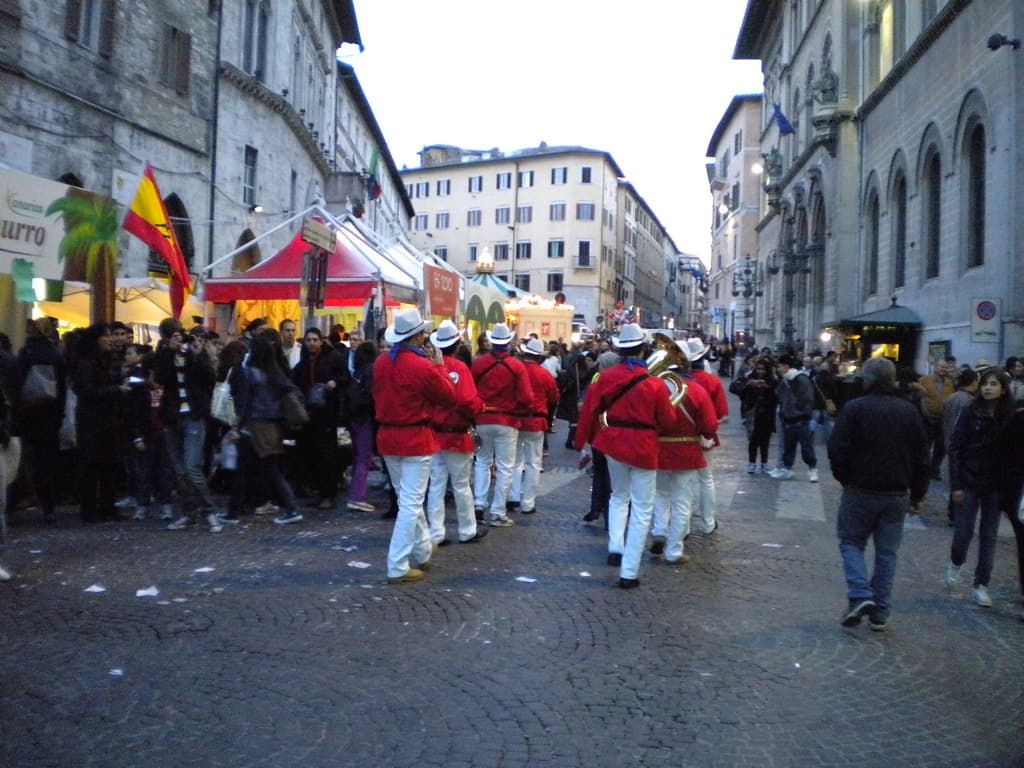
A marching band works its way down the Corso Vannucci during the festival
Photo by Perugiacity.com / flickr · CC BY 2.0
What to expect
The festival covers two weekends and the days between them.
Opening weekend
The crowds arrive
Stalls open along the Corso Vannucci and in the main squares and gardens. Weekends draw coach groups from across Italy, so the center is lively and packed.
Weekdays
Tastings and workshops
The quieter middle of the festival is the time for guided tastings, hands-on workshops, talks and the new Città del Cioccolato (City of Chocolate), a museum in the old covered market, with room to move between stalls.
Closing weekend
Last bites
The final weekend brings another rush, with shows, demonstrations and the last chance to buy before the stalls pack up.
Planning your trip
Getting there
Perugia is about two hours by train from Florence and two to three from Rome, often with a change, and it has a small airport (San Francesco d'Assisi) with a few European connections. Most visitors arrive by car or train, park or arrive at the bottom of the hill, and ride the Minimetrò, a small automated people mover that links the car park at Pian di Massiano and the train station to the center. A chain of escalators that runs through the ruins of the Rocca Paolina fortress also lifts you up to the old town.
Where to stay
Perugia is a university town with a good supply of hotels, guesthouses and apartments. Festival weekends are busy, so book ahead. The city also makes an easy base for Assisi, Spello and the Umbrian countryside. If you are pairing chocolate with truffles, the Alba International White Truffle Fair in Piedmont runs on weekends through November and into early December.
What it costs
Walking the festival is free, and the official tourism page lists free admission. You pay for what you buy, and for paid extras such as the Città del Cioccolato museum and some workshops; the program lists the details. Hotel rates rise on festival weekends, so weekdays and nearby towns are the easier way to keep the bill down. We have not found published prices for Perugina's factory tours, so check with them before you go.
Go like you know
- Visit on a weekday morning, when the stalls are open and the crowds are mostly local.
- Take the escalators through the Rocca Paolina at least once: they pass through a buried medieval street.
- Look beyond the big brands. Small artisan producers from across Italy bring bars you will not find at home.
- Balance the sugar with a lunch of torta al testo, Umbrian flatbread stuffed with cured meat and greens.
- Plan a day trip to Assisi, about half an hour by train, to see the Basilica of St. Francis.
- Walk to the edge of the old town at sunset. From the terraces behind the Corso Vannucci, the view stretches across the Umbrian valley toward Assisi and the mountains beyond.
- Christmas markets are not far behind. The Nuremberg Christkindlesmarkt opens in late November, shortly after Eurochocolate closes.
- Pack chocolate carefully for the trip home. Bars survive a suitcase far better than filled pralines, which melt and crack.
Frequently asked questions
Is Eurochocolate free?
Yes, walking the festival is free. The stalls are in public streets and squares, and the tourism board lists entry as free. You pay for chocolate you buy and for paid extras, such as the Città del Cioccolato museum and some workshops. Check the official program for prices and booking.
Is it good for children?
Very. Children love the tastings, the chocolate sculptures and the hands-on workshops, and the festival has a family area with children's workshops. Weekend crowds can be overwhelming with small children or pushchairs on the steep streets, so families with young kids should aim for weekdays.
How long should I stay?
One day is enough to walk the festival and taste plenty. Two days let you add a workshop or tasting, explore Perugia's museums and churches, and enjoy the old town in the evening. Add a third day for Assisi or the hill towns of Umbria.
Can I visit the Perugina factory?
Perugina runs a chocolate house with a museum and factory tours at its plant on the edge of Perugia, outside the historic center. Visits are guided and advance booking is mandatory. It is closed on Sundays, so plan around the festival weekend. It is separate from Eurochocolate.