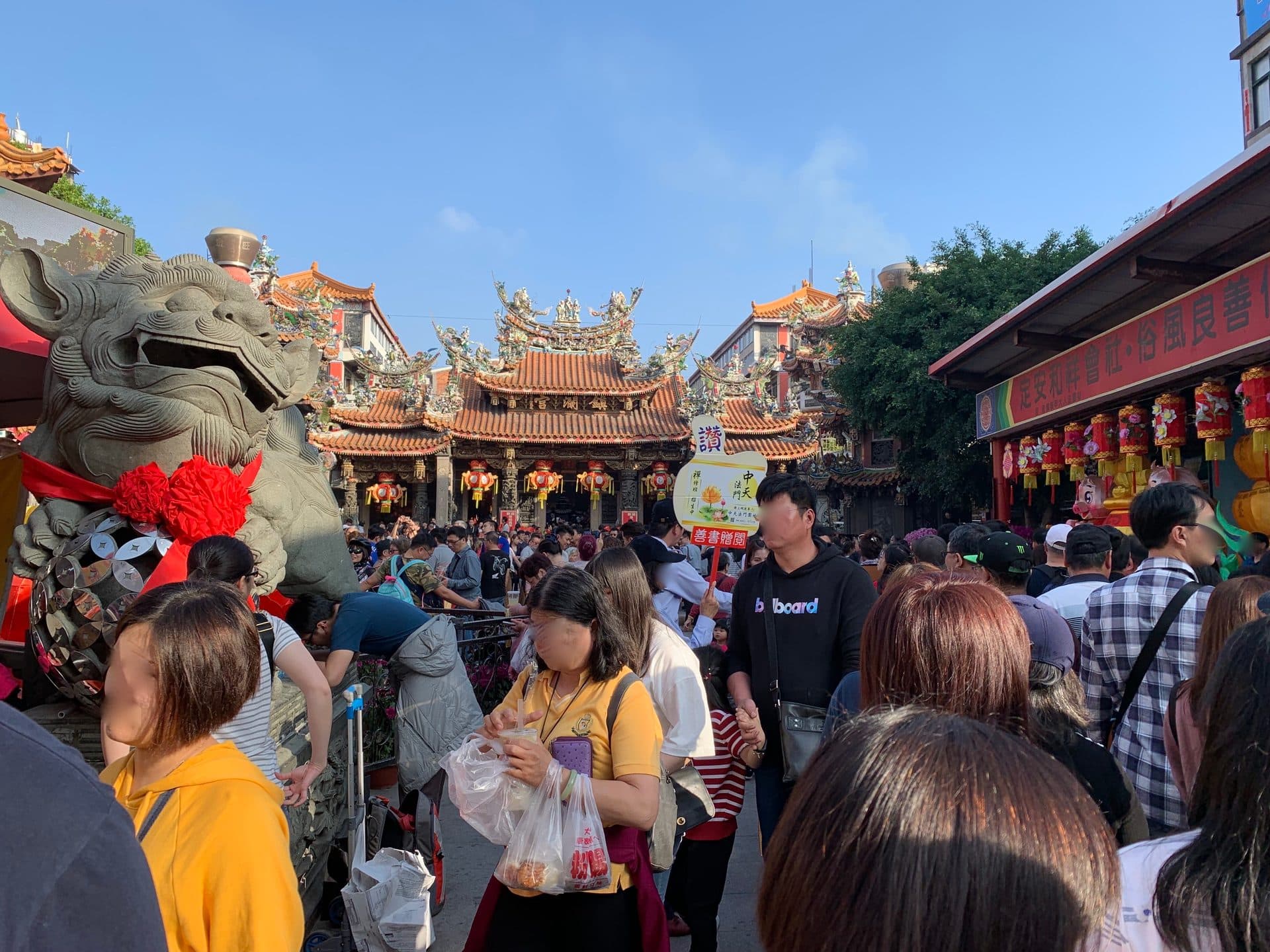
What is the Dajia Mazu Pilgrimage?
Mazu (媽祖) is the goddess of the sea, worshipped across coastal China, Taiwan and Southeast Asia. According to tradition, she was a young woman named Lin Moniang from Fujian province who lived in the tenth century and saved fishermen from storms. After her death, she was revered as a protector of seafarers, and her worship spread with migrants across the Taiwan Strait. In Taiwan, she is one of the most beloved deities, with temples dedicated to her in towns and fishing ports across the island.
The Jenn Lann Temple in Dajia, in Taichung, organizes one of Taiwan's most representative religious and cultural events: a pilgrimage in which Mazu's statue is carried in a palanquin through central Taiwan, visiting other temples and blessing the communities along the way. The route covers more than three hundred kilometers on foot, through Taichung, Changhua, Yunlin and Chiayi, before returning to Dajia.
The exact date of departure is chosen each year by divination with jiaobei, moon-shaped blocks cast before the goddess on the Lantern Festival. The pilgrimage draws well over a hundred thousand participants by most counts, from devout followers who walk the whole route to locals who join for an hour, and the event is officially designated an Important Folk Custom of Taiwan.
The goddess walks, and an island walks with her.
What to expect
The pilgrimage follows a fixed ritual sequence over nine days and eight nights.
Departure night
Leaving Dajia
In a ceremony of firecrackers, drums and dancing troupes, the palanquin leaves Jenn Lann Temple late at night (10:05 p.m. in 2026), accompanied by a huge crowd.
Days 2–4
On the road
The procession travels south, stopping at temples and homes along the route. Pilgrims crawl under the palanquin, zuān jiào, to receive the goddess's blessing.
Days 4–5
At Xingang
The goddess arrives at Fengtian Temple in Xingang, Chiayi, the pilgrimage's destination, for ceremonies and celebrations, including a birthday ceremony the morning after she arrives.
Final days
The return
The procession turns north, passing through towns and villages, and returns to Dajia after nine days amid fireworks and crowds.
Planning your trip
Getting there
Take a train on Taiwan's Coastal Line to Dajia Station, about 200 meters from Jenn Lann Temple. Taichung is easily reached from Taipei by high-speed rail, and shuttle buses have run on departure and return days. The route passes many towns with train stations, so you can join and leave the pilgrimage at different points.
Pilgrims walk day and night, resting in temples, schools and roadside spots. If you walk for more than a day, bring good shoes, light clothes, a hat, a raincoat, a small backpack and a headlamp.
Where to stay
Base yourself in Dajia for the departure and return nights, or in a route town with a station if you plan to follow the palanquin for a day. Accommodation in Dajia and route towns fills up on key nights, so book early. Many walking pilgrims sleep on mats in temples and schools, but space is limited and best left to those who arrive early.
What it costs
Walking with the procession is free. Local households and temples offer food, drinks and places to rest along the way, so you can travel light on meals. Beyond lodging and train fares, the main optional spend is a pilgrim's hat, shirt or flag from the temple. We found no published prices for these.
Go like you know
- Crouch under the palanquin as it passes, if you wish to receive the blessing; follow the lead of other pilgrims.
- Accept food offered by locals; it is part of the merit-making and hospitality of the pilgrimage.
- Buy a pilgrimage flag or incense bag at the temple as a souvenir and blessing.
- Visit Jenn Lann Temple on a quieter day to see the goddess's statue and the temple's intricate decorations.
- Learn about the Baishatun Mazu pilgrimage too, another famous Mazu pilgrimage in Miaoli with an unpredictable route.
- Time the divination day with the lanterns: the Lantern Festival is also when the Pingxi Sky Lantern Festival releases wishes into the sky near Taipei.
- Come back in summer for the Taiwan International Balloon Festival in Taitung, on the island's east side.
Frequently asked questions
When is the Dajia Mazu Pilgrimage?
It usually takes place in spring, around the third month of the lunar calendar, when Mazu's birthday falls. The exact departure date is chosen by divination at the temple on the Lantern Festival and announced weeks in advance. The pilgrimage lasts nine days and eight nights.
Can foreigners take part?
Yes. The pilgrimage is open to everyone, and many foreigners join for a day or longer. Dress modestly, follow the instructions of temple staff, and respect religious rituals. At the temple you can buy a pilgrim's hat, shirt or flag if you want to join a walking group.
Do I need to walk the whole route?
No. Most participants join for part of the route. You can follow the palanquin for a few hours or a day and take a train back. Use the temple's official announcements to find where the procession will be and when.
What should I bring?
Comfortable walking shoes, light clothes, a hat, sunscreen, a raincoat, a water bottle, earplugs for firecrackers, and a headlamp for night walking. A small towel and a change of socks help on longer stretches. Many pilgrims also carry a small stool or mat for rests.
What is the Baishatun pilgrimage?
The Baishatun Mazu pilgrimage, from Gongtian Temple in Miaoli, is another famous Mazu walk, known for its unpredictable route: the goddess's palanquin decides the path as it goes. Its dates and route differ from Dajia's, and some devotees join both. Follow its official announcements if you want to experience it.