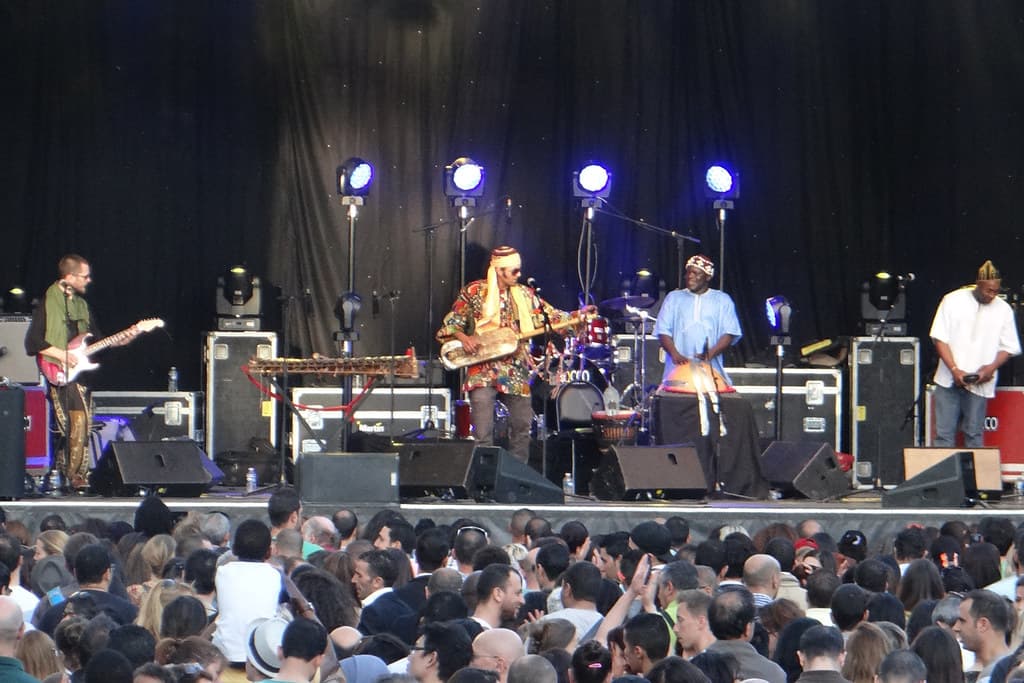
What is the Fête de la Musique?
On June 21, the longest day of the year, France makes music. The Fête de la Musique was launched in Paris in 1982 by Jack Lang, then France's Minister of Culture, and Maurice Fleuret, with a simple idea: for one day, anyone can play, anywhere, for free. Its slogan, Faites de la musique, "make music", sounds exactly like the festival's name in French.
The result is a nationwide party. From late afternoon until well after midnight, streets, squares, parks, courtyards, bars, churches and concert halls fill with music. Amateur bands set up on the pavement, DJs play from shop doorways, choirs sing in churches, brass bands march through the streets, and established orchestras and stars give free concerts. Every genre has its place, from rock, rap and electro to jazz, classical and music from around the world.
Paris, where it all began, is at its liveliest. Neighbourhoods such as the Marais, the Latin Quarter, Belleville and Montmartre turn into open-air stages, and museums and cultural institutes host their own concerts. You can walk from a gypsy jazz band on one corner to a heavy metal group on the next and a choir in a church a few steps away.
The idea has spread far beyond France. More than 120 countries and over a thousand cities now take part, under names such as Make Music Day or World Music Day. But the original, in the city where it was born, is still the best way to experience it.
What to expect
The music starts in the afternoon and builds through the evening, with the biggest crowds after dark.
Afternoon
The first notes
Musicians set up on street corners, in squares and in parks, and the first concerts begin. It is the best time for families and for smaller acoustic performances.
Evening
The city fills
As the evening goes on, the crowds grow, bars spill onto the pavements, and bigger stages in squares and public spaces start their concerts. Some streets become so crowded it is hard to move.
Night
Until the small hours
The party carries on well past midnight in many neighbourhoods, with DJs and dancing in the streets. Public transport runs late, and many people walk home through a city still full of music.
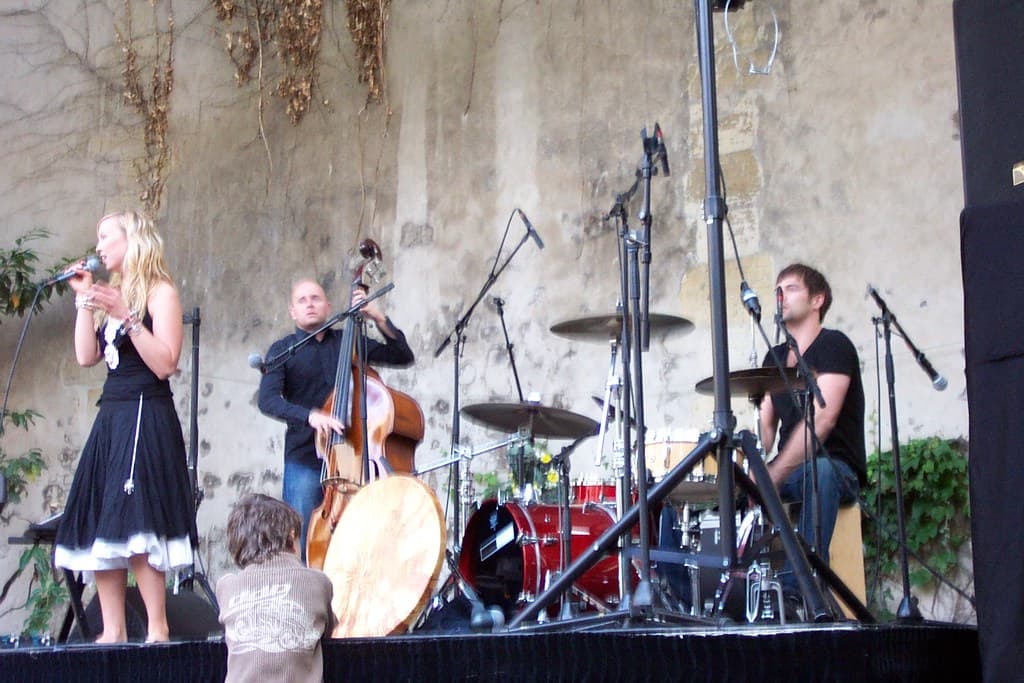
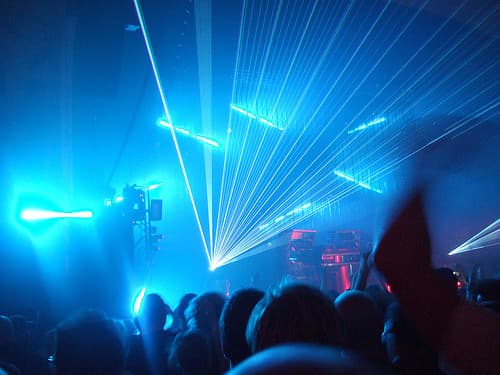
A free concert in Paris on June 21
Photo by RuTemple / flickr · CC BY 2.0
Planning your trip
Getting there
Paris is served by Charles de Gaulle and Orly airports and by high-speed trains and Eurostar from across Europe. On the night of June 21, the metro is very busy, and the city usually runs extra or late services; check the transport authority's announcements.
Where to stay
Anywhere central works, close to a metro line. June is high season in Paris, so book early. If you want to sleep, avoid rooms directly above busy streets and squares in the nightlife districts, where the music goes on late.
What it costs
Nothing: every concert of the Fête de la Musique is free. Paris itself is expensive, especially in June, but you can spend the whole day and night listening to music without buying a ticket.
Go like you know
- Bring a small bottle of water and comfortable shoes; you'll walk for hours.
- Check out the concerts at museums and cultural institutes, which often host world music and dance on their forecourts.
- Join in: many people bring an instrument and play themselves, which is the whole spirit of the day.
- Look up the concerts in churches, concert halls and cultural centres, many of which open their doors for free on the day.
- Charge your phone before you set out; you'll want photos, maps and a way to find your friends in the crowds.
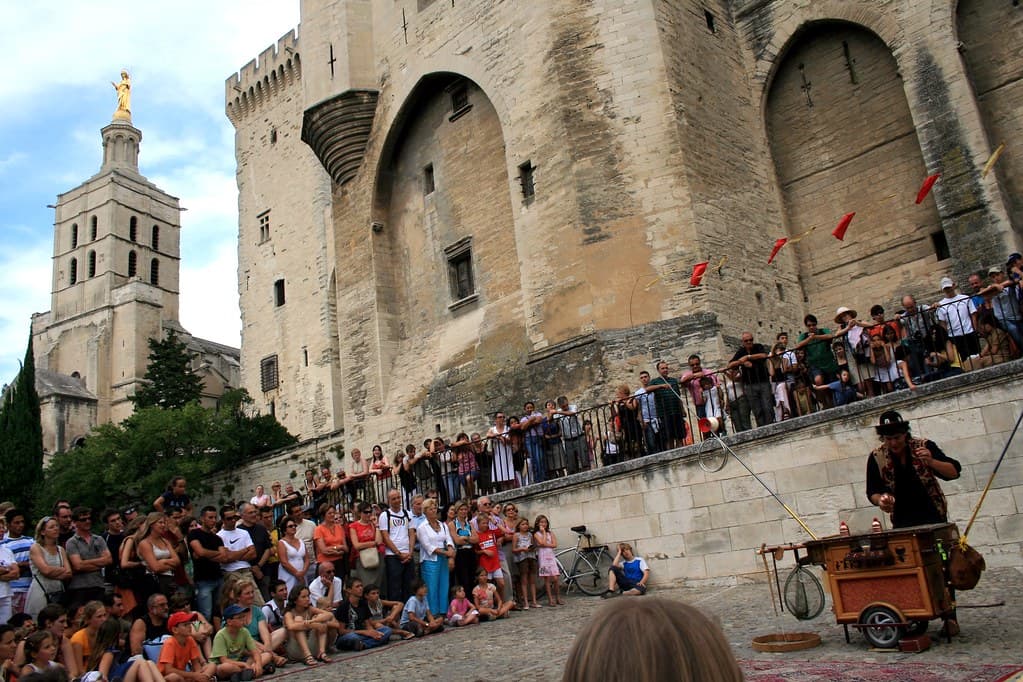
- Avignon's Festival d'Avignon, in July, is France's great festival of theatre.
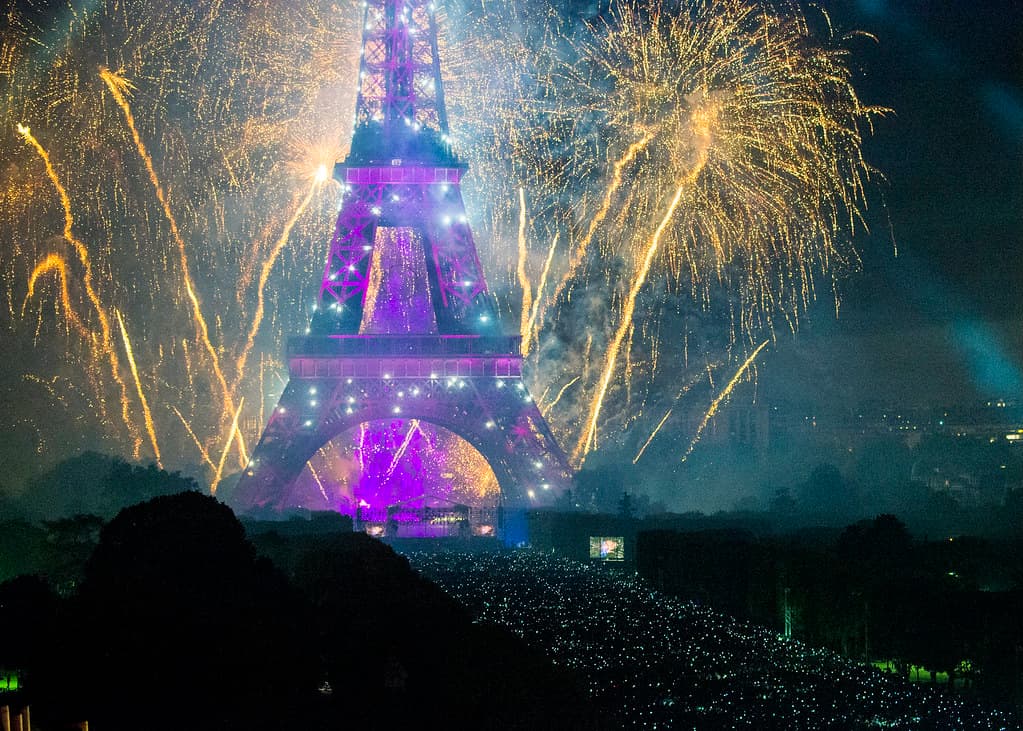
- Paris celebrates again three weeks later on Bastille Day, with fireworks over the Eiffel Tower.
Frequently asked questions
When is the Fête de la Musique?
Every year on June 21, the summer solstice, whatever the day of the week. In 2027 it falls on a Monday. Music starts in the afternoon and goes on late into the night, and the programme is published in the days before the festival.
Is it only in Paris?
No. The festival is held in towns and cities all over France, and in more than 120 countries around the world, often under the name Make Music Day or World Music Day. Paris, where it was born in 1982, has the biggest and most varied programme.
Can anyone perform?
Yes, that's the idea. Amateurs and professionals alike play for free in the streets and public spaces. Larger performances, amplified sound and late hours may need permission from the local authorities, so check the rules if you plan to play with a full sound system.